
Suppose a campus is preparing for a staff event and a visitor tour. The cleaning plan should cover preparation, occupied-hour checks, and the reset after guests leave.
The pressure of the visit
Before a visit, inspect the lobby, meeting rooms, restrooms, and guest route. Confirm that bins, surfaces, and supplies meet the agreed standard.
Review the event calendar when planning cleaning and daytime coverage. Confirm any changes to access, room use, and service windows with the organizer.
Preparation before the event
Schedule a preparation window that fits the event and the site. Use a checklist to confirm the work before guests arrive.
- Hard-floor entries and lobby areas swept and damp-mopped, glass wiped clean of fingerprints.
- Conference rooms staged: surfaces wiped, trash emptied, chairs aligned, whiteboards cleared and erased clean.
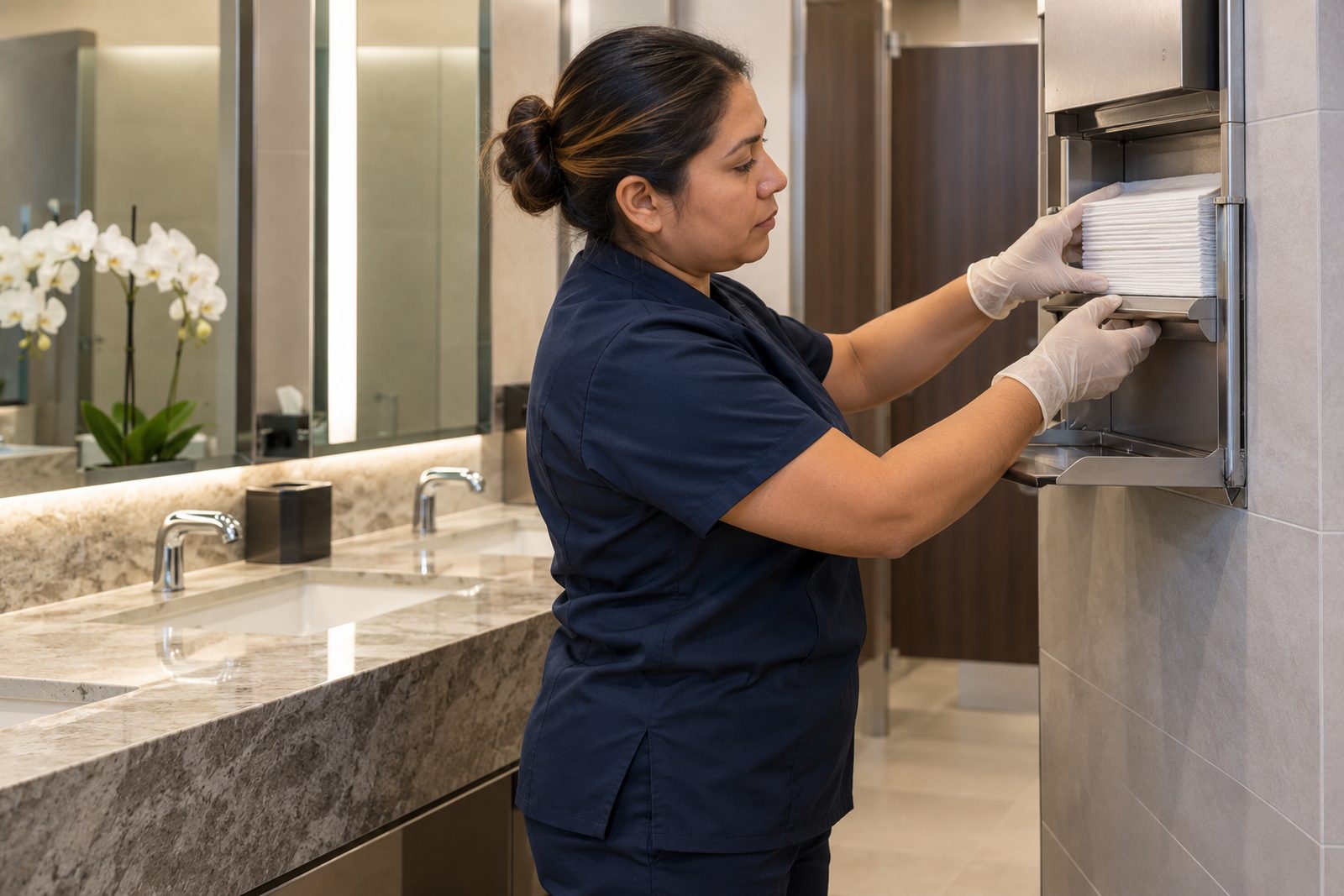
- Restrooms fully stocked and touch-point wiped — see our note on restroom-quality as a signal.
- Catering or break areas prepped for the expected headcount: trash bins emptied, counters cleared, coffee and water stations restocked.
- High-traffic corridors and elevator interiors spot-cleaned.
Confirm staffing and task ownership before the event. Make sure the assigned crew has access, supplies, and a supervisor contact.
Mid-event upkeep
Events generate messes on a timeline that does not match the cleaning schedule. Catering leaves crumbs and spills. Restrooms get heavy traffic in tight windows. Trash bins fill faster than normal. Break areas turn over repeatedly.
Agree on the occupied-hour route with the day porter team. Include bin checks, restrooms, shared surfaces, and any spaces that must remain quiet or restricted.
Fast teardown and reset
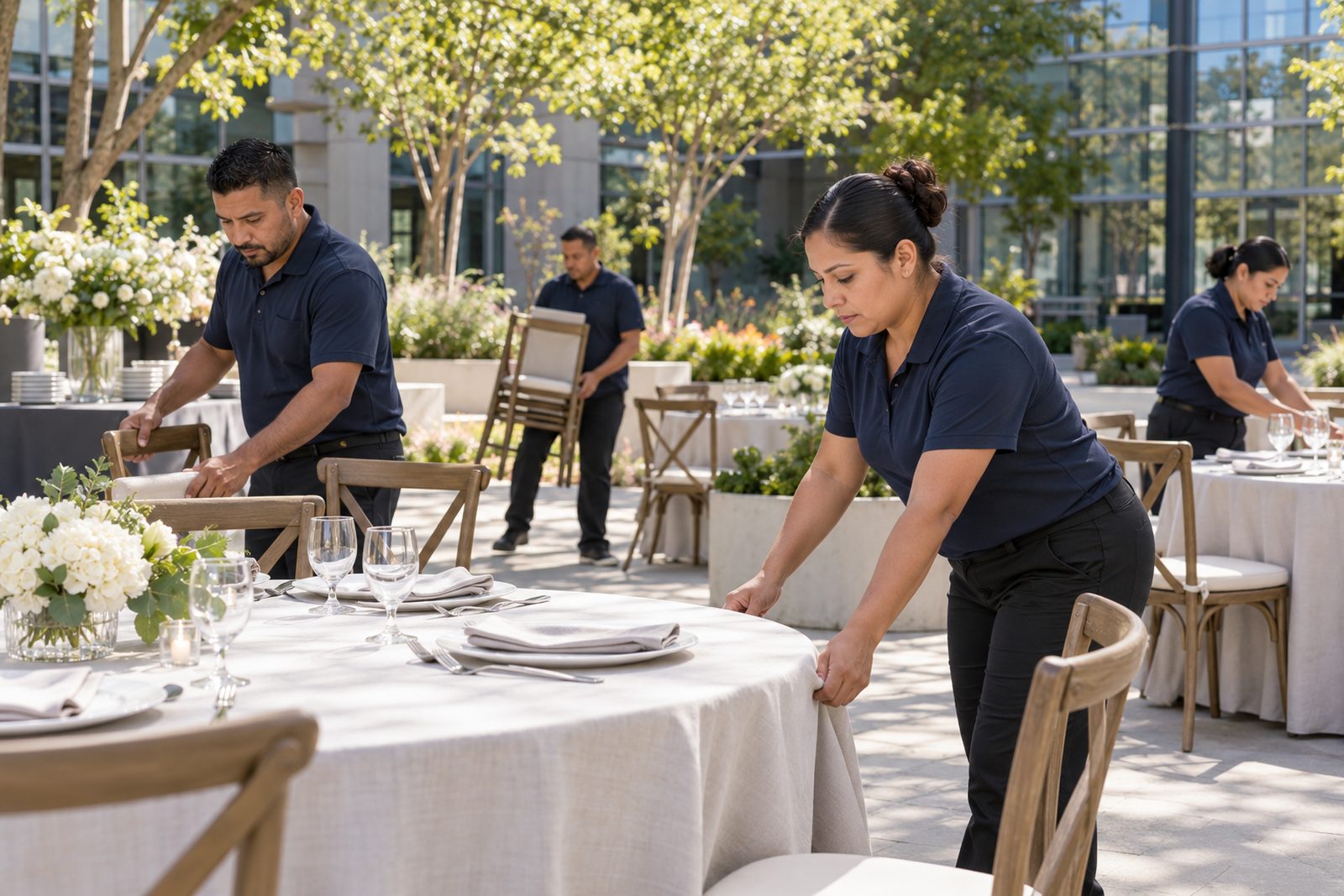
Confirm when guests and catering staff will leave each area. Plan the reset around the next scheduled use and any access restrictions.
Assign each area to a named role, sequence the tasks, and define who checks completion. Record any work carried into the next shift.
Coordination makes it work
Share the event schedule with the facility team early enough to plan staffing and supplies. Confirm the guest areas, catering arrangements, access, and next use of each space.
Include event preparation, in-event checks, and reset in the agreed scope. Confirm changes with the organizer and record the handoff to routine service.