
Restroom upkeep is part of everyday facility service. Stocked supplies, clean surfaces, and a clear reporting route help staff and visitors use the space.
What to inspect
Include soap, towels, bins, surfaces, and drainage in routine checks. Report empty dispensers, leaks, and persistent odors so the responsible team can respond.
On a campus with employees and visitors, plan service around actual restroom use. Include events, shift changes, and access restrictions in the schedule.
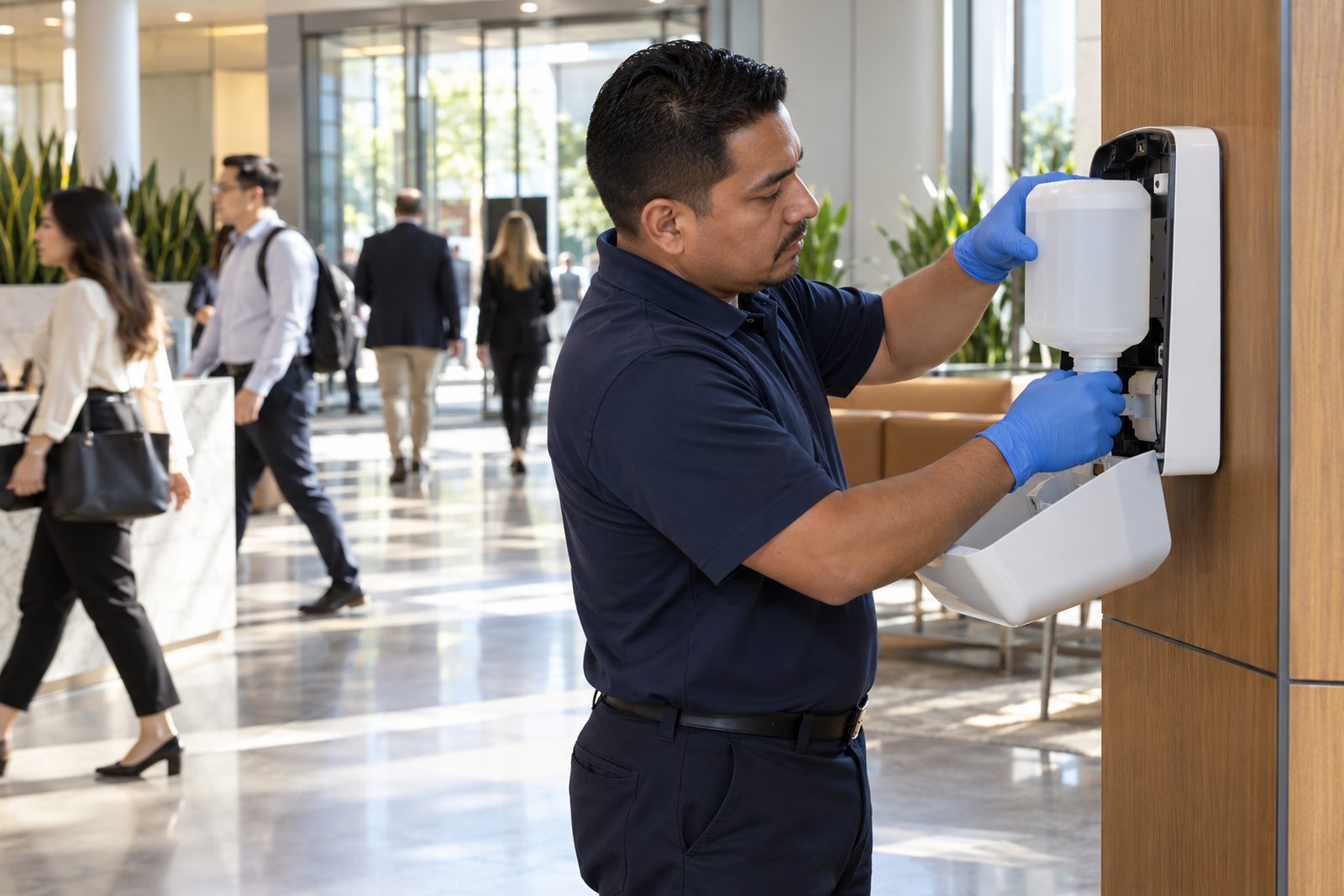
During a walkthrough, check that dispensers work and that the stored refills fit them. Confirm where supplies are kept and who can unlock storage during occupied hours. Record damaged fixtures separately from cleaning defects so maintenance requests reach the right team. Check that staff can reach the reporting contact without leaving an urgent issue undocumented at the end of a shift.
Routine service tasks
Build the service plan around supplies, surfaces, fault reporting, and handoff. Check those tasks consistently during occupied hours.
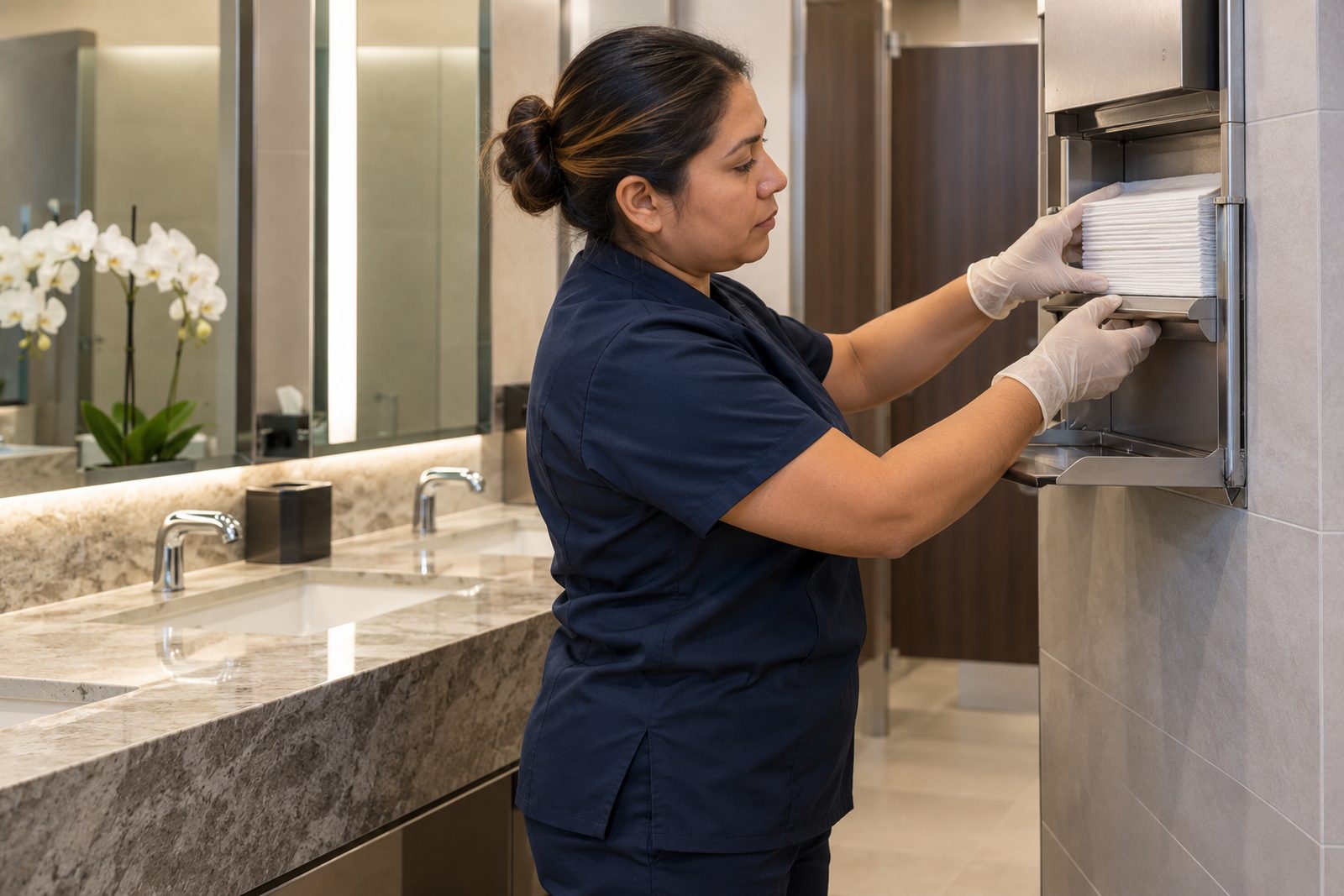
- Stocking on a schedule, not on a complaint. Soap, paper towels, and seat covers should never reach empty during business hours. Mid-day restocks are not optional on busy campus days.
- Touch-point care. Include handles, flush controls, faucets, and dispenser exteriors in the approved cleaning plan. Follow the product instructions where disinfection is required.
- Active odor control, not spray masking. Proper drain treatment, regular grout cleaning, and adequate ventilation address the source. Air fresheners are a supplement, not a solution.
- Documented rounds. Record completed checks and unresolved issues. Give the next shift access to the handoff.
Using employee feedback
Ask employees for specific feedback about supplies, cleaning, access, and recurring faults. Use the feedback alongside service records to identify work that needs attention.
Group recurring feedback by location and issue. Compare it with inspection records and assign follow-up work to the responsible team.
Building a reliable program
Set check frequencies using actual traffic and event demand. Define the handoff between overnight and daytime staff, including who handles urgent supply or maintenance requests.
Discuss restroom upkeep within the janitorial services scope. Where daytime checks are needed, agree on their coverage, timing, and reporting.
Agree on how staff report a spill or an unavailable restroom. Tell the crew who may restrict access and what signs the site uses while work is underway. At handoff, list open faults, temporary closures, and missing supplies, then name the person responsible for following up.
What to check
Set clear responsibilities for stocking, cleaning, fault reporting, and shift handoff. Review the service when occupancy or event demand changes.