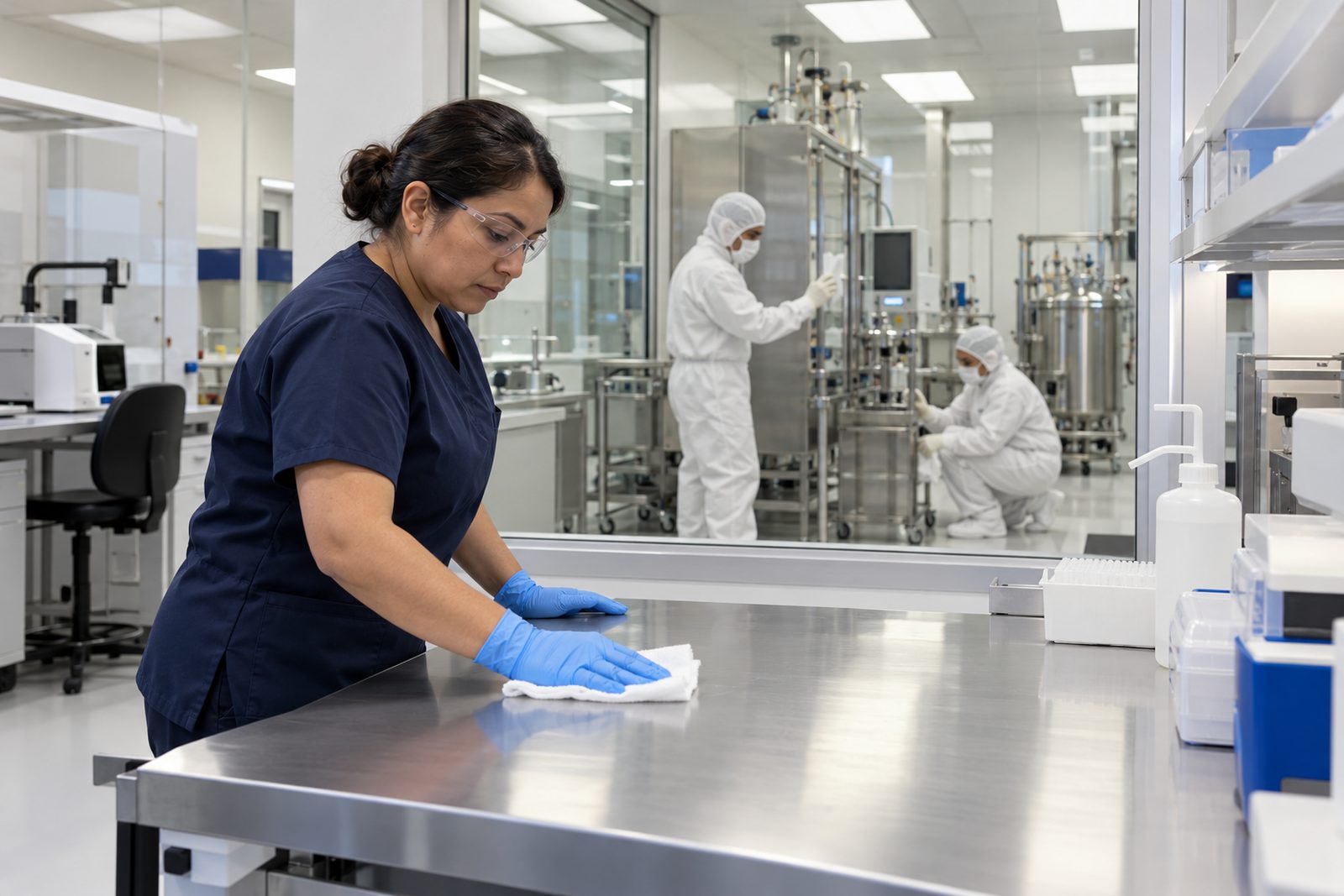

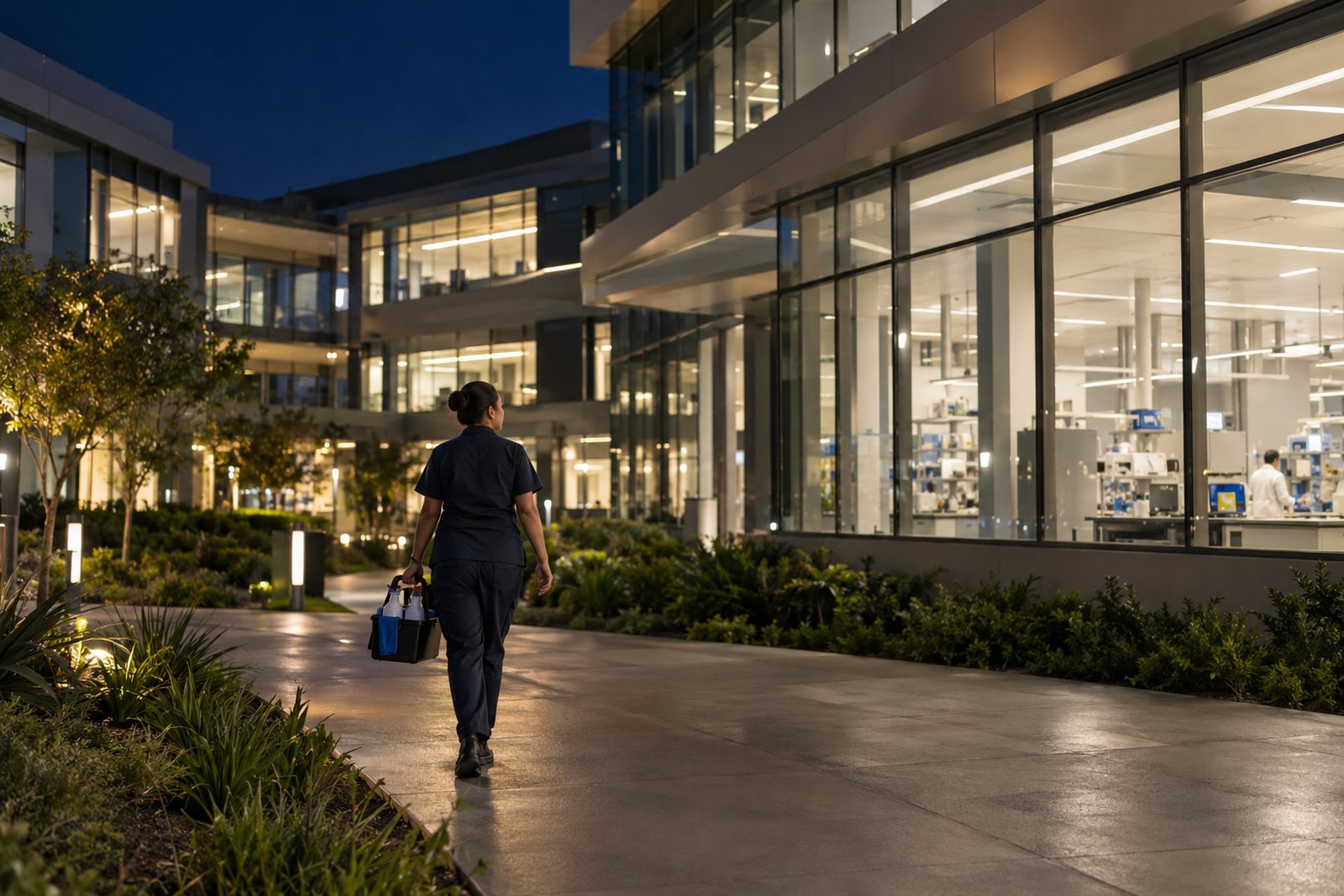
Continuous operations need cleaning windows defined by area and activity. Coordinate with operations instead of assuming that the whole site is available after office hours.
The campus that does not stop
Suppose a campus operates manufacturing, cell culture and analytical work across shifts. Map the periods when each area is available for cleaning. Confirm who authorizes access and release back to operations.
Assess staffing, access and supervision against the planned windows. Define how missed or shortened windows are reported and how the quality team assesses any departure from the schedule.
Finding the windows
Identify available cleaning windows with operations and research leads. Some areas may need a planned shutdown or other controlled arrangement. Do not assume a particular time is suitable across the campus.
A coordination plan can include:
- A defined coordination schedule for facilities and operations to review upcoming changes
- Documented "cleaning windows" per space category — cleanrooms, BSL-2 labs, analytical suites, common areas — based on current operational state
- A clearly understood escalation path when a planned window closes unexpectedly (a batch runs long, an instrument is down for maintenance that extends into the night shift)
- Flexible crew scheduling that can shift start times without losing coverage elsewhere
Night reset and day porter: two different jobs
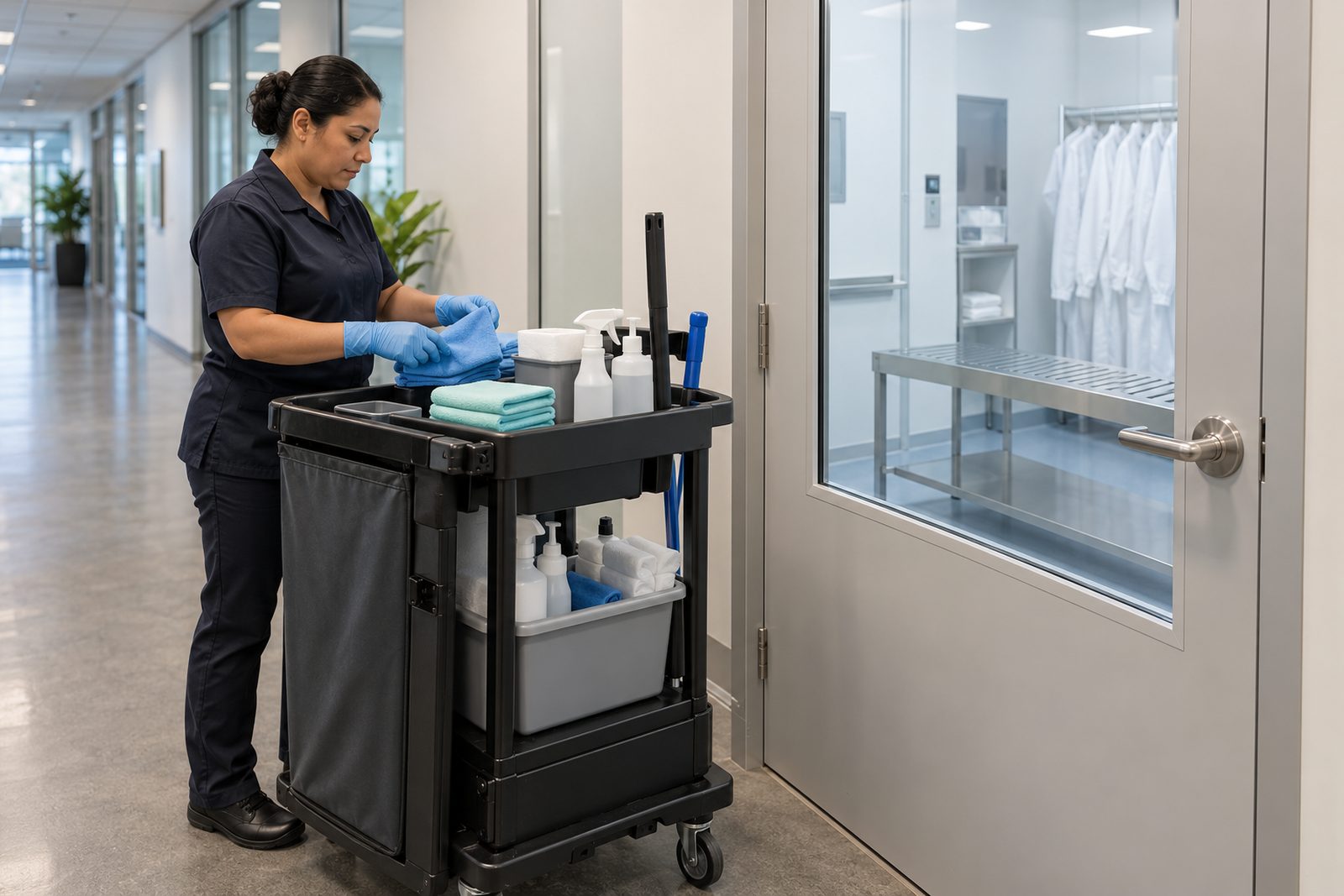
Define the separate responsibilities of scheduled cleaning crews and day porters. Match training, access and staffing to each assigned task.
Scheduled crews can use approved lower-traffic windows for cleaning, disinfection and other assigned tasks. Record work under the applicable procedure and report areas that could not be completed.
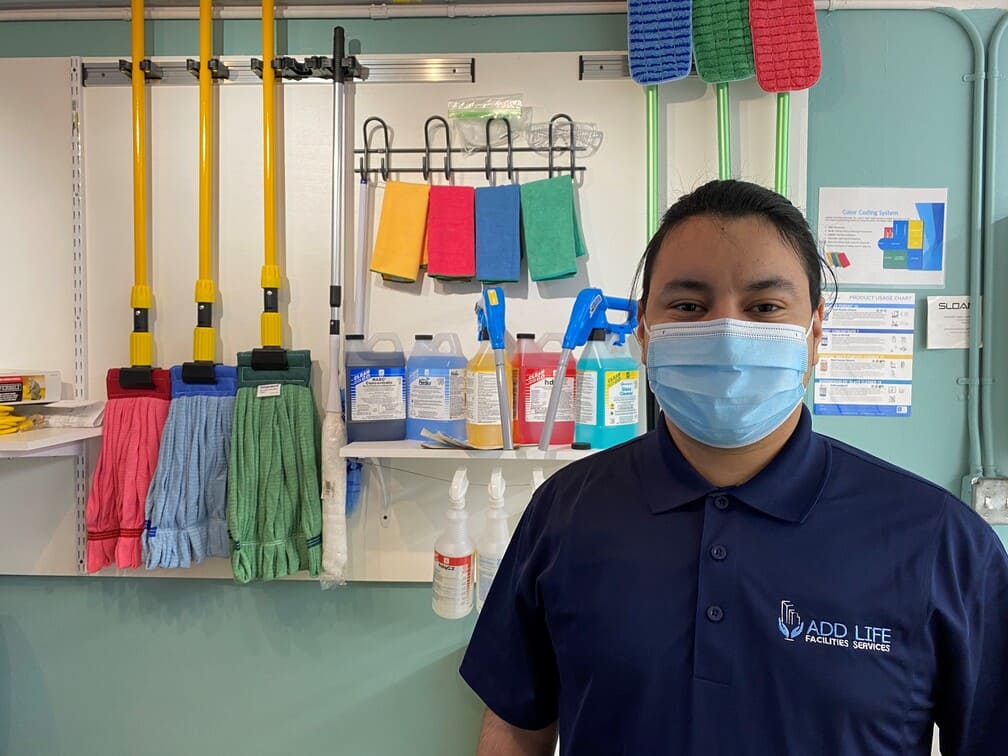
Day porter coverage is responsive and visible — keeping common areas, restrooms, and lobby spaces presentable through a busy operational day, addressing spills promptly, and supporting building occupants without disrupting active work. Day porters in a biotech facility also need to understand what they cannot touch: active BSL-2 work areas, instrument setups, open cell culture vessels. That boundary awareness requires specific training, not just a general facilities orientation.
Provide supervision and escalation contacts for each shift. Check that schedule changes and staff absences can be assessed without assigning work to unqualified personnel.
Coordinating with environmental monitoring
Interpret monitoring results alongside operating conditions and cleaning records. EU GMP Annex 1 addresses environmental monitoring in sterile medicinal-product manufacture. Quality staff should investigate findings without presuming cleaning is the cause.
Coordinate sampling and cleaning through the monitoring plan, including adjacent areas where relevant. Record actual activity and timing. Disclose late entries rather than presenting reconstructed records as contemporaneous.
Cleaning and room-release planning
Assess dependencies between cleaning, quality review and room release. Agree who can authorize schedule changes and what evidence is needed before an area returns to use.
Define completion, record review and handover requirements in the facility maintenance scope. Review missed windows and unresolved issues through the agreed escalation process.