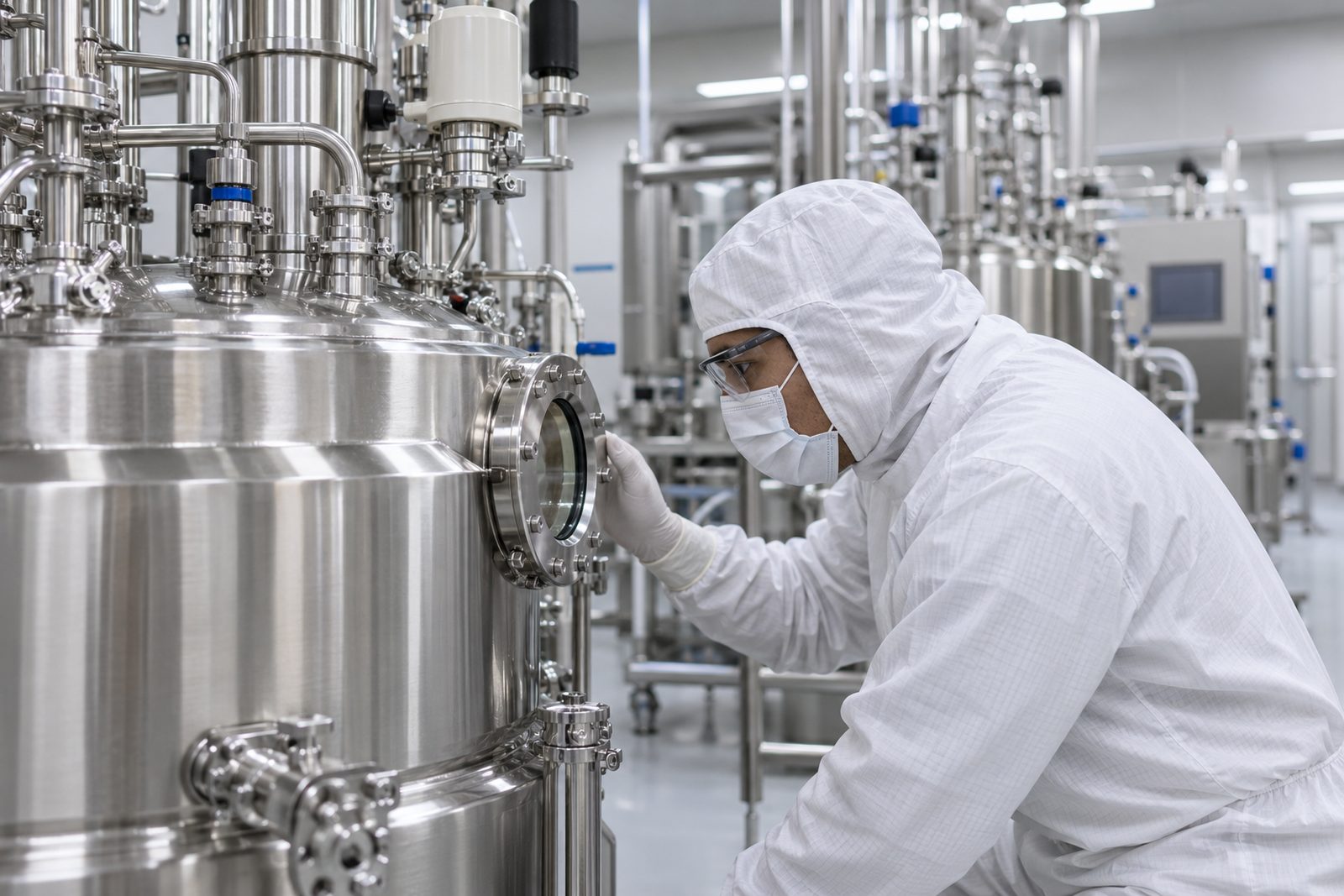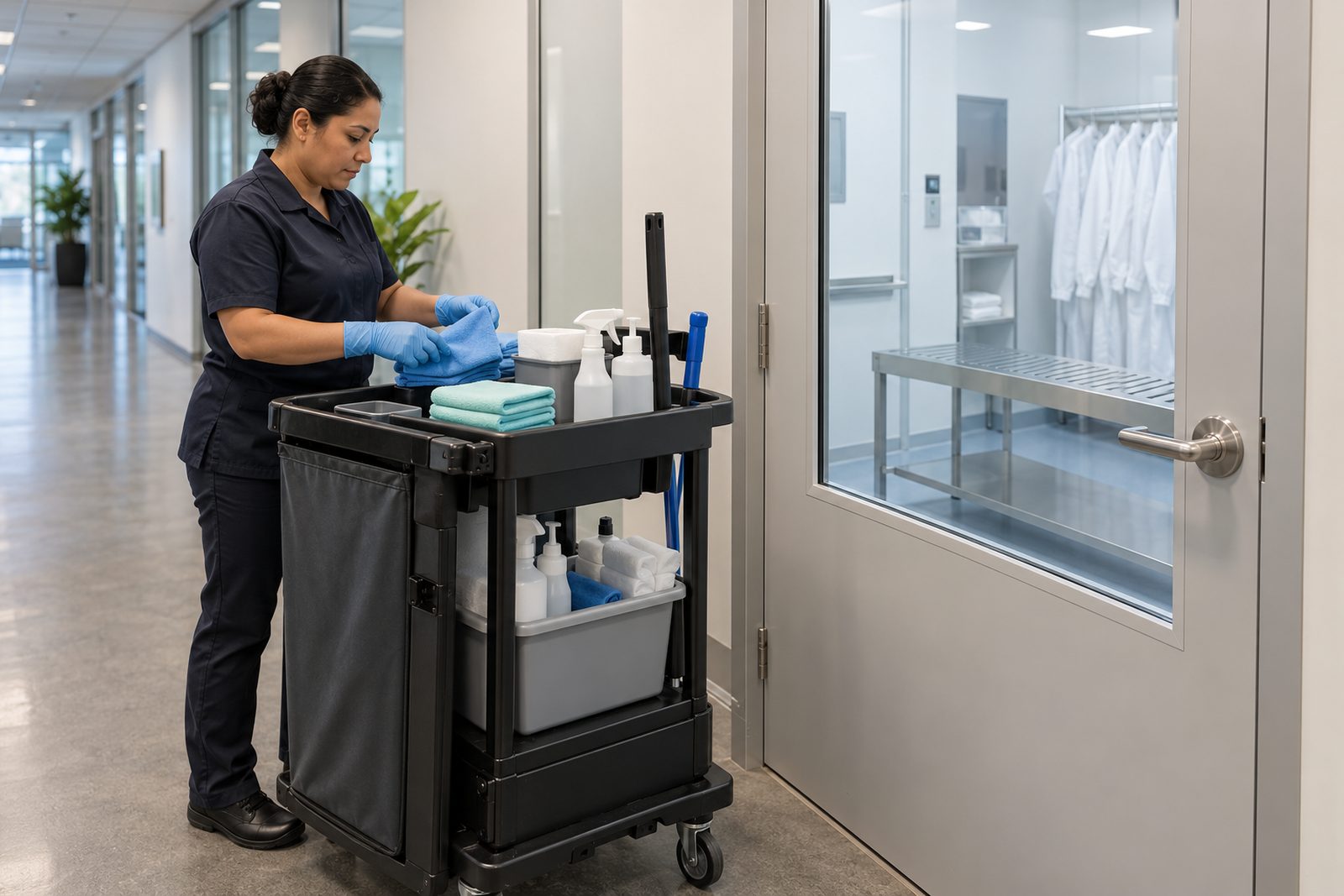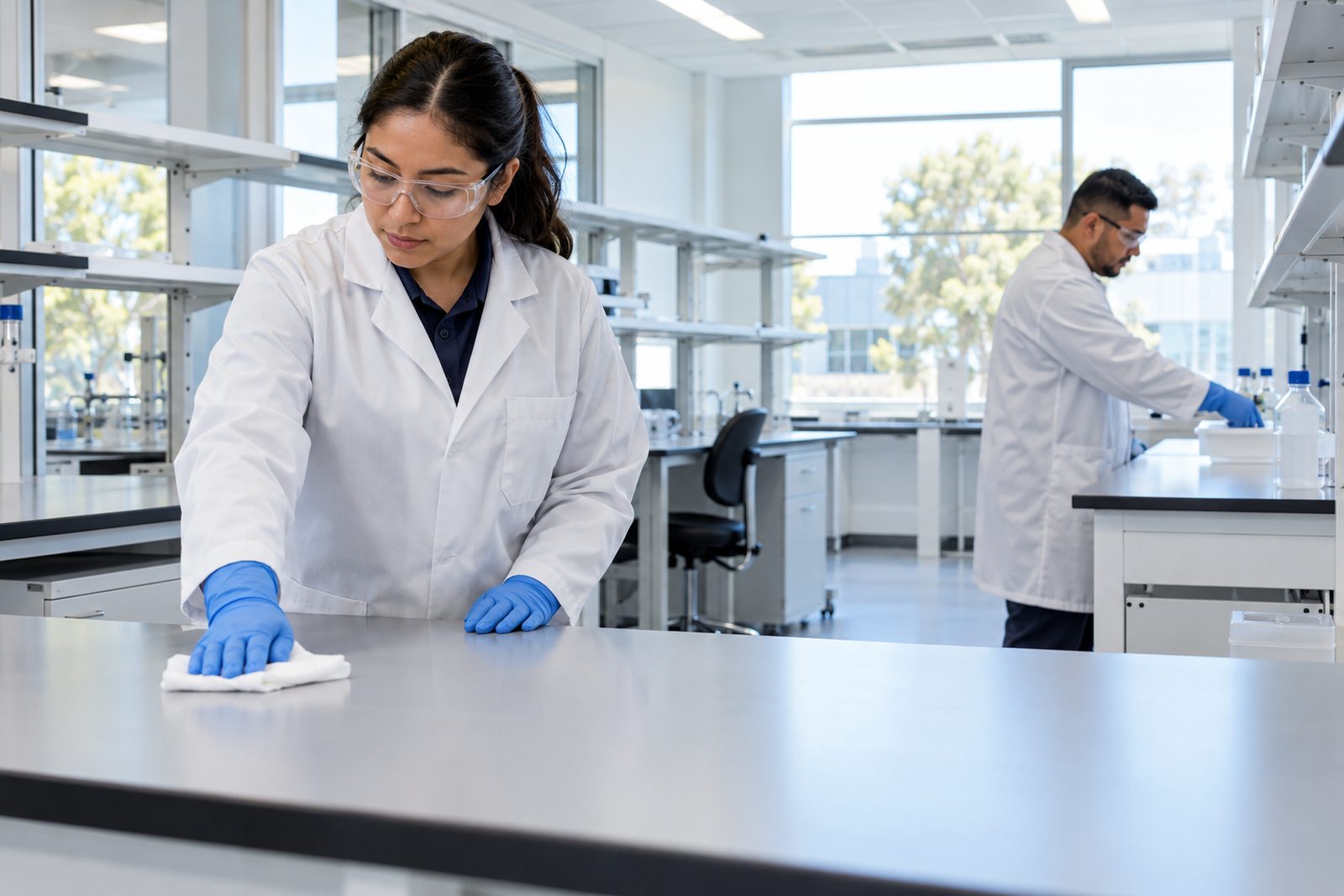
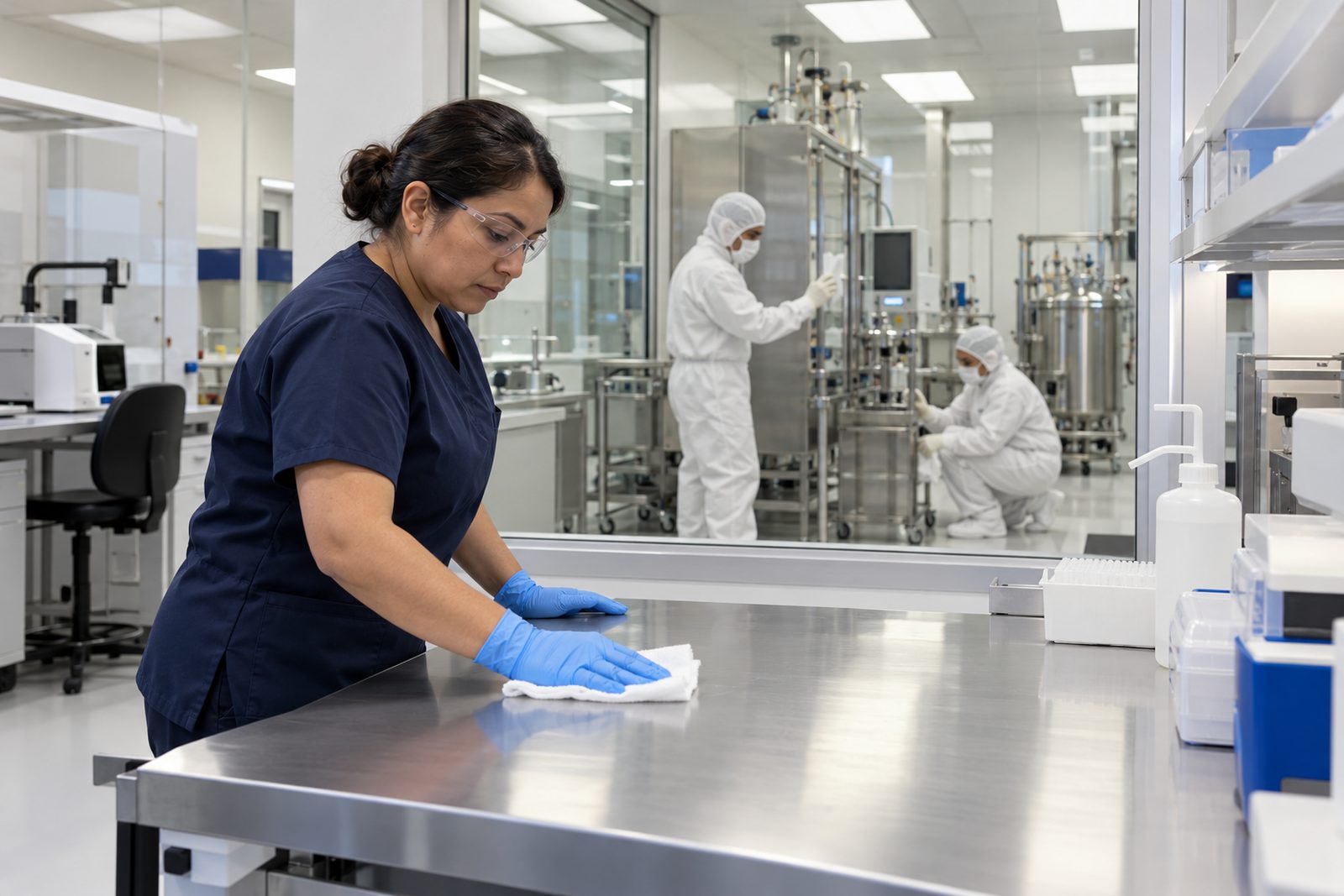
The move from an R&D lab to a GMP manufacturing facility is not a facilities upgrade. It is a fundamental change in the rules under which every operational activity — including cleaning — is designed, performed, documented, and reviewed.
The R&D-to-GMP gap is wider than it looks
Suppose a research team plans to begin GMP manufacturing. Assess cleaning requirements against the intended product and process before deciding which research procedures can be retained. Research laboratories may also have formal safety and quality requirements.
In drug manufacturing, 21 CFR 211.67 requires written equipment-cleaning procedures and records. Define qualification, validation, materials and documentation through the applicable requirements and quality system.
What changes about cleaning at the transition
Review these areas when planning the transition:
- Procedure formalization: Informal lab cleaning practices must be converted to written SOPs with defined steps, materials, dilutions, contact times, and verification requirements.
- Validation: Define the required evidence, acceptance criteria and sampling methods with the quality team. Select tests for the contaminants and equipment involved.
- Material qualification: Every cleaning agent, wipe, mop, and material used in the GMP space must be qualified for that use — including evaluation of compatibility with the surfaces being cleaned and confirmation that the agent itself does not introduce contaminants.
- Record generation: Define the required information and review responsibilities in the approved record procedure. Record actual work and departures without backdating.
Validated procedures and the documentation build
Include cleaning validation in project planning where required. Define acceptance criteria, sampling, analytical methods and approvals before execution. Allow for investigation of unexpected results.
The documentation build that accompanies validation is substantial: validation protocol, execution records, analytical data, exception reports for any cycles that required investigation, and the final validation report that summarizes all of it. That report then becomes part of the controlled document system that must be maintained, referenced in production SOPs, and updated whenever the cleaning process changes materially.
Gowning, segregation, and environmental monitoring
Review gowning and segregation for the intended manufacturing process. Existing research controls may need revision, but their adequacy should be assessed rather than assumed.
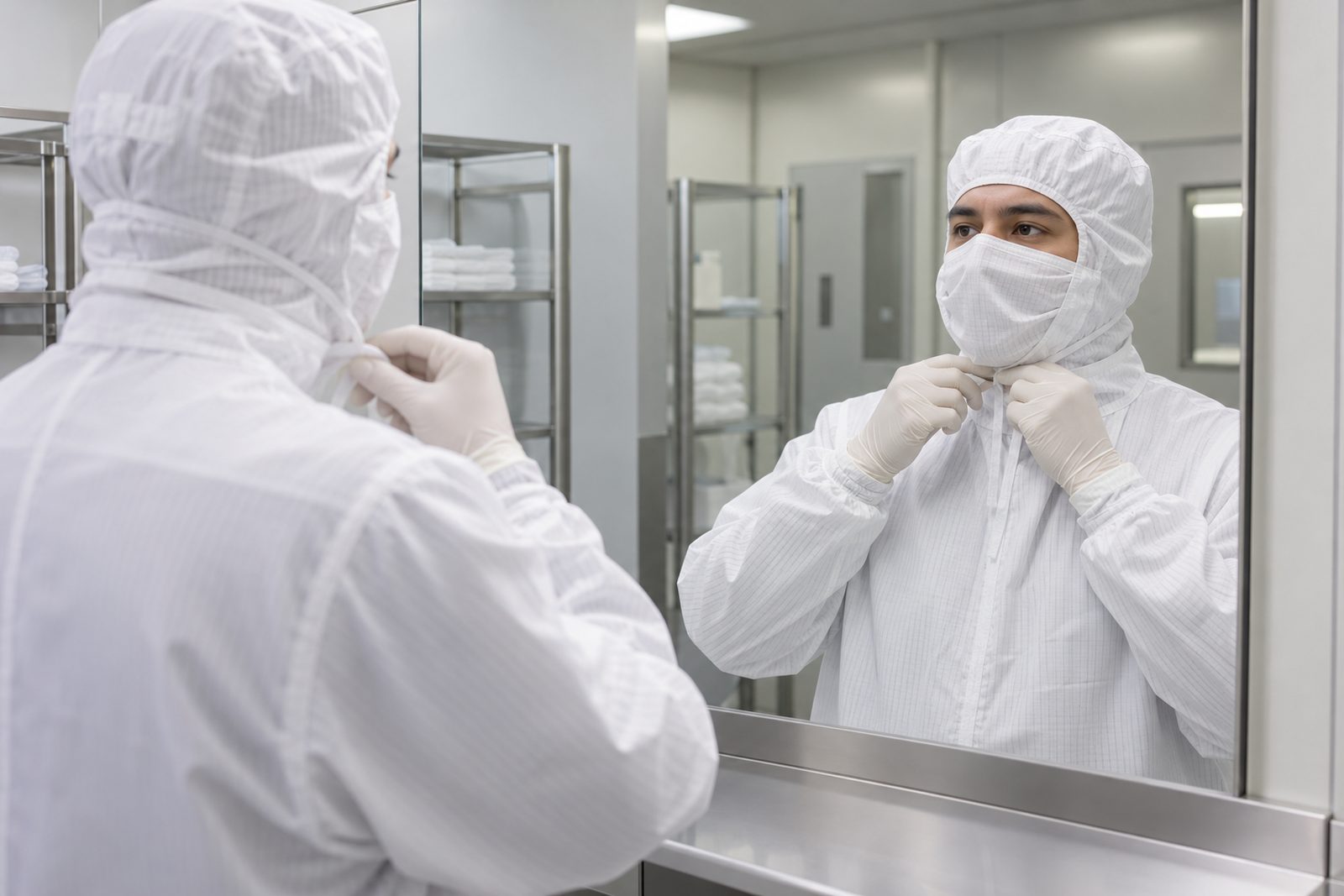
Define gowning and removal sequences from the process risks and applicable requirements. Garment removal is not automatically the reverse of donning. Train cleaning personnel on the approved site procedures.
Segregation — between product campaigns, between different products if multi-product manufacturing occurs, between open and closed processing areas — has direct implications for cleaning scope and sequence. Campaign cleaning (full room and equipment clean between product campaigns) is a distinct, higher-intensity activity from the routine inter-batch cleaning that occurs during a single campaign. Both must be defined in SOPs, and both must generate records that clearly identify which type of cleaning was performed.
Common pitfalls at scale-up
Include these potential gaps in the transition review:
- Bringing research-era cleaning habits into GMP spaces without converting them to formal SOPs first — and then trying to backfill the documentation after operations have started
- Underestimating the time required for cleaning validation, causing manufacturing start dates to slip when validation results require additional cycles
- Using the same cleaning personnel in GMP and non-GMP areas without implementing zone-specific materials, gowning, and log systems
- Omitting cleaning-partner qualification and record-access requirements from the quality plan
- Failing to include the cleaning team in change-control workflows, so that facility changes (new equipment, layout modifications, new products) outpace the cleaning procedure updates
Planning the transition
Involve operations, quality and cleaning personnel during planning. Agree on procedures, qualification responsibilities and training before the relevant work begins. Base the service scope on the actual process and facility.
Discuss scope through our GMP cleaning services. See our biotech industry page for the sector overview, or request a proposal for your facility.