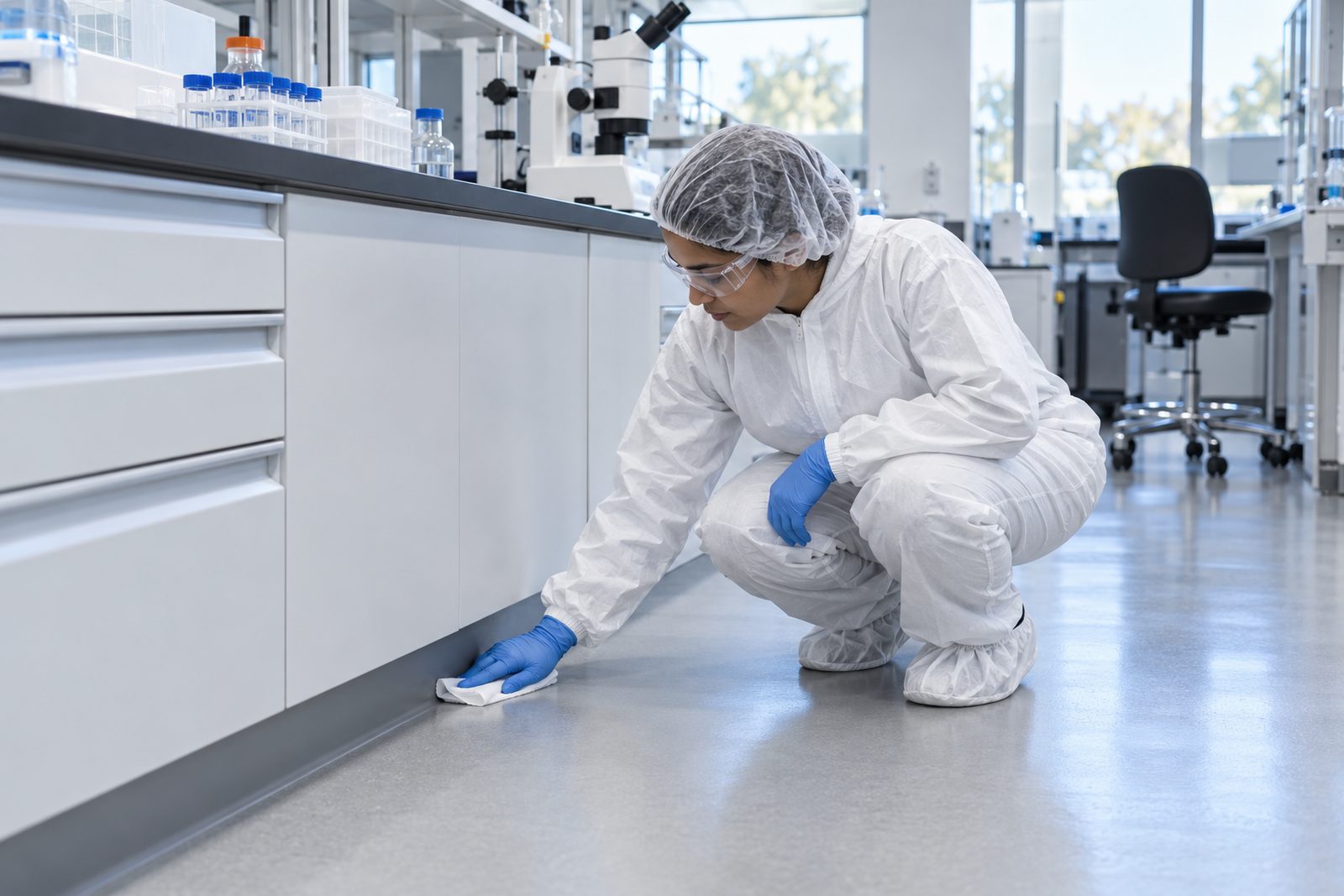
Active laboratory work needs clear boundaries for cleaning. Identify which surfaces may be cleaned, which need researcher clearance and which are outside the cleaning scope.
One wrong wipe
Suppose a technician encounters open samples, operating instruments or equipment cables near the cleaning area. Stop and ask the authorized laboratory contact to confirm the boundary. Do not move or clean active setups without permission.
The process owner should assess any suspected disturbance to active work. Record the observation and notify the designated contact rather than assuming that the material or experiment is unaffected.
Defining the boundary
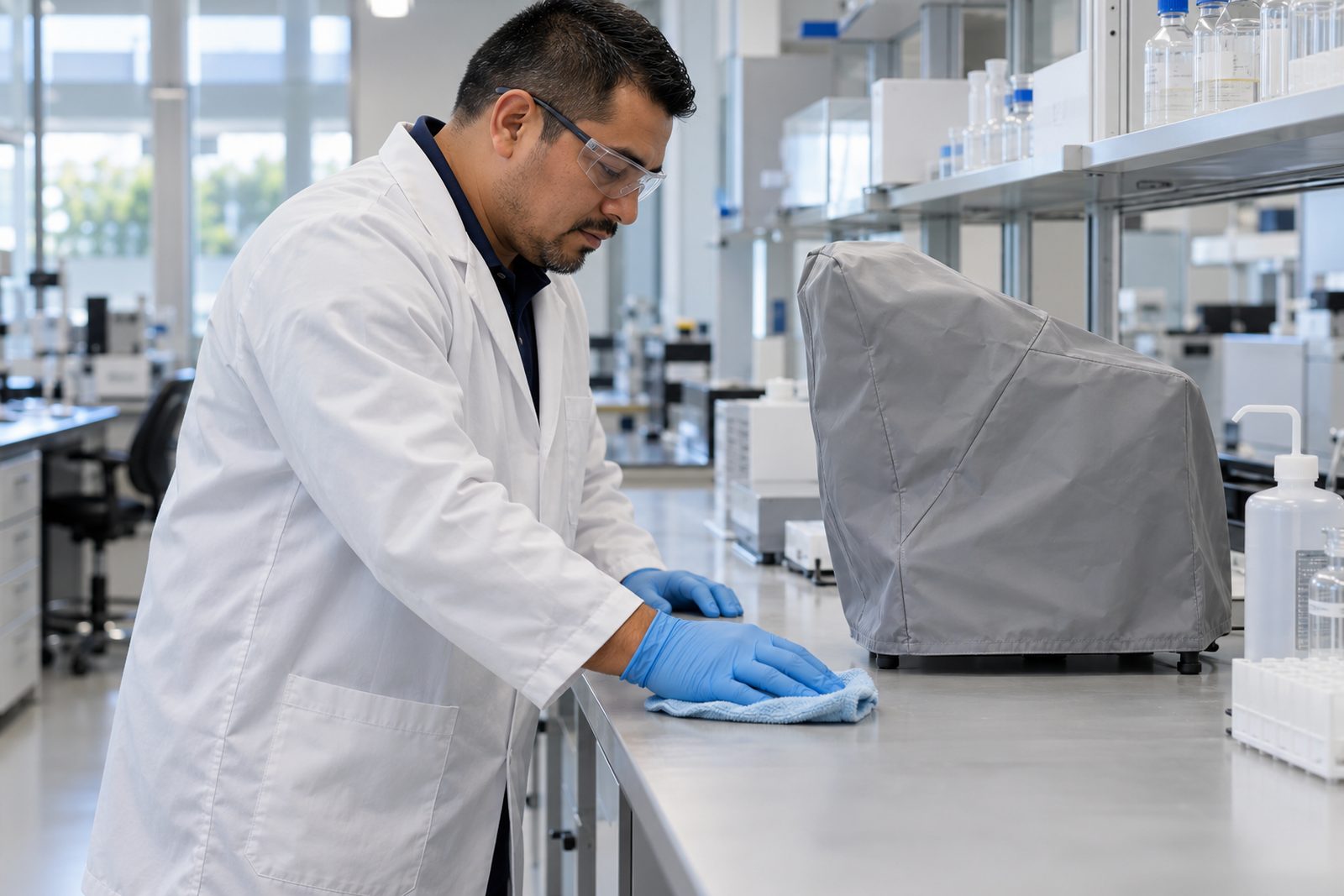
The bench line is the first boundary. Everything on the bench surface — instruments, open vessels, running equipment, labeled samples — is off-limits unless a researcher has explicitly cleared it and marked it as cleanable. That designation needs to be visible: a simple colored tape line at the front edge of the bench, a laminated "active — do not clean" placard, or a standardized signage system the whole lab uses consistently.
Other standing boundaries in an active research lab include:
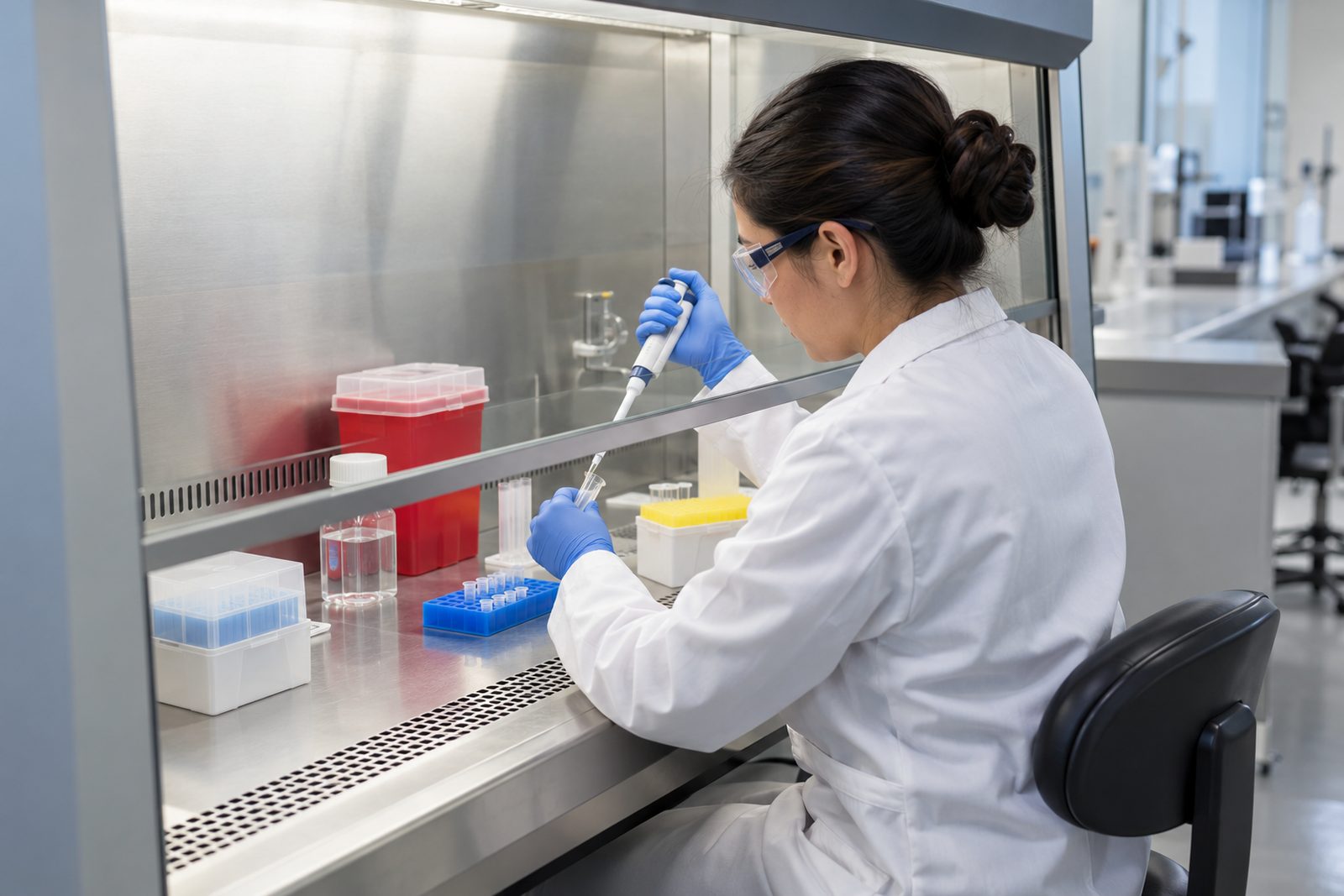
- Biosafety cabinet interiors — work assigned only to personnel trained and authorized under the approved cabinet procedure
- Active instrument setups — PCR machines mid-run, HPLC systems during a sequence, plate readers with loaded samples
- Open culture vessels and uncapped tubes — any uncapped container is a contamination risk; cleaning staff should not work in proximity until it is capped or removed
- Cryogenic storage areas — liquid nitrogen dewars and sample boxes in active use
- Labeled sample staging areas — bench sections designated by researchers as active sample zones
These boundaries have to be documented — not just communicated verbally. A written SOP that cleaning technicians are trained on, and that researchers know exists, creates a shared operating framework rather than an informal understanding that erodes over time.
Communication is the protocol
Use a pre-shift check with the laboratory contact to identify ongoing work, restricted surfaces and unusual hazards. Record changes to the approved scope and any deferred cleaning.
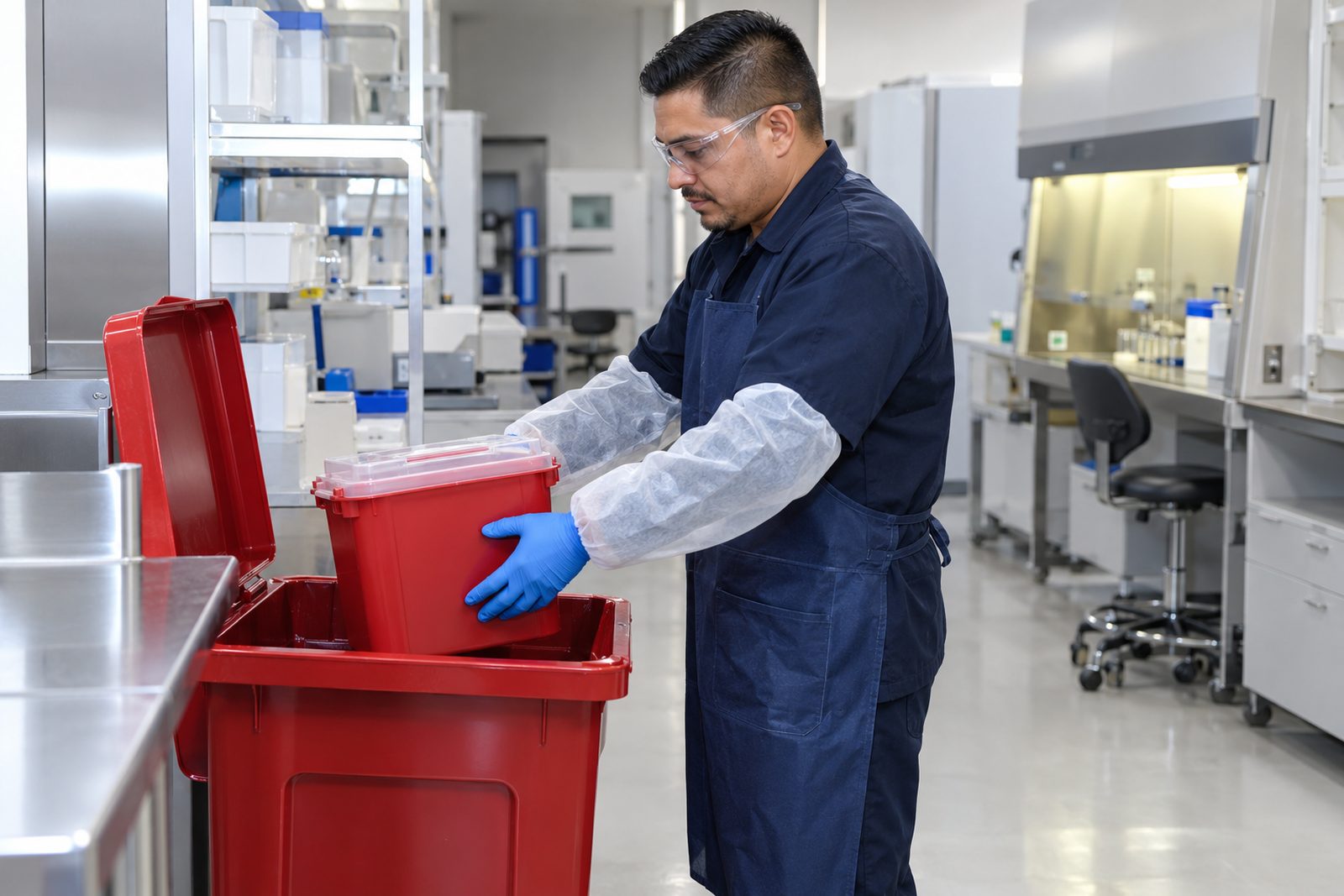
Define a visible signal for areas that are not ready for cleaning. Record the deferred area, reason and responsible contact in the approved log rather than leaving an unexplained gap.
Instrument-safe methods and chemical selection
Select products for the surface and equipment instructions. Disinfectants can affect metals, plastics, optics and electronics depending on formulation and exposure. The safety and quality teams should assess efficacy and compatibility before use.
The laboratory cleaning program needs to map chemical selection to surface type, not apply a single product universally. That mapping is developed in coordination with the research team and documented in the cleaning SOP — so the technician entering the space knows which product to use where, without having to make a judgment call in the moment. Instrument manufacturers typically publish approved cleaning agents for their equipment; those specifications should be incorporated into the SOP during program setup, not discovered during a warranty claim.
Building a lab culture that works
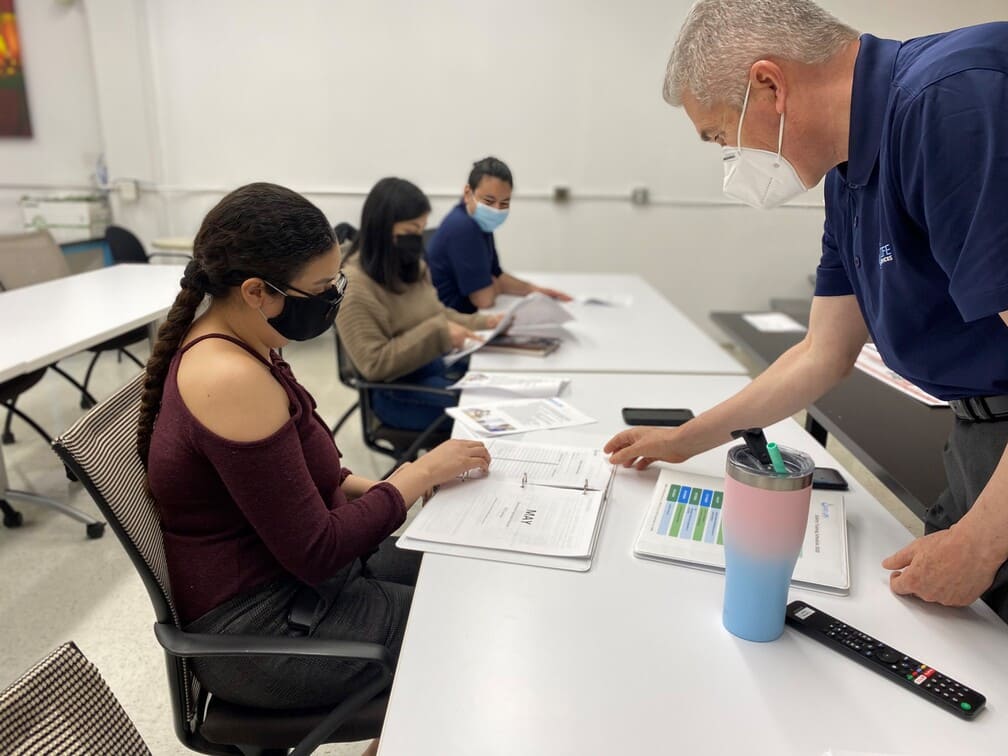
Introduce the cleaning team to laboratory contacts and explain responsibilities. Researchers should clear and mark approved surfaces before cleaning. Technicians should report spills or unexpected conditions through the agreed process.
Review whether staff understand the boundaries and whether deferred areas receive follow-up. Use observations and records to assess the program rather than promising uninterrupted experiments or improved monitoring results.