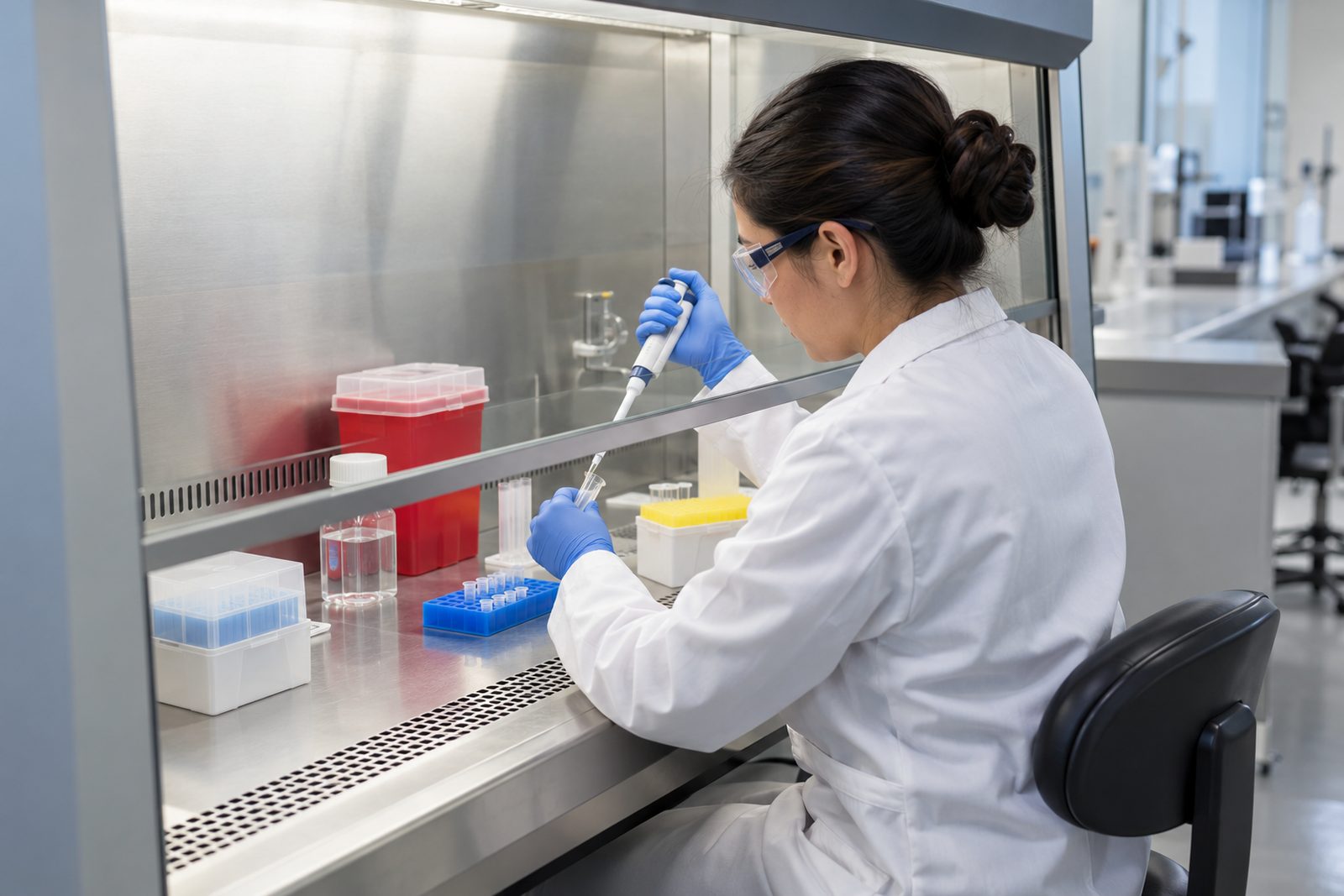

Life-science facilities may have sharps, biological, chemical, and pharmaceutical waste. The site EHS team should define each waste stream, its containers, and the authorized handling process.
Waste streams to identify
Use the site waste plan to identify which of these categories apply. Classification and handling depend on the material and the applicable requirements:
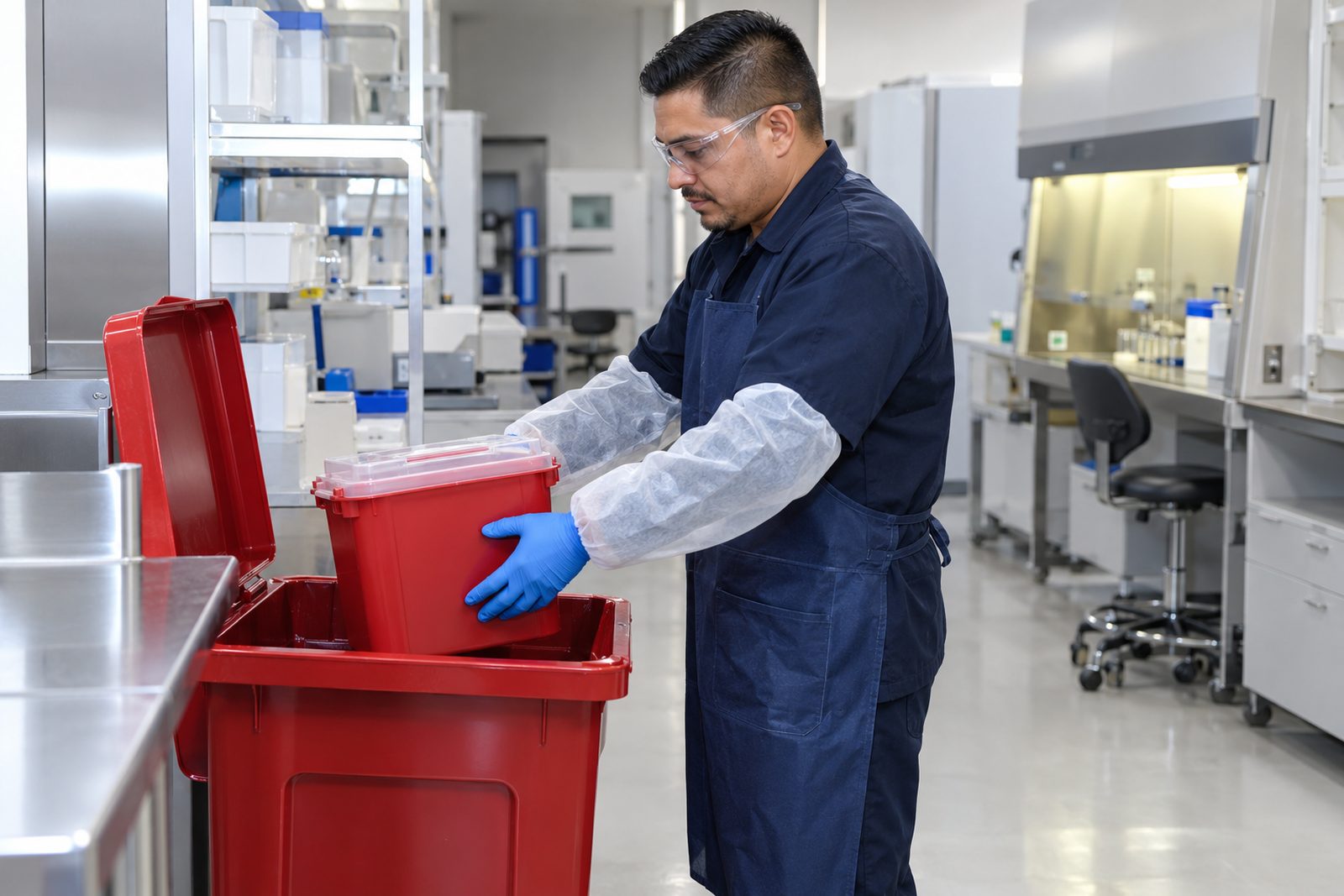
- Sharps. Needles, blades, and contaminated broken glass need designated containers. Follow the site instructions for container placement, fill limits, closure, and pickup.
- Biohazardous waste. Research materials may require a biological waste route. EHS should specify the containers, labels, treatment, and collection process for the materials generated.
- Chemical waste. Ask EHS to classify solvents, reagents, and contaminated materials. Follow its instructions for compatible containers, labels, storage, and collection.
- Pharmaceutical and hazardous drug waste. Keep drug waste within the disposal process approved for the specific material. Do not assume that a chemical or biological waste container is suitable.
Why mixing streams creates problems
Keep waste streams separate according to the site waste plan. Ask EHS and the authorized disposal vendor to assess any mixed or incorrectly placed material.
Suppose a worker finds a liquid in a container designated for sharps. The written procedure should identify who to notify and how to restrict access. Routine cleaning staff should not open or sort the container.
Segregation, labeling, and staging
Effective segregation depends on three things being right simultaneously: the right containers in the right locations, staff trained to use them correctly, and a staging area that keeps different streams physically separated until pickup.
Check container placement, label condition, and staging arrangements during site reviews. Suppose a label becomes unreadable or a container appears in the wrong location. The crew should use the EHS reporting process before moving it.
Facility team and disposal vendor roles
Define the cleaning team role in writing. Container transport belongs in the scope only when authorized by the site and supported by appropriate training. Opening, sorting, relabeling, or repacking waste requires separate authorization and qualifications.
Define how the surrounding floors and surfaces may be cleaned. An unidentified spill near waste storage should be referred to EHS under the site response plan. Routine cleaning should resume only when the area is released for that work.
For context on how we structure cleaning and support in laboratory environments where regulated waste is present, see our laboratory facility services and disinfection services pages.
What to check
Confirm who classifies waste, who may move containers, and who responds to damage or spills. The cleaning scope should follow those assignments and the written EHS procedures.