
Cleaning around analytical instruments requires care with products, tools, and timing. Agree on the work boundaries with lab staff before cleaning starts.
Why instruments are unforgiving
Mass spectrometers, electron microscopes, and analytical balances have different cleaning restrictions. Review the instructions for the installed equipment. Keep routine area cleaning outside components that require specialist service.
In regulated labs, follow the site quality procedures for cleaning near equipment. Report suspected contamination or accidental contact to the instrument owner before continuing.
Static, residues, and vapor drift
Review these hazards with the instrument owner before selecting tools or products:
- Electrostatic discharge (ESD). Confirm whether the area requires ESD-rated tools and follow the site controls for static-sensitive equipment.
- Cleaning residues. Confirm which products are compatible with nearby equipment. Keep sprays away from exposed components and use the approved application method.
- Solvent vapors. Ask the instrument owner about solvent restrictions and ventilation before using cleaning products nearby.
Include product approval, application method, and instrument access boundaries in the work instructions. Stop and ask the lab contact when a restriction is unclear.
Methods for working near equipment
Start with the equipment manufacturer instructions and the approved site SOP. Have lab staff confirm which of these practices belong in the cleaning plan:
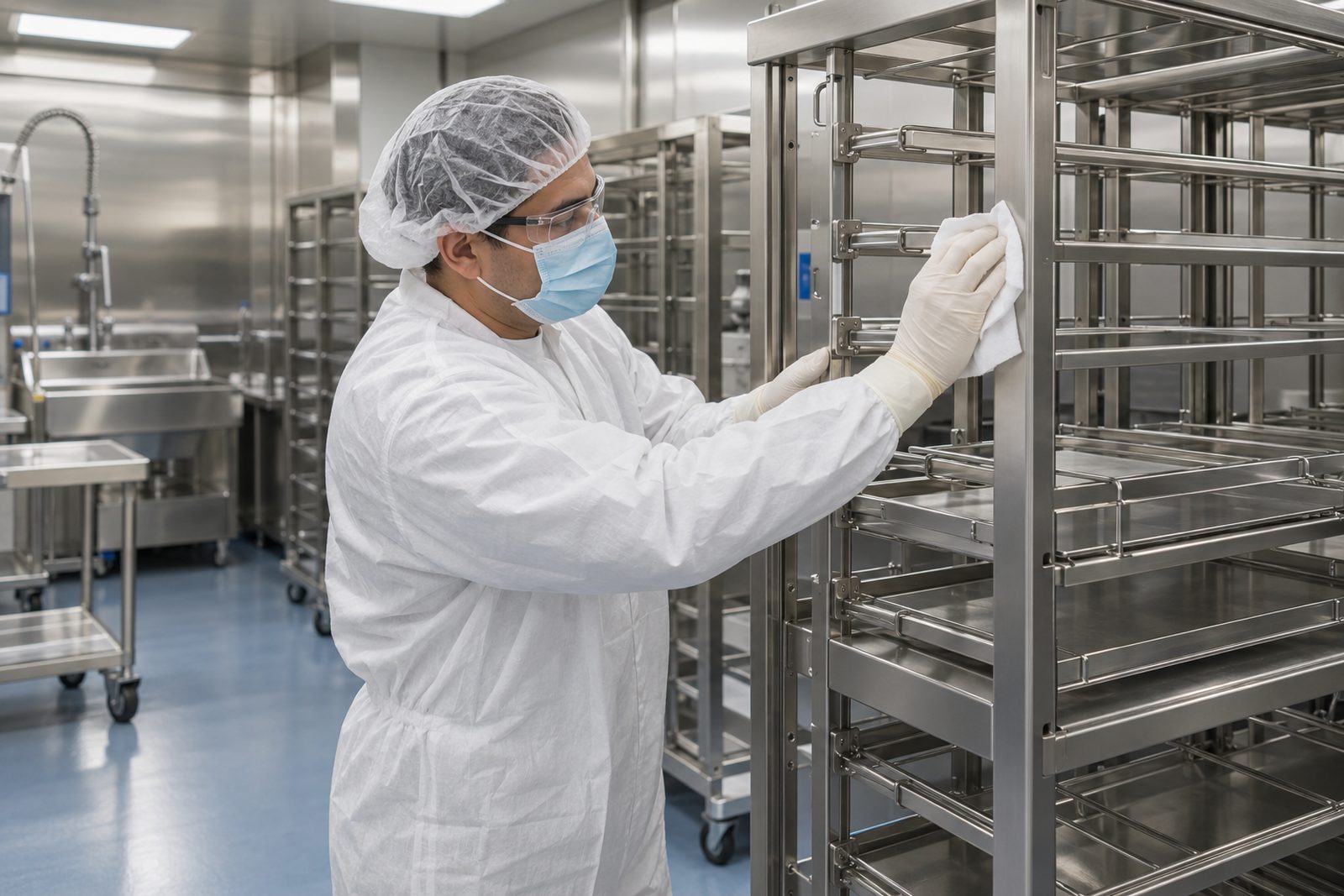
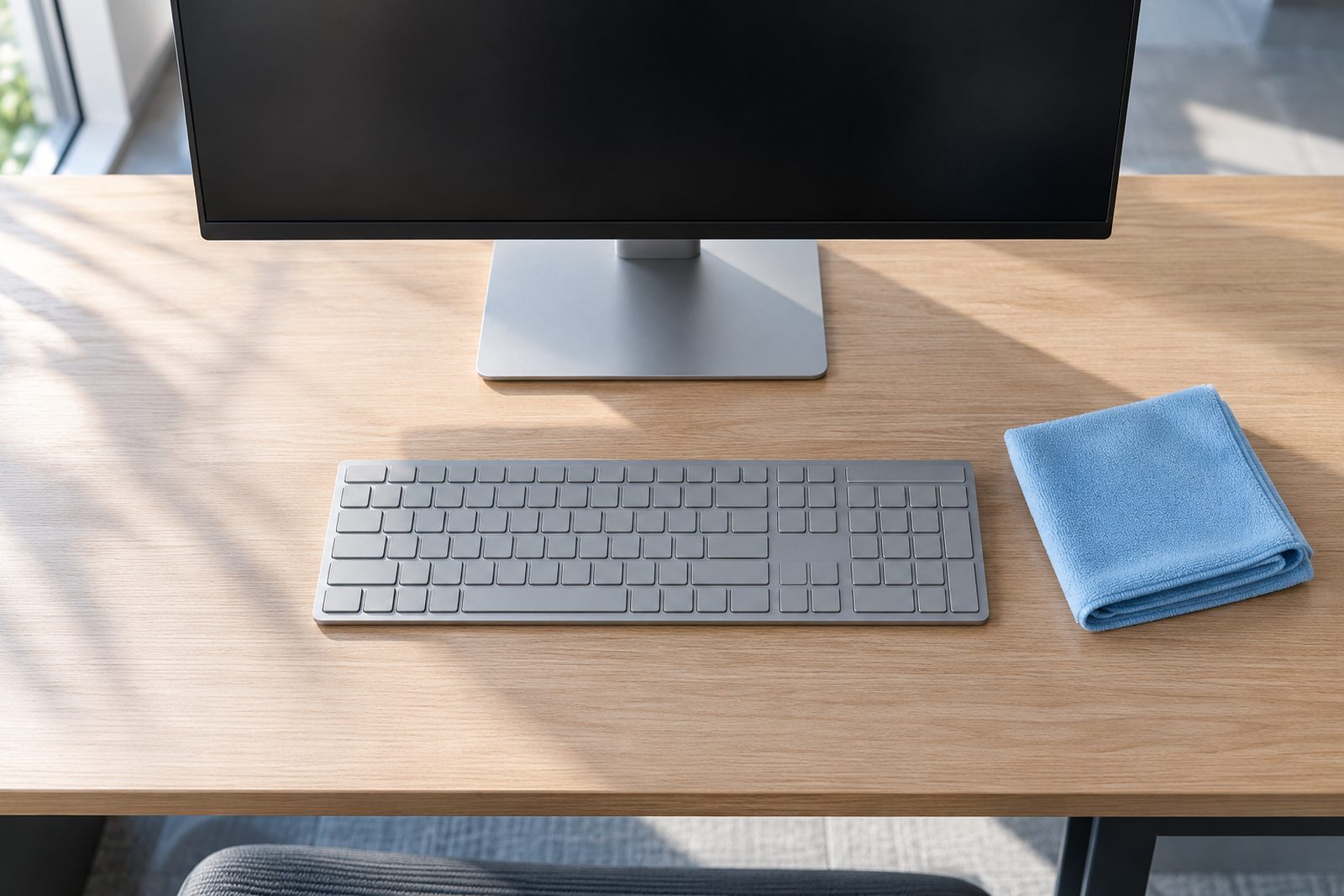
- Use approved low-lint wipes with controlled moisture near sensitive instruments. Follow both equipment and cleaning-product instructions.
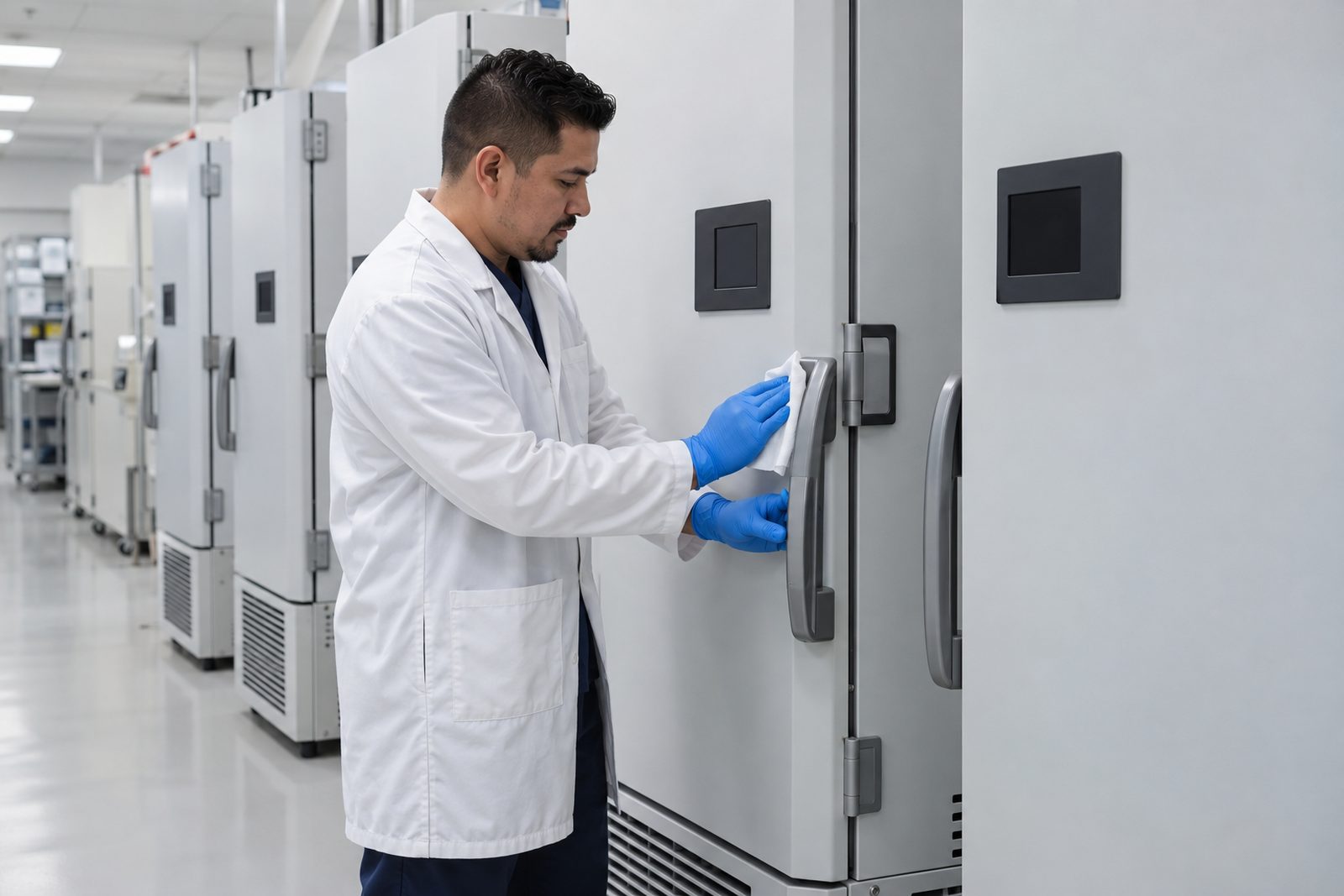
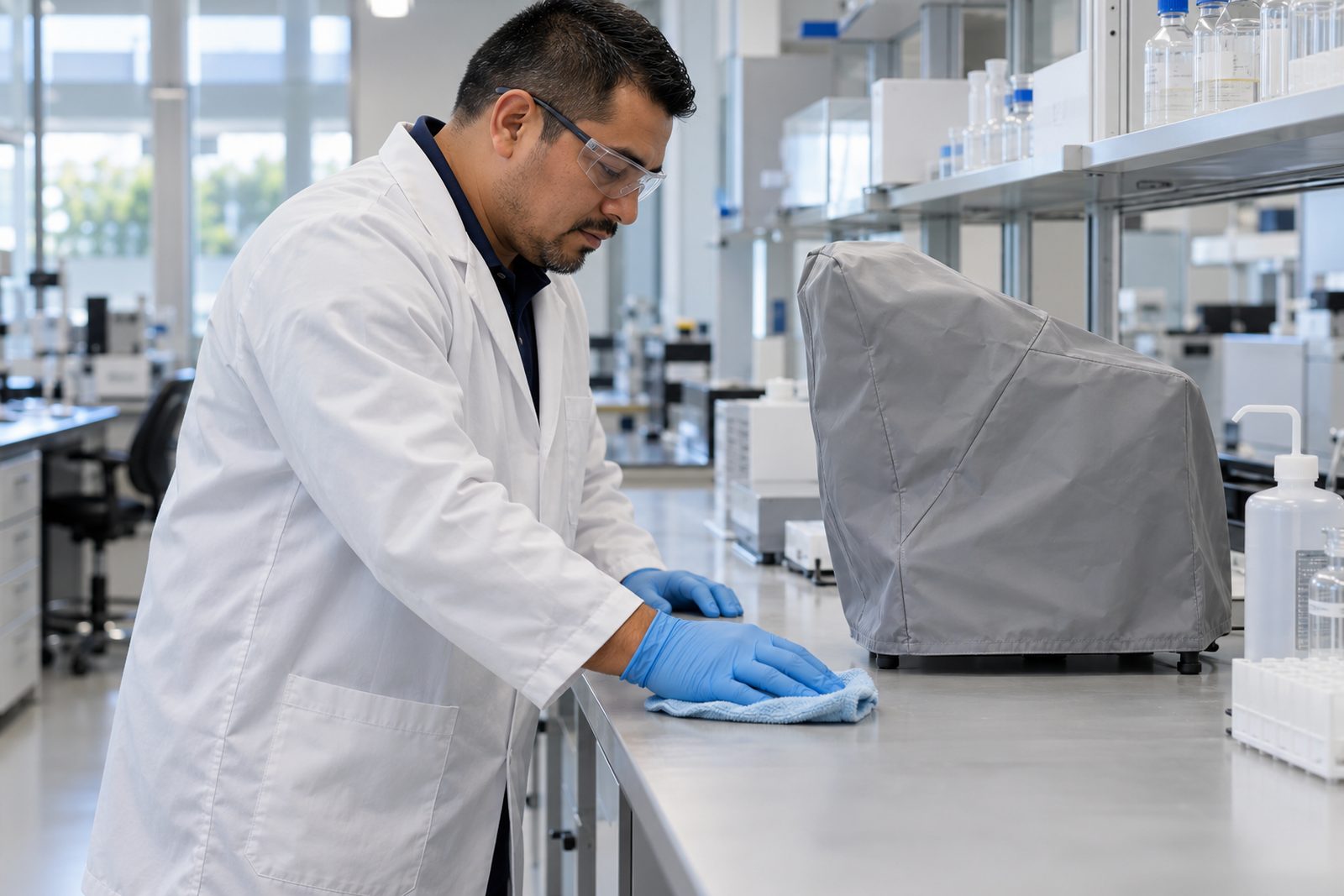
- Applying disinfectants to the cloth or wipe rather than spraying directly onto bench surfaces within a defined exclusion zone around the instrument.
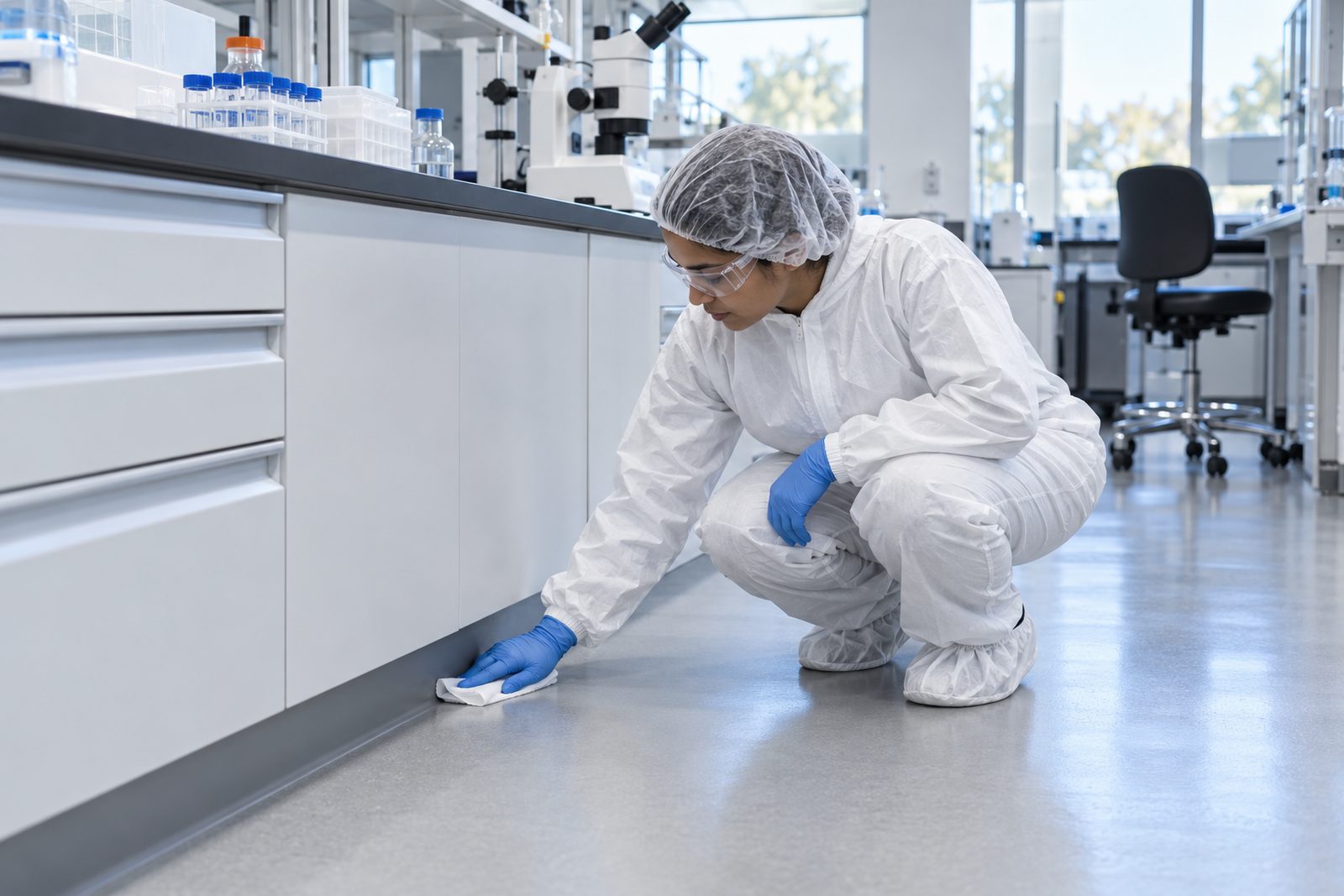
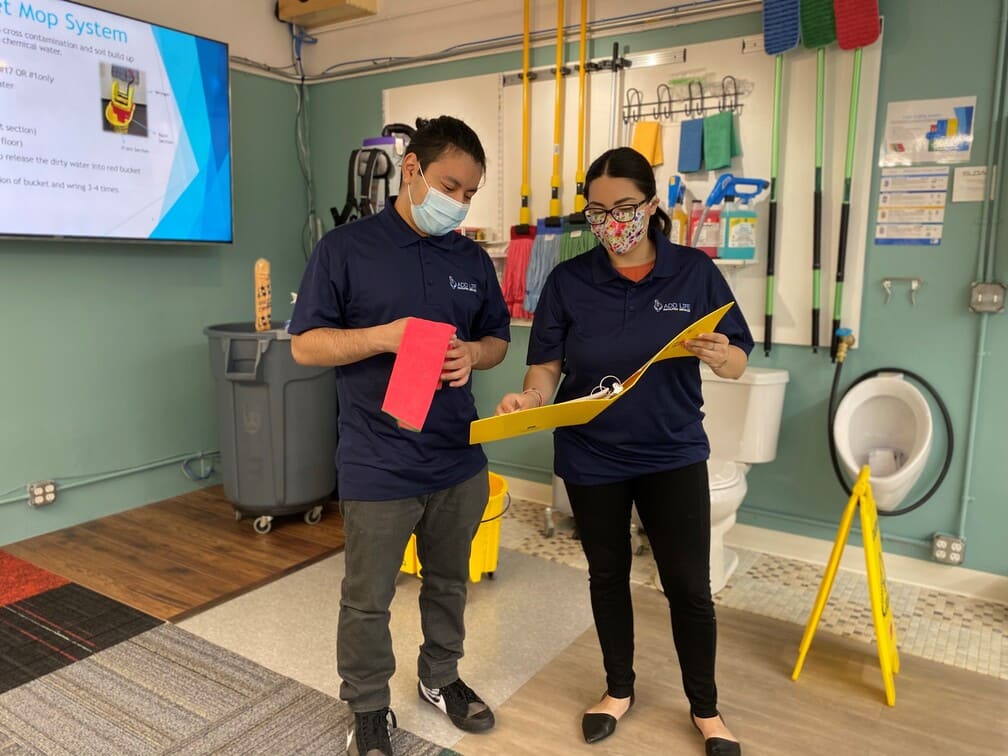
- Using ESD-safe or anti-static mop systems on floors in areas where balances, oscilloscopes, or precision electronics are in use.
- Cleaning instrument-adjacent areas only when instruments are confirmed idle, powered down, or in a non-acquisition state — coordinated with lab staff, not assumed.
- Use the site-approved particulate removal method. Do not sweep, dust, or vacuum near instruments without confirming that the method and equipment are suitable.
Coordinating with lab staff
Confirm the cleaning window before entering an instrument area. Calibration, sample loading, and active acquisitions may require a schedule change.
Agree on cleaning windows with lab managers, including overnight or weekend work. Define who can authorize a schedule change and how the crew should respond when an instrument is active.
Ask lab staff to report new instruments, room changes, and unusual residues before the next cleaning. Update the work instructions when those changes affect the scope.
For more on how we structure cleaning in regulated analytical environments, see our medical and laboratory services overview.
What to check
Confirm approved products, wipe materials, static controls, and timing before work starts. Keep specialist instrument cleaning outside the routine area scope unless separately authorized.