
Interpret monitoring results alongside the room state, production activity and cleaning record. Coordinate sampling and cleaning under an approved plan.
The three occupancy states
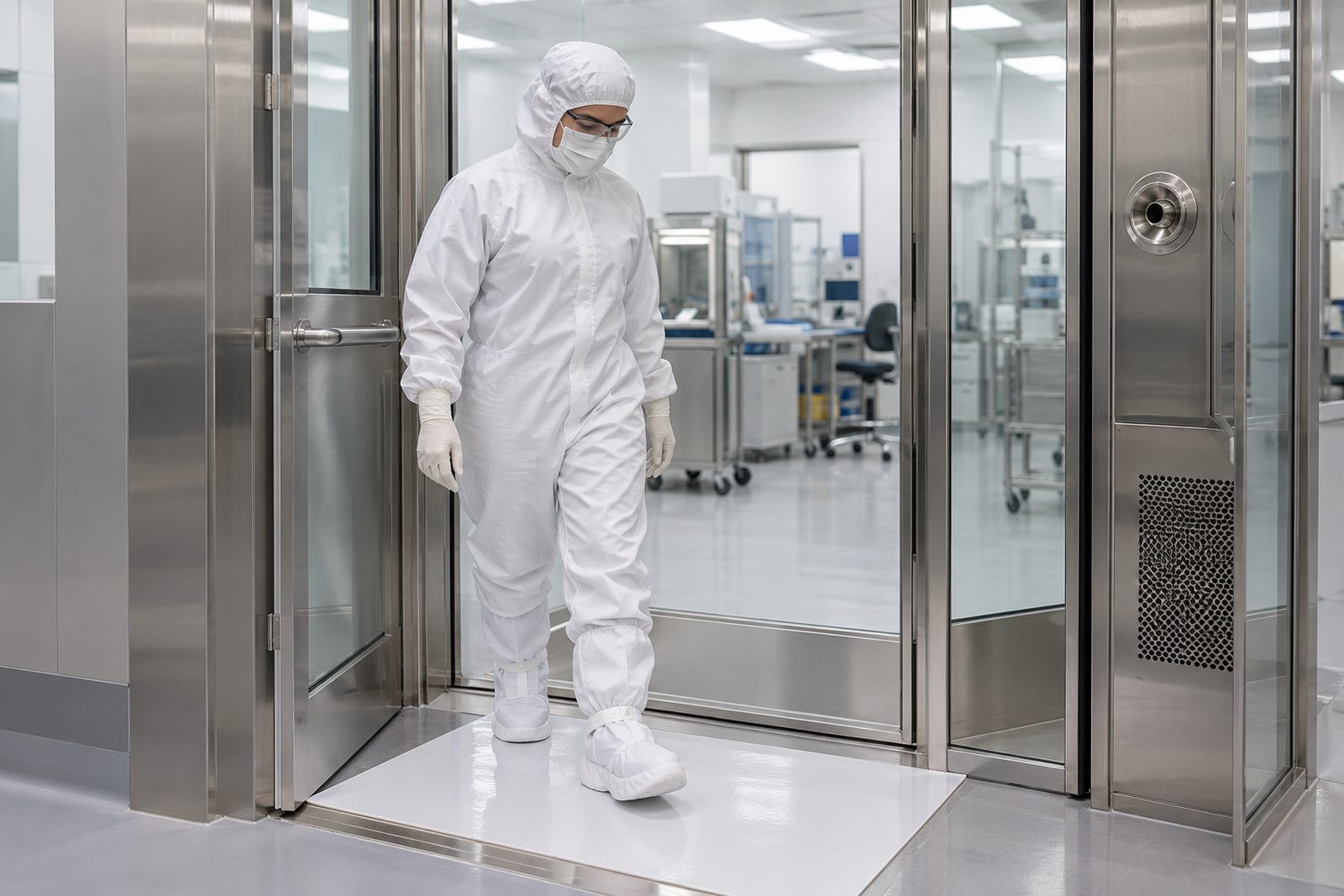
ISO 14644-1 describes three room states that classify the conditions under which a cleanroom is assessed. Each has distinct implications for both environmental monitoring and cleaning program design.
As-built means the completed installation without production equipment, materials or personnel. Define pre-service cleaning and assessment in the qualification plan.
At-rest means equipment is installed and operating as agreed, without personnel present. It is a particle-classification state, not a surface bioburden criterion.
Operational means the installation functions as specified with the agreed personnel present. Define the conditions represented by sampling.
What environmental monitoring measures
Environmental monitoring programs for classified manufacturing areas typically incorporate both viable and non-viable monitoring methods:
- Non-viable particle counts — measurements at sizes specified in the classification and monitoring plan. A particle count does not identify viable organisms.
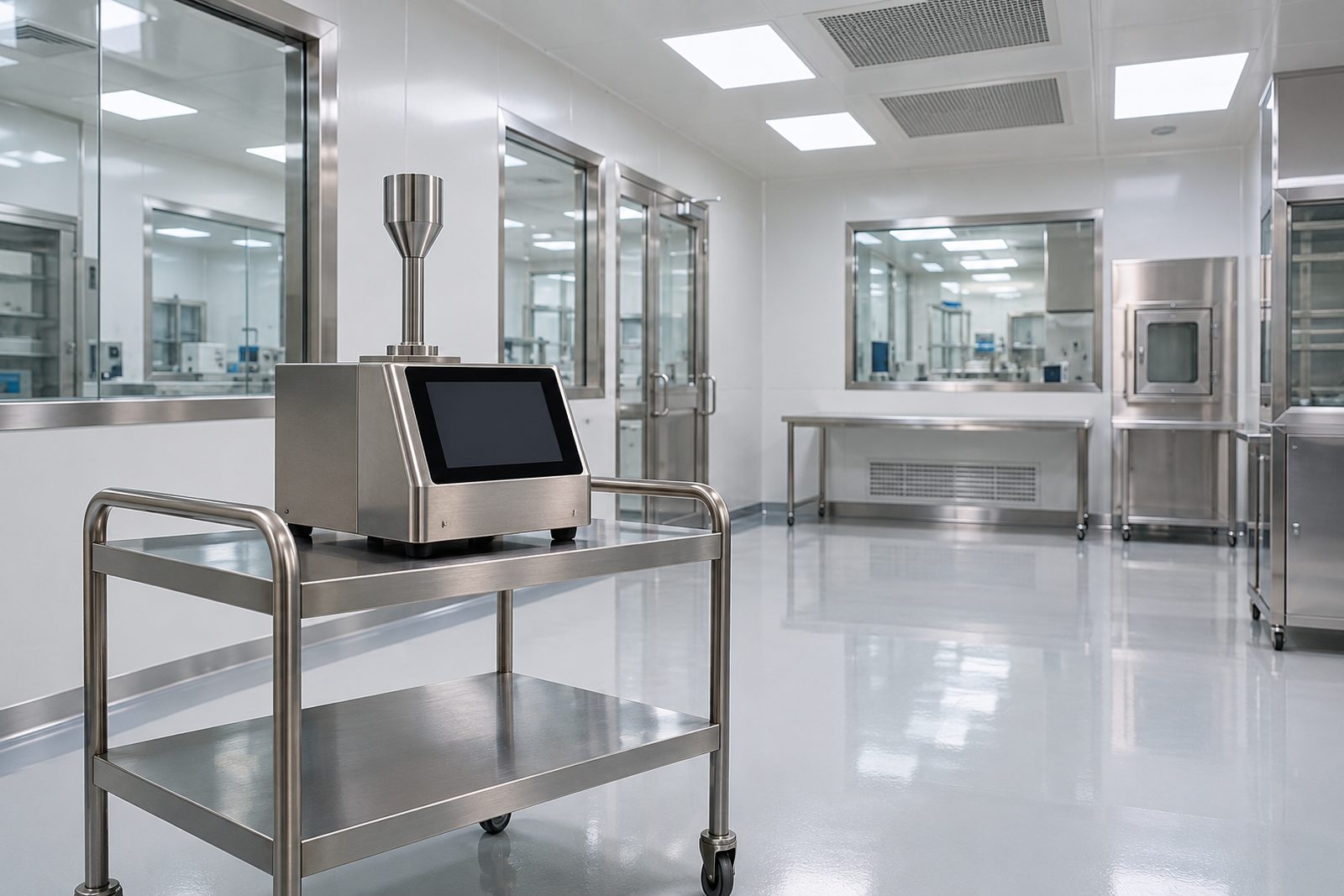
- Active viable air sampling — impaction or centrifugal samplers drawing a defined volume through an agar plate. Results are reported as CFU/m3 and compared to action and alert limits per EU GMP Annex 1 or your site-specific specification.
- Settle plates — passive collection of microorganisms settling onto media. Define locations and exposure times in the monitoring plan.
- Surface contact plates and swabs — assessment of recoverable microorganisms. Define the sampling area in cm2, method and acceptance criteria in the plan.
Surface sampling contributes evidence about contamination control. Review trends with personnel activity, methods, residues and cleaning records before assigning a cause.
Why cleaning timing relative to EM matters
Sampling timing affects what a result represents. Distinguish post-cleaning assessments from operational sampling. Do not change timing to obtain a favorable result.
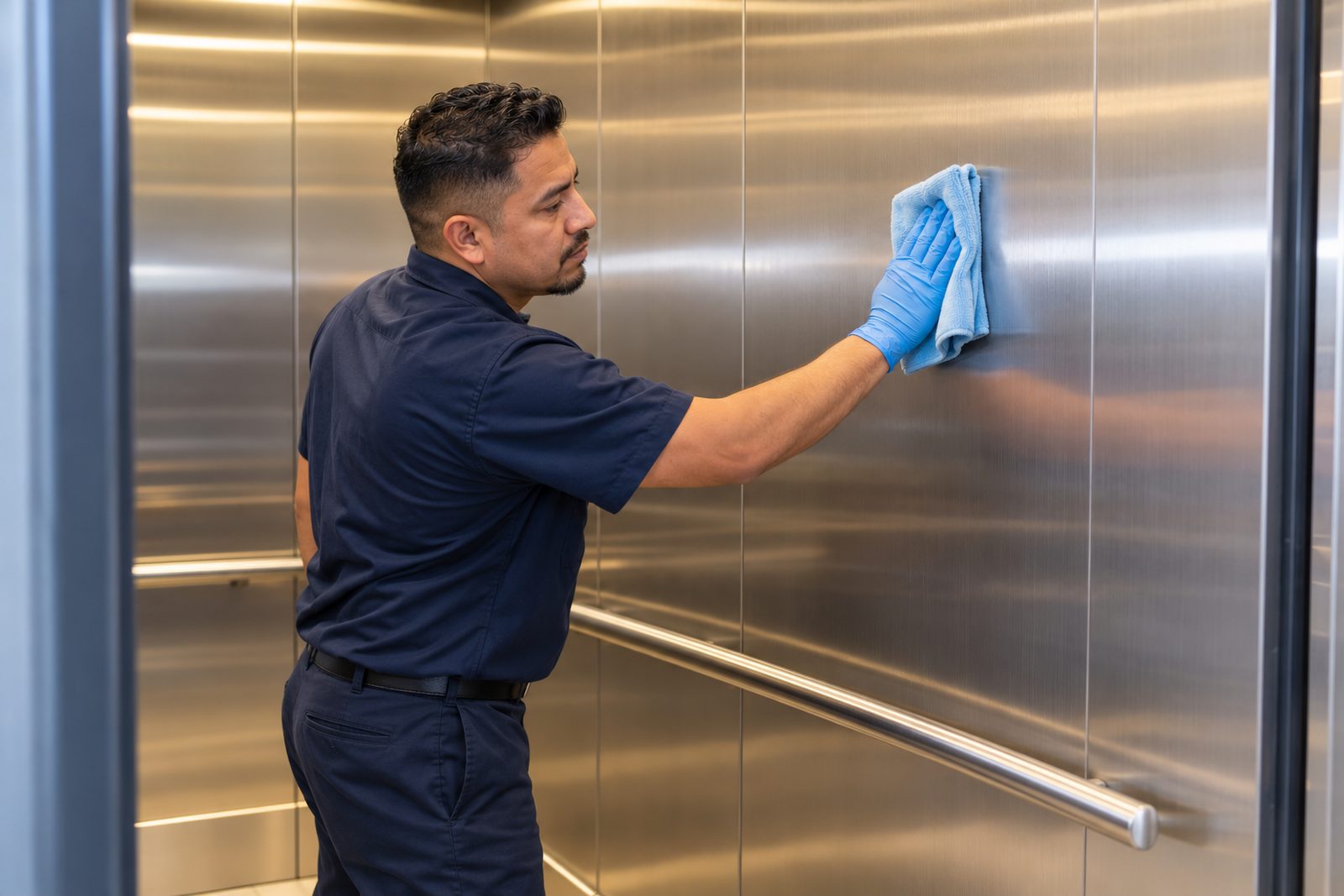
Where timing problems arise: a cleaning cycle that occurs during an EM sampling window disturbs settle plates and generates aerosols from mopping activity. A cleaning cycle delayed until after EM sampling allows bioburden to accumulate on surfaces longer than the specification assumes. The two programs must be explicitly coordinated, not independently scheduled.
Coordinating cleaning windows with EM
The coordination plan should address these elements:
- A shared calendar identifying cleaning, monitoring and any planned overlap authorized by the sampling procedure.
- A recovery interval where required, supported by qualification and the monitoring objective. Do not assume a generic waiting time applies.
- A cleaning record that is accessible to the quality team and includes the time of completion so EM results can be contextualized against the cleaning timeline.
Notify operations and quality staff when schedules change. Record actual times and assess departures from the plan.
Excursion response and cleaning's role
Follow the approved investigation procedure for results exceeding a limit. The quality team should decide what evidence to collect and when to reclean. Preserve agent, method, personnel and deviation records.
Review unexplained trends through the quality system. Assess cleaning alongside other sources. Put changes under change control. See our GMP cleaning programs to discuss your scope.