
A cleanroom's ISO class describes airborne particle cleanliness. Cleaning, gowning and monitoring need their own approved specifications. Understanding that distinction helps you set the scope for a cleaning contract.
What ISO 14644 actually defines
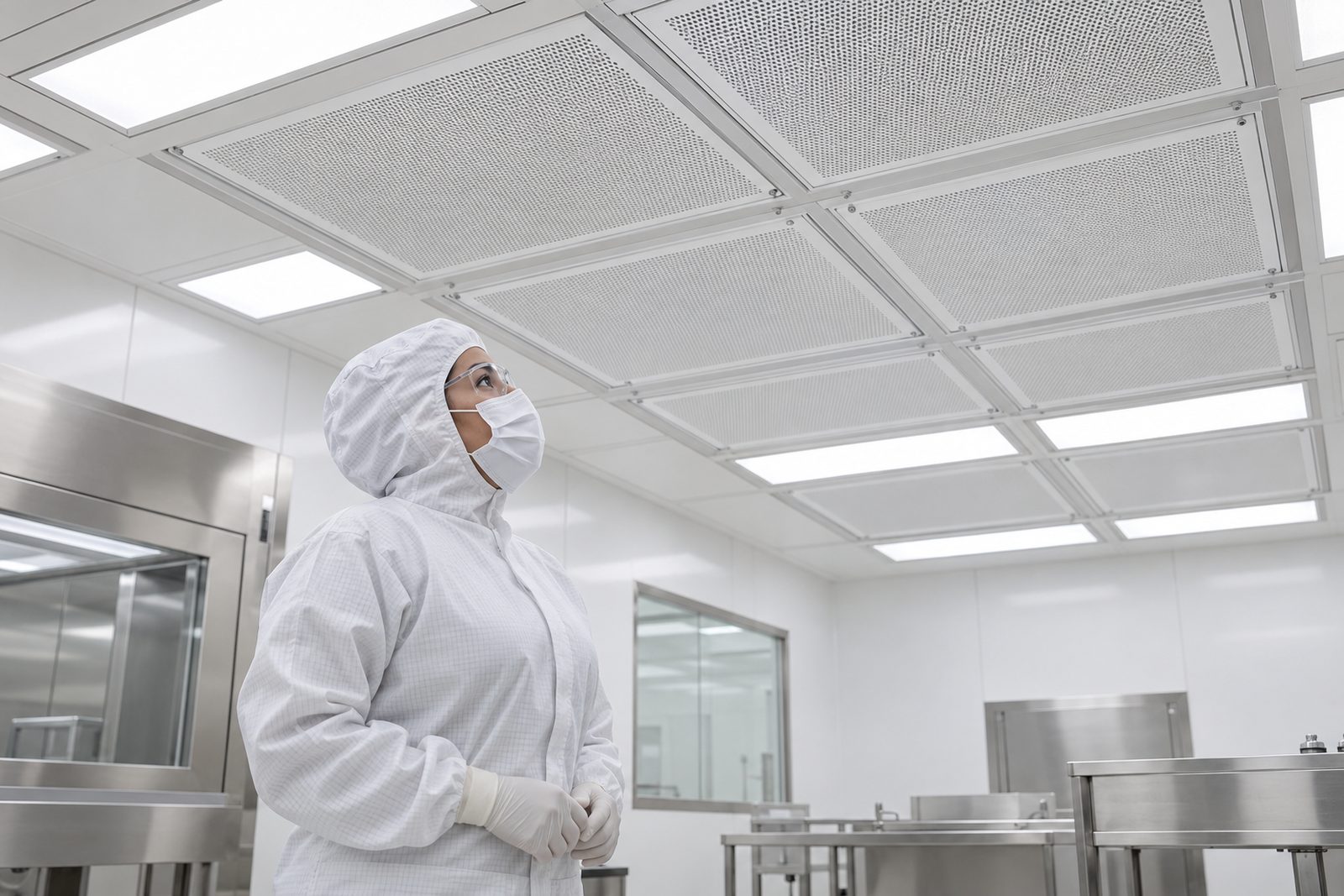
ISO 14644 is an international standard series for cleanrooms and associated controlled environments. Part 1 sets the classification method: count airborne particles at specified sizes and compare to defined concentration limits. The standard does not tell you how to clean — it tells you what cleanliness state your room must achieve and how to prove it.
The classification report specifies which particle sizes are assessed. Particle counts do not establish microbiological cleanliness. Define the separate monitoring program through the quality system.
The class scale in plain terms
ISO 14644-1 defines classes by airborne particle concentration. Read the class together with the specified particle size and occupancy state. Examples include:
- ISO Class 5 — ISO 14644-1 specifies a limit of 3,520 particles/m3 at 0.5 µm and larger. Classification alone does not define the permitted process.
- ISO Class 7 — ISO 14644-1 specifies a limit of 352,000 particles/m3 at 0.5 µm and larger. Confirm the intended use against the facility specification.
- ISO Class 8 — ISO 14644-1 specifies a limit of 3,520,000 particles/m3 at 0.5 µm and larger. Cleaning requirements depend on the process and contamination risks.
A lower ISO class number indicates a lower permitted particle concentration at the specified size. It does not prescribe a cleaning frequency, disinfectant or gowning sequence.
As-built, at-rest, operational
ISO 14644-1 distinguishes as-built, at-rest and operational occupancy states. Record the state used for classification and monitoring.
As-built means the completed installation without production equipment, materials or personnel. At-rest means equipment is installed and operating as agreed, without personnel present. Operational means the installation functions as specified with the agreed personnel present.
Suppose a room meets its particle specification at rest. Its operational assessment must still account for personnel, equipment and the process. Review the monitoring plan with the quality team before setting cleaning windows.
How classification drives cleaning
Define controls from the process risk assessment and approved site procedures:
- Frequency — set intervals and event-based cleaning requirements in the site SOP. The ISO class alone does not determine the schedule.
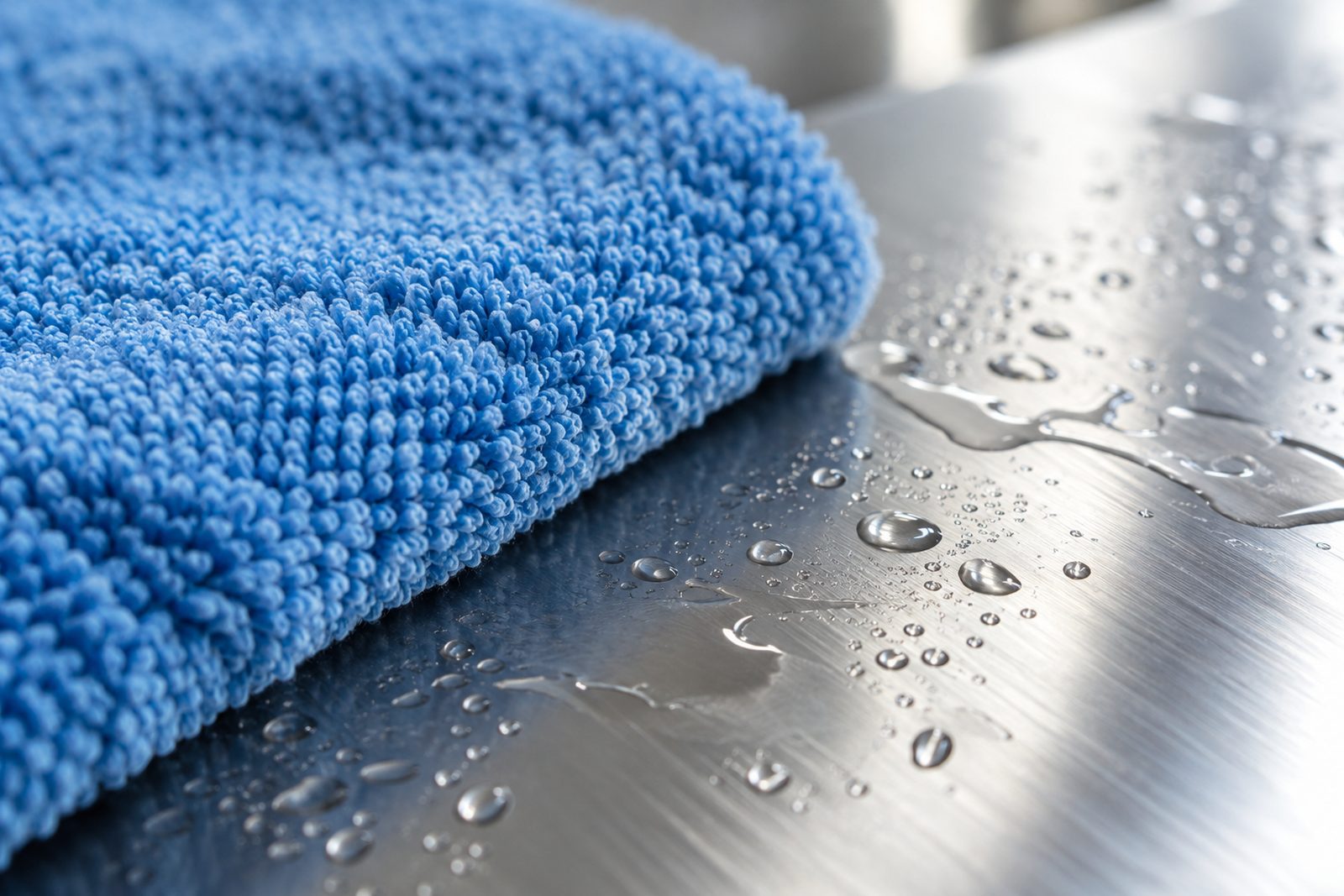
- Chemical selection — assess efficacy and material compatibility. Define contact time and residue removal in the approved procedure.
- Technique and tools — specify suitable low-shedding materials, coverage methods and tool segregation for each zone.
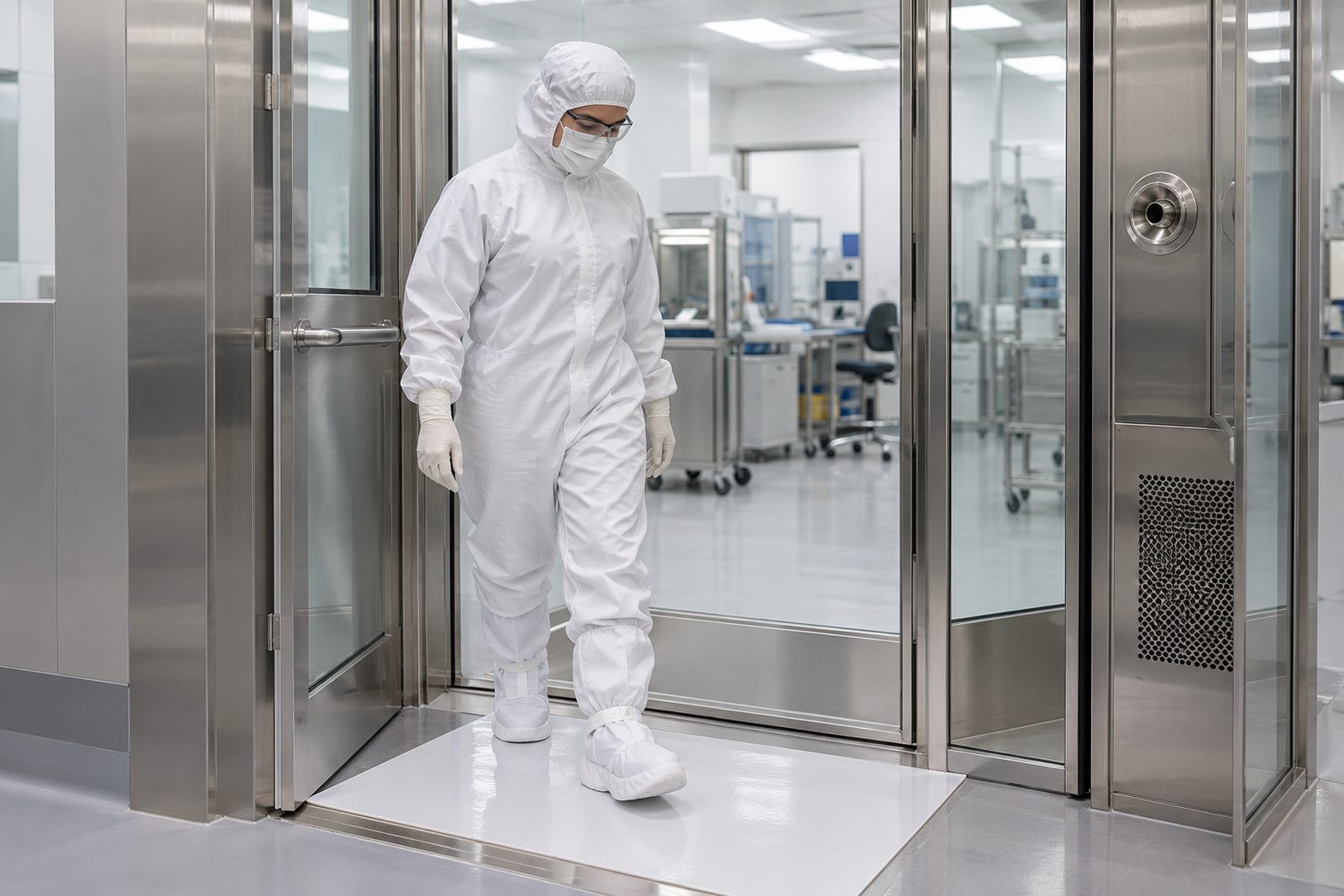
- Gowning — follow the approved garment selection and donning sequence for the activity and area.
What to ask a cleaning partner
Ask how written cleaning procedures connect to the room specification. Ask how staff record contact times and report deviations. An environmental monitoring excursion needs investigation; the result alone does not establish a cleaning failure.
Discuss room-specific procedures, training and records with your quality team before service begins. See our cleanroom cleaning services to discuss your facility scope.