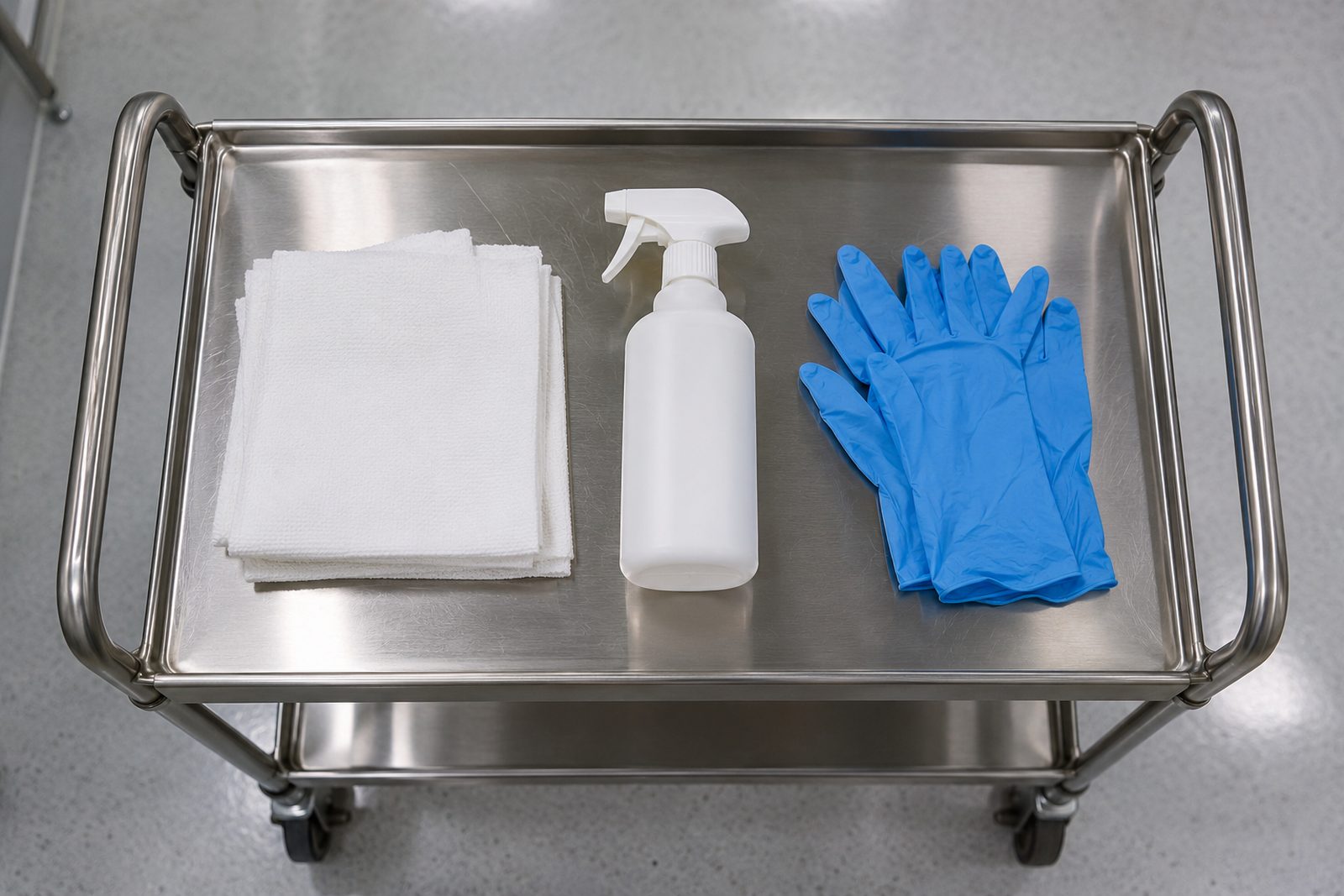

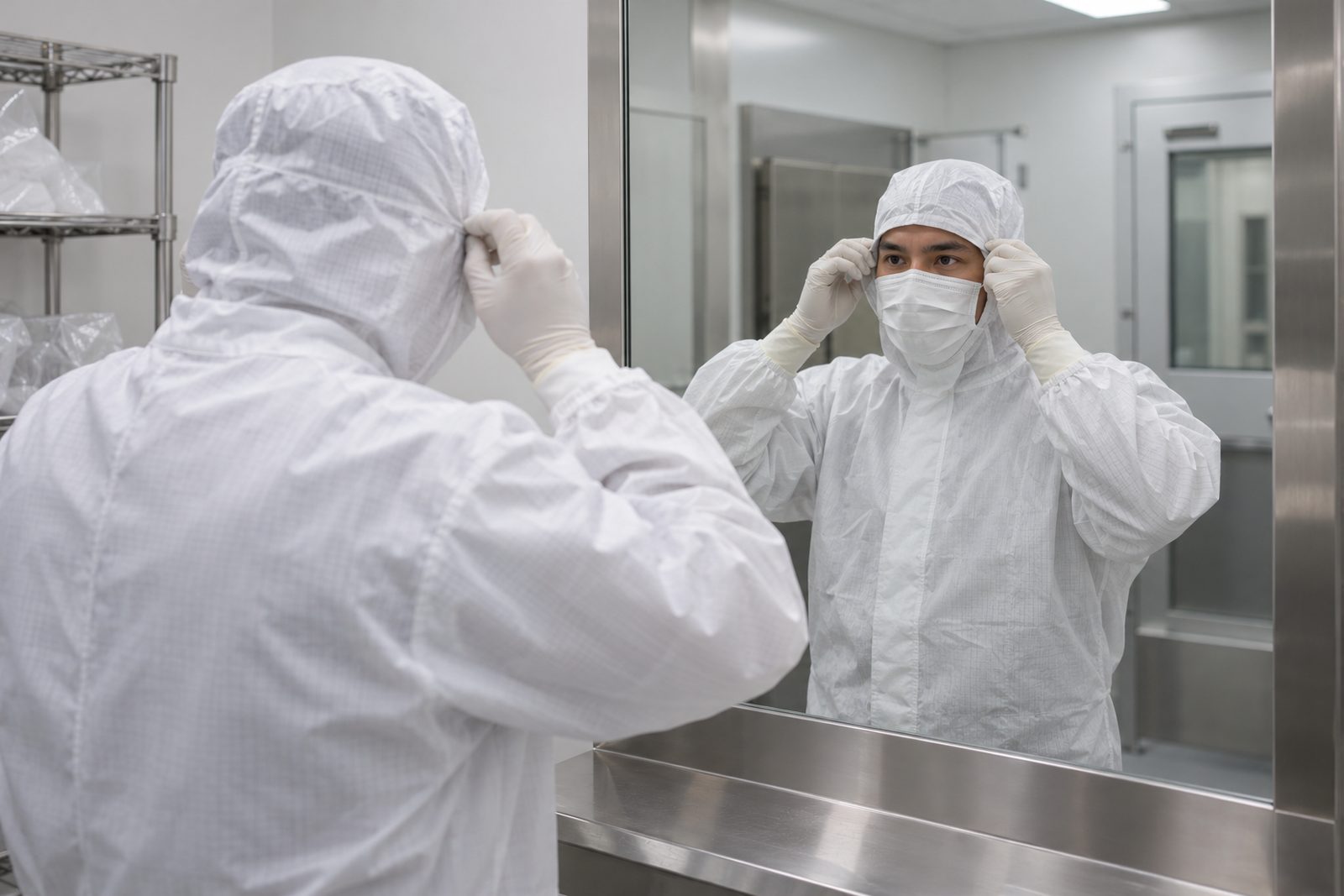
Garment selection, donning technique and behavior all contribute to contamination control. The approved procedure should explain how they work together.
The correct gowning sequence
Use the approved gowning sequence. It should keep clean garments away from uncontrolled surfaces and define how personnel cross the gowning boundary.
Use these topics to review a site gowning procedure. They are not a universal donning sequence:
- Define footwear changes and how personnel cross the gowning bench boundary.
- Define when hair and beard covers are donned and how coverage is checked.
- Specify hand washing, drying and sanitization in the approved hygiene procedure.
- Explain how to don the coverall without contact with uncontrolled surfaces.
- Specify garment overlaps and closure checks for the selected system.
- Define when masks and gloves are donned without touching clean outer surfaces.
- Define outer-glove requirements and when gloves must be changed or sanitized.
Gowning errors to review
Review the procedure for these potential errors:
- Donning gloves before the coverall cuffs are secured, then touching the coverall exterior with already-gloved hands — transferring skin flora to the outer garment surface.
- Touching a mask or garment after gowning without following the approved glove-change or sanitization procedure.
- Crossing back over the gowning boundary without following the re-entry procedure.
- Leaving garment closures incomplete or overlaps inconsistent with the approved gowning procedure.
None of these mistakes require a bad actor. They happen when gowning is treated as a routine task rather than a controlled procedure.
Aseptic behavior is a discipline
Movement can disturb airflow and release particles. Avoid reaching over exposed product or critical surfaces. Follow the approved behavior procedure for the process and airflow design.
Aseptic technique includes clothing, movement and control of contact with critical surfaces. Define these behaviors in the approved procedure.
Training should address controlled movement, critical airflow and avoidance of contact with exposed product. Cleaning staff should work only where the process owner has authorized the activity.
Hand hygiene and glove discipline
Gloves supplement hand hygiene. Follow approved washing, sanitization and replacement requirements. Confirm agent compatibility with the glove material.
Suppose a technician resumes work before completing the approved glove-sanitization contact time. Record and assess the departure. Contact time comes from the product and qualified use, not a universal interval.
Training, certification, and culture
Include practical observation in qualification. Use a defined assessment to check technique and record departures. The quality team should specify any microbiological monitoring and reassessment.
Apply gowning expectations to staff, contractors and visitors. Record deviations and assess retraining or procedure changes. Discuss site requirements when defining classified cleaning programs.