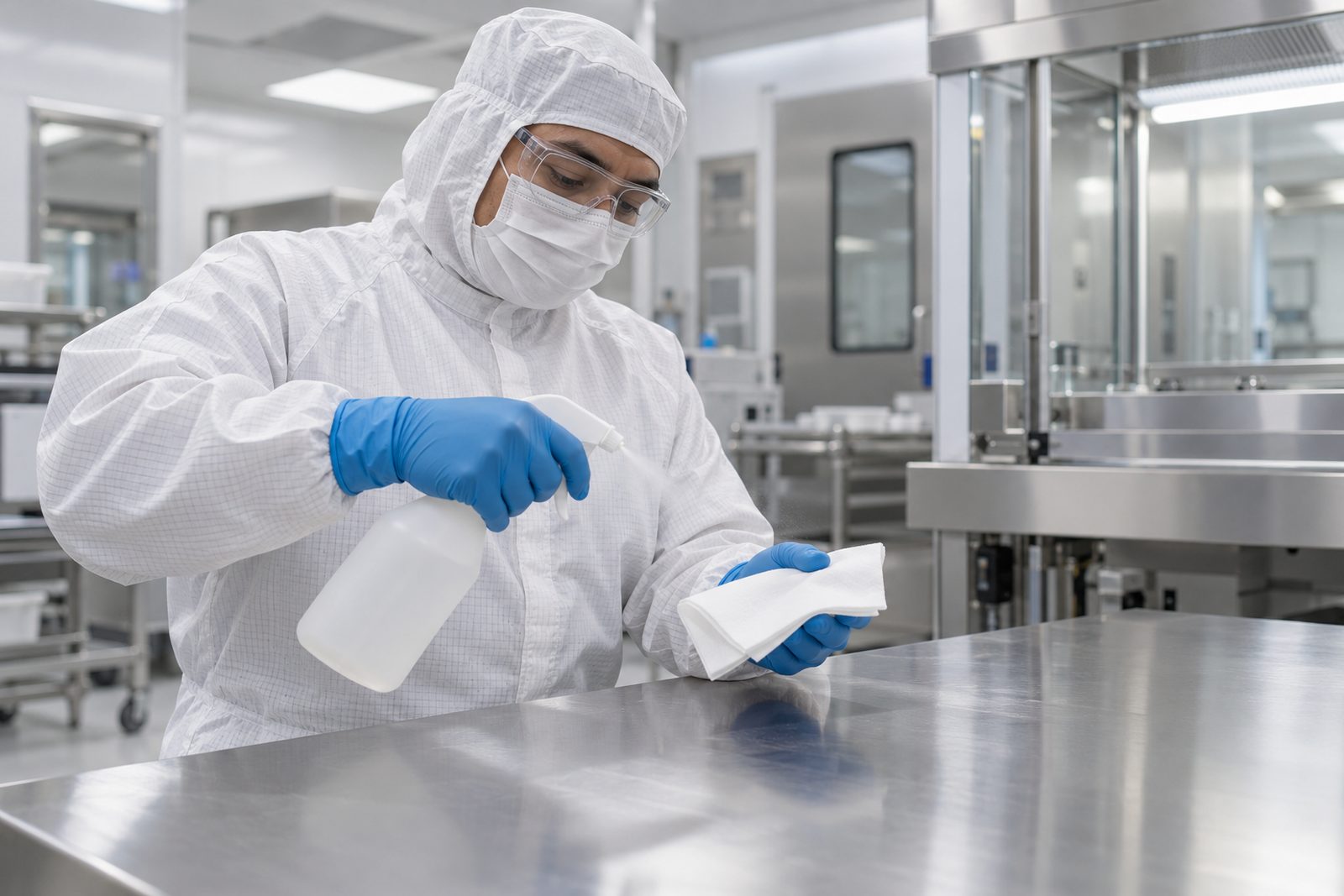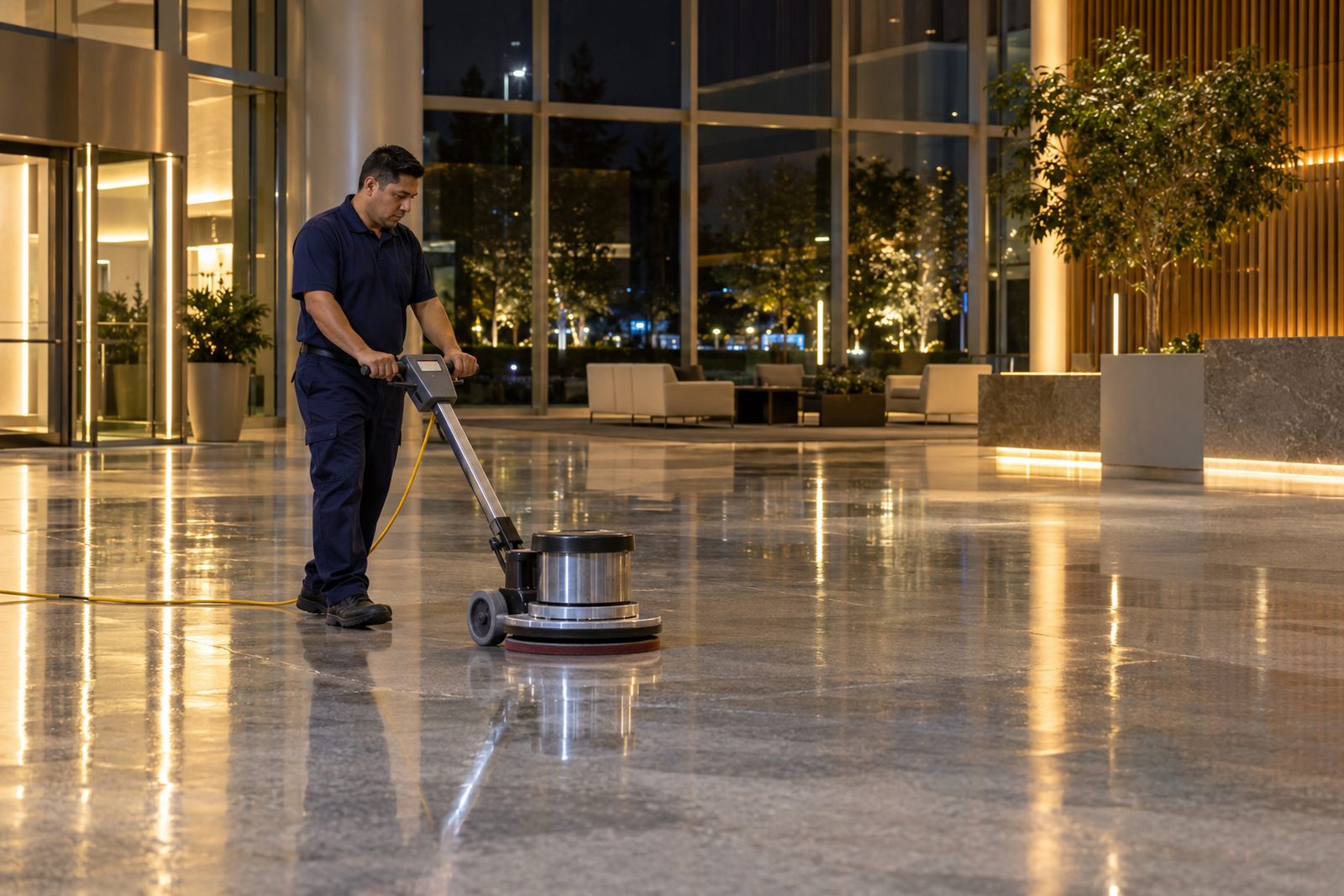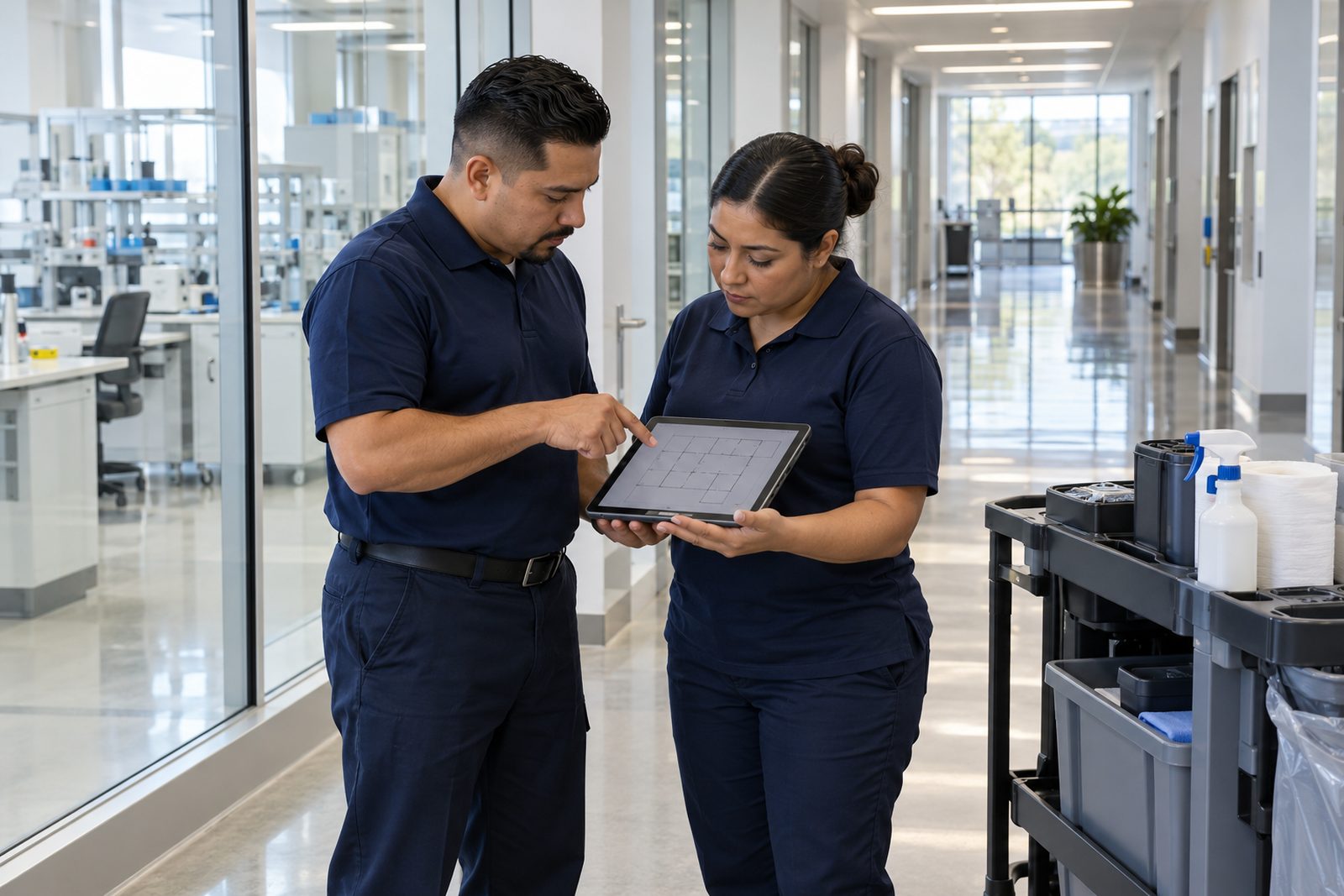

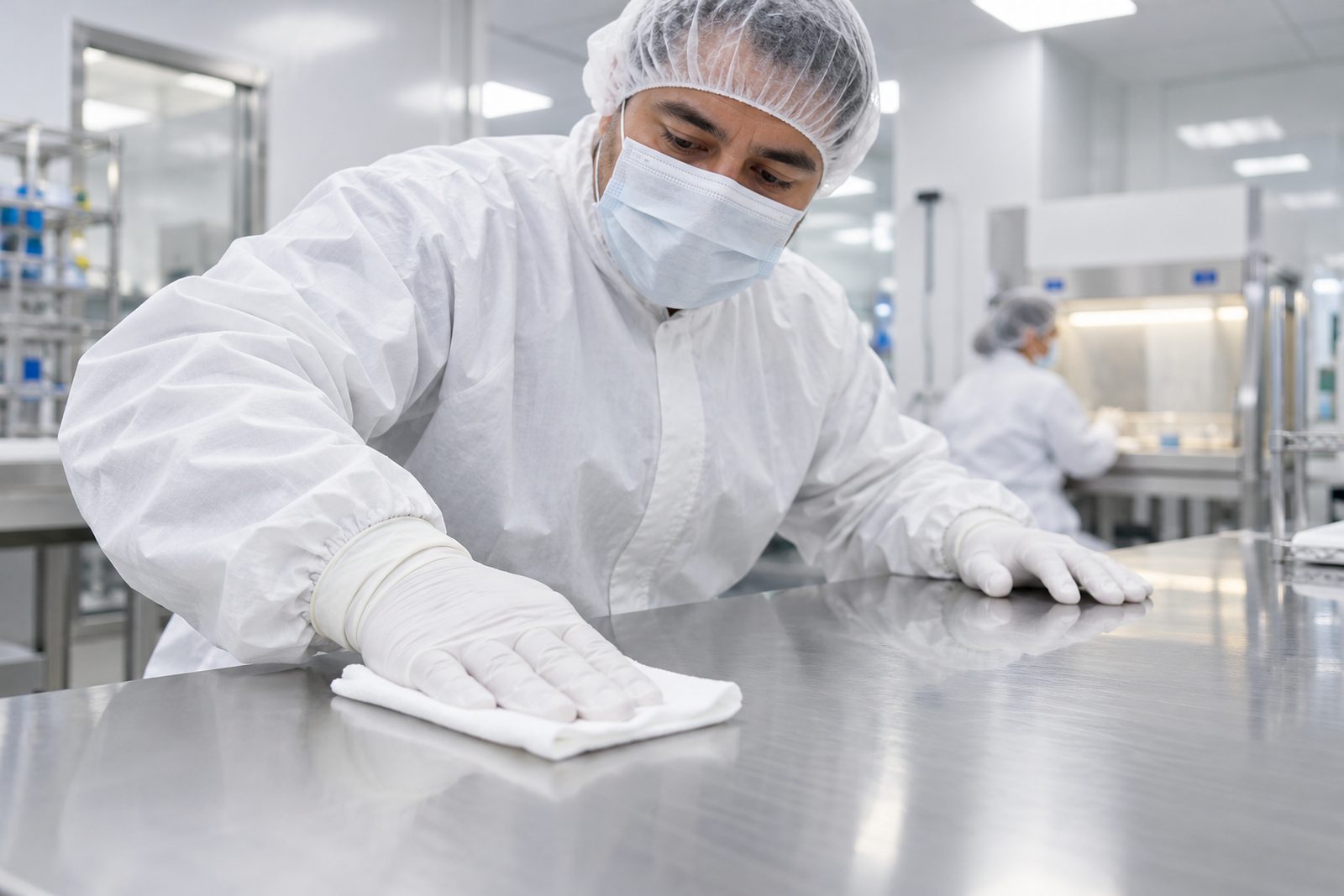
Wipe selection, chemistry and technique all matter. A written method should define coverage, stroke direction and when to expose a clean face or replace the wiper.
Why technique is the variable
A soiled wiper can transfer contamination back to a surface. Define and verify a coverage method for the task. ISO 14644-5 addresses operations; it does not validate a site-specific wiping method.
Unidirectional overlapping strokes
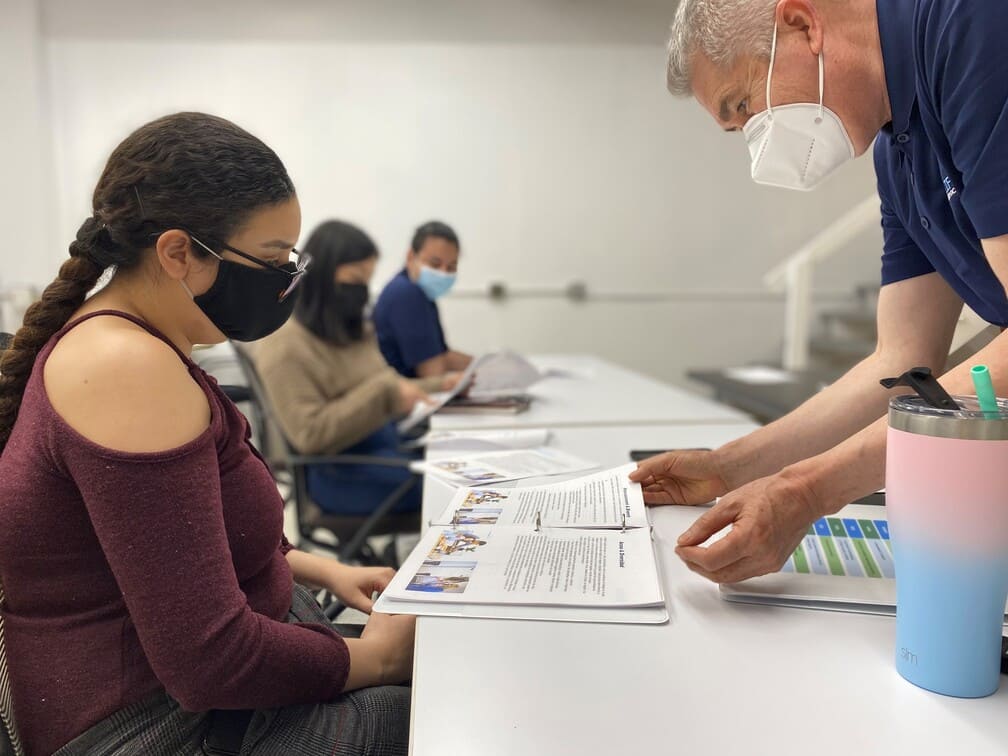
Where the approved method uses unidirectional strokes, lift the wiper after each pass. Overlap the next pass to cover the surface. Demonstrate the technique during training.
Check coverage without repeatedly using a soiled face. The procedure should define overlap and replacement for the task, rather than use a universal percentage.
On horizontal surfaces (floors, benchtops), work from the area closest to critical equipment outward toward the room perimeter. On vertical surfaces (walls, equipment panels), work from top to bottom. Both rules serve the same logic: move contamination away from critical zones, not toward them.
Fold-and-rotate: the method explained
Fold the selected wiper as specified in the approved method. Protect faces intended for later use from contact with soiled surfaces or gloves.
Expose a clean face at the defined point. Replace the wiper when its clean faces are used or the task requires replacement. Do not carry a contaminated wiper into another zone.
Make enough suitable wipers available for the task. Refolding a soiled wiper does not replace the need for a fresh one at the approved point.
Clean-to-dirty, top-to-bottom
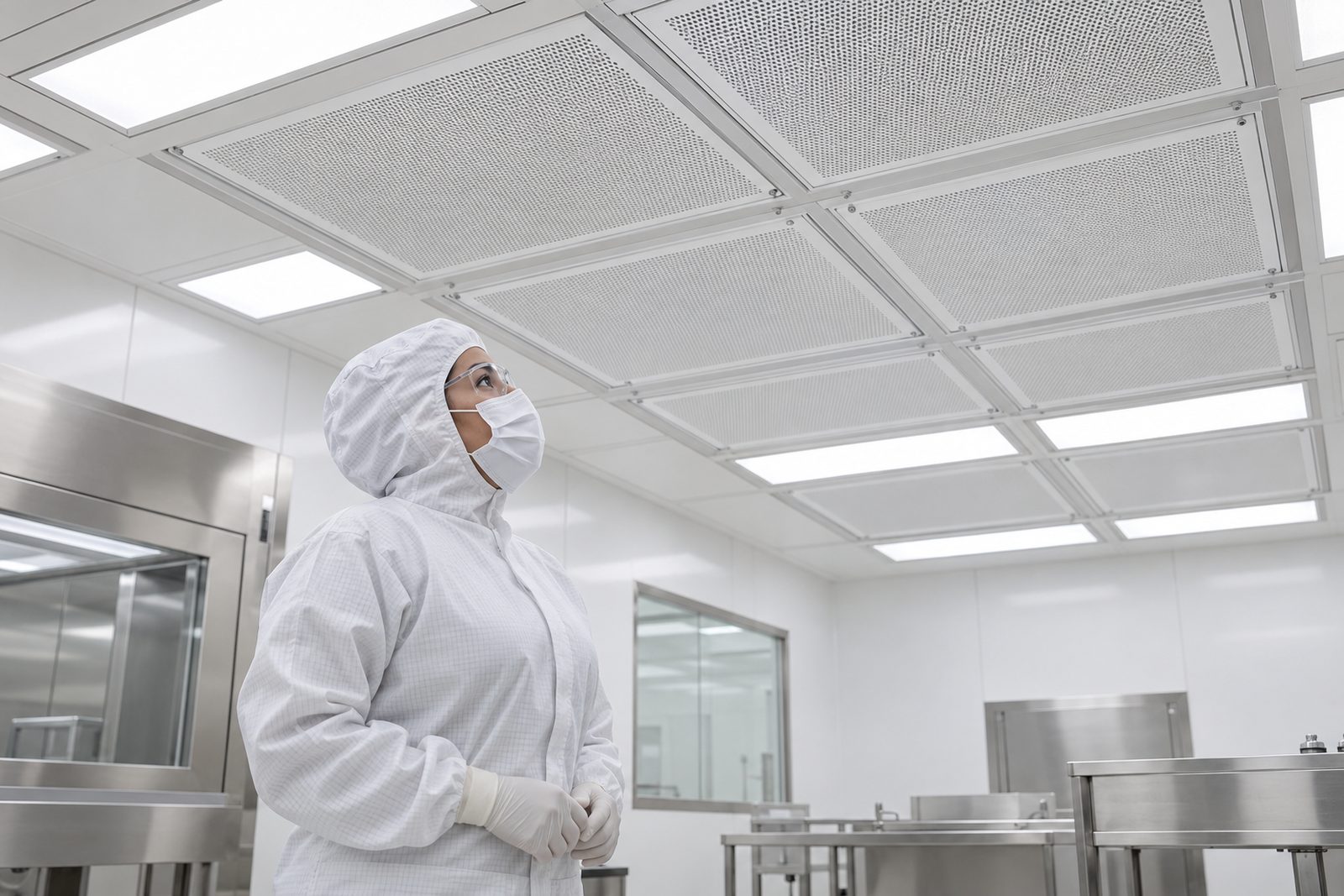
Define the room sequence to avoid transferring contamination onto cleaned surfaces. The approved method should address high surfaces, critical zones and floors in relation to the equipment and airflow design.
Follow the manufacturer and approved site procedure for hoods and cabinets. Do not disturb a HEPA filter face unless an authorized maintenance procedure explicitly requires it.
Plan cleaning around each zone. Use dedicated or appropriately decontaminated tools between areas. Avoid carrying contamination from support spaces into critical zones.
Wipe selection and pre-wetted vs. dry
Select wipers for shedding, absorbency, compatibility and any sterility requirement. Check supplier specifications and qualify materials for the intended use.
Pre-wetted wipers can help control application. Staff must still verify suitability and contact time. Qualify the product, packaging and use method against site requirements.
Dry wipers have a role in final polishing steps or in areas where residue from prior wet cleaning needs to be physically removed before a rinse step. They should not be used for primary disinfection — a dry wipe physically moves particles but does not deliver the contact time required for chemical kill. For more on how chemistry and technique interact, see our overview of cleanroom disinfection programs and classified cleaning services.