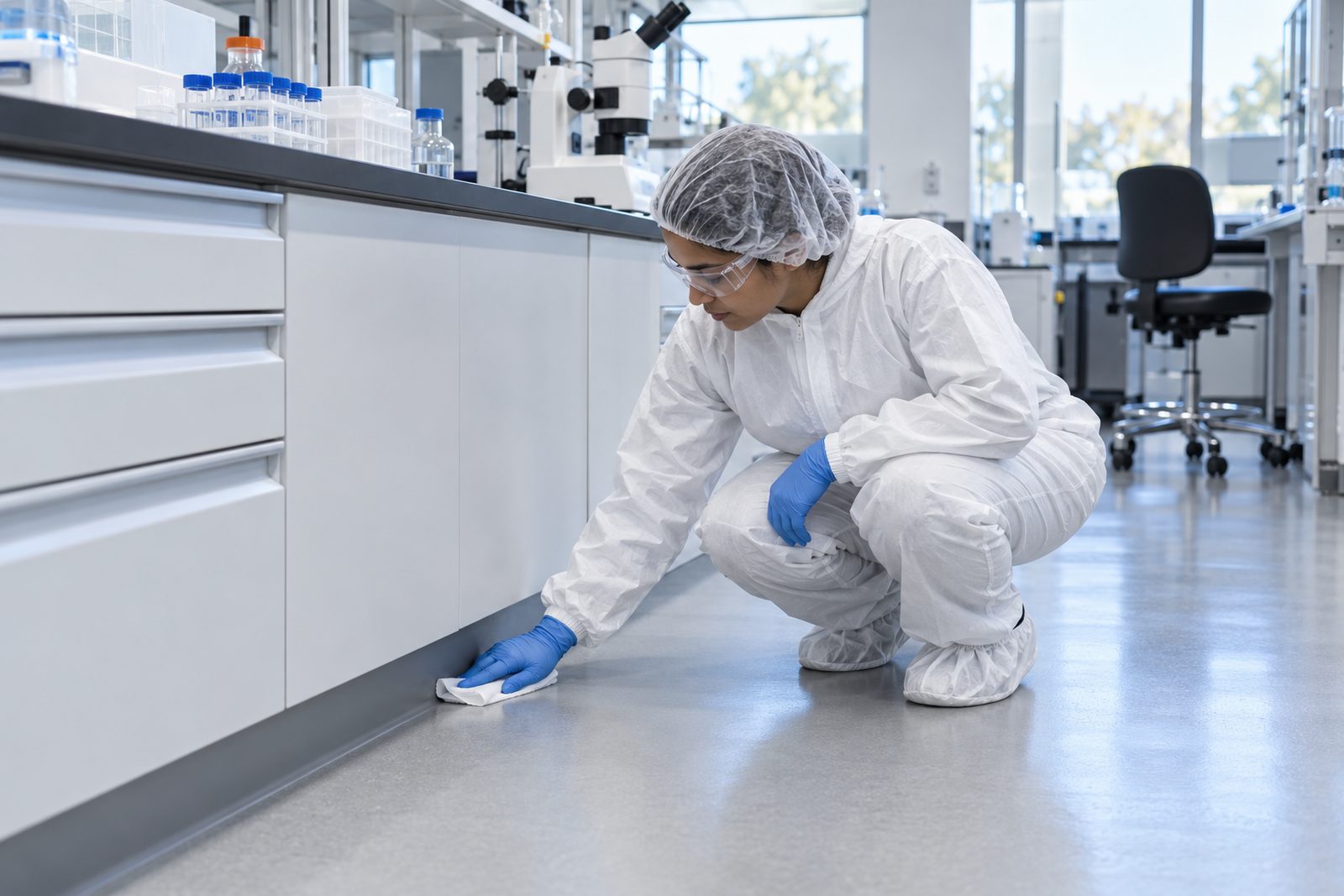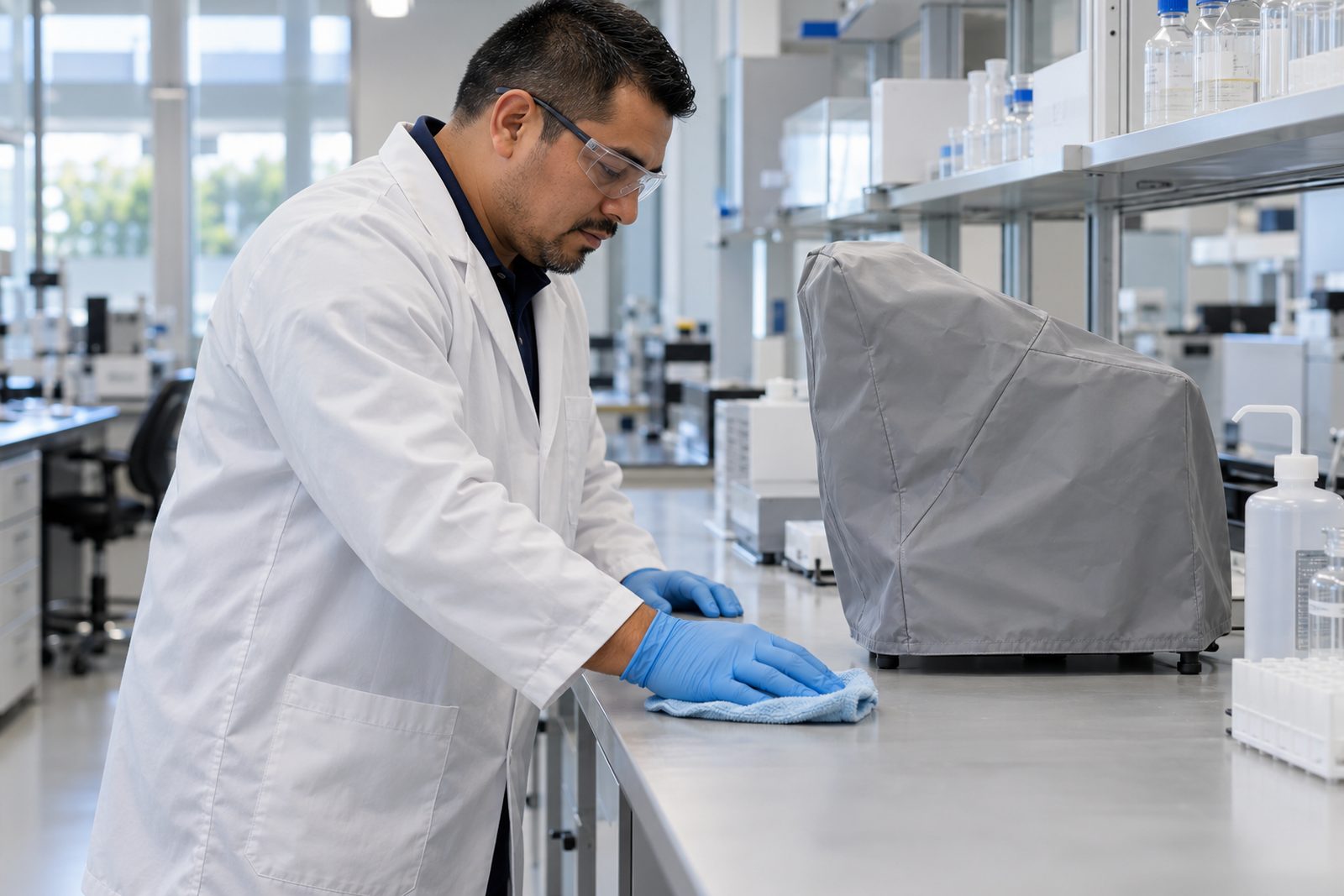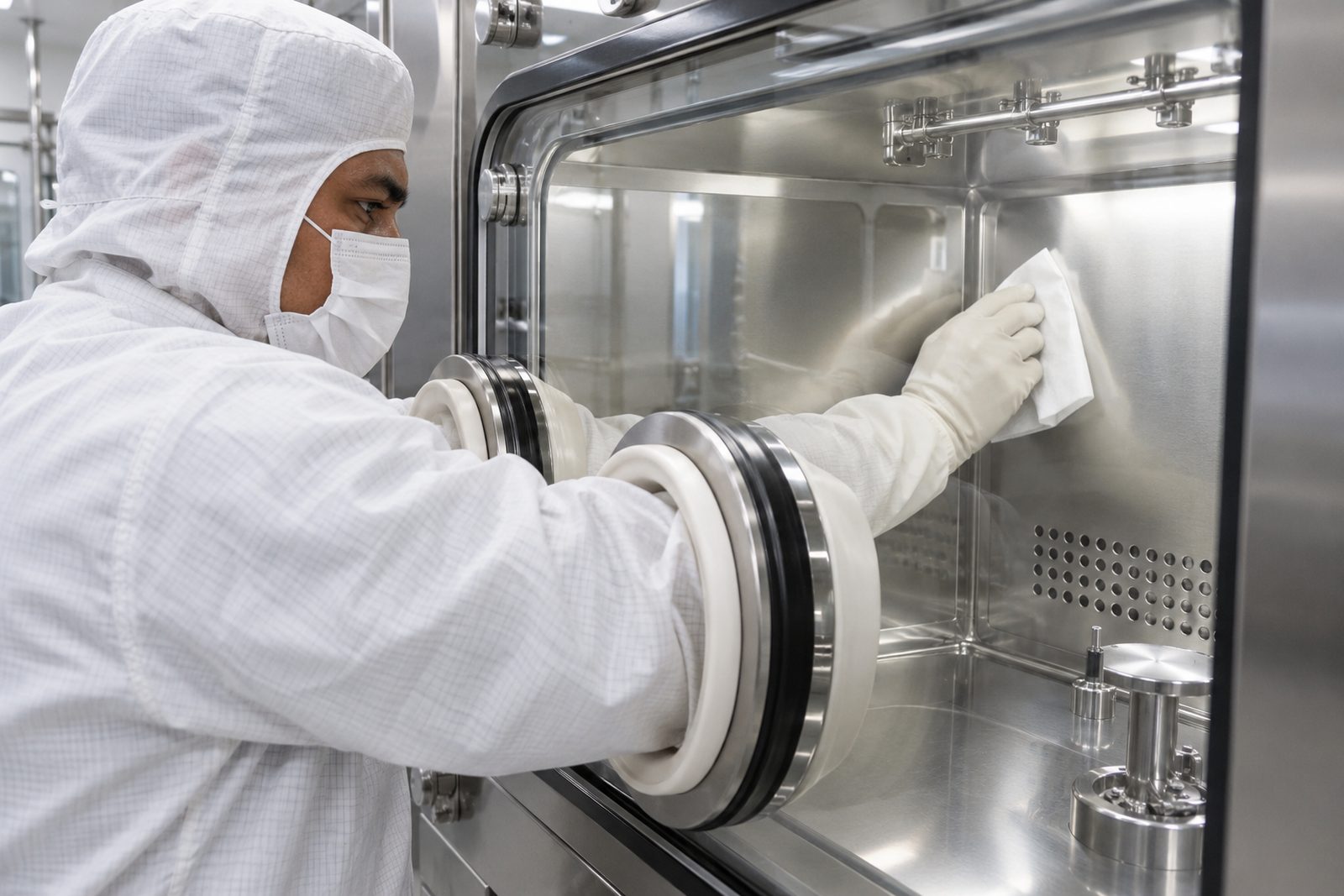
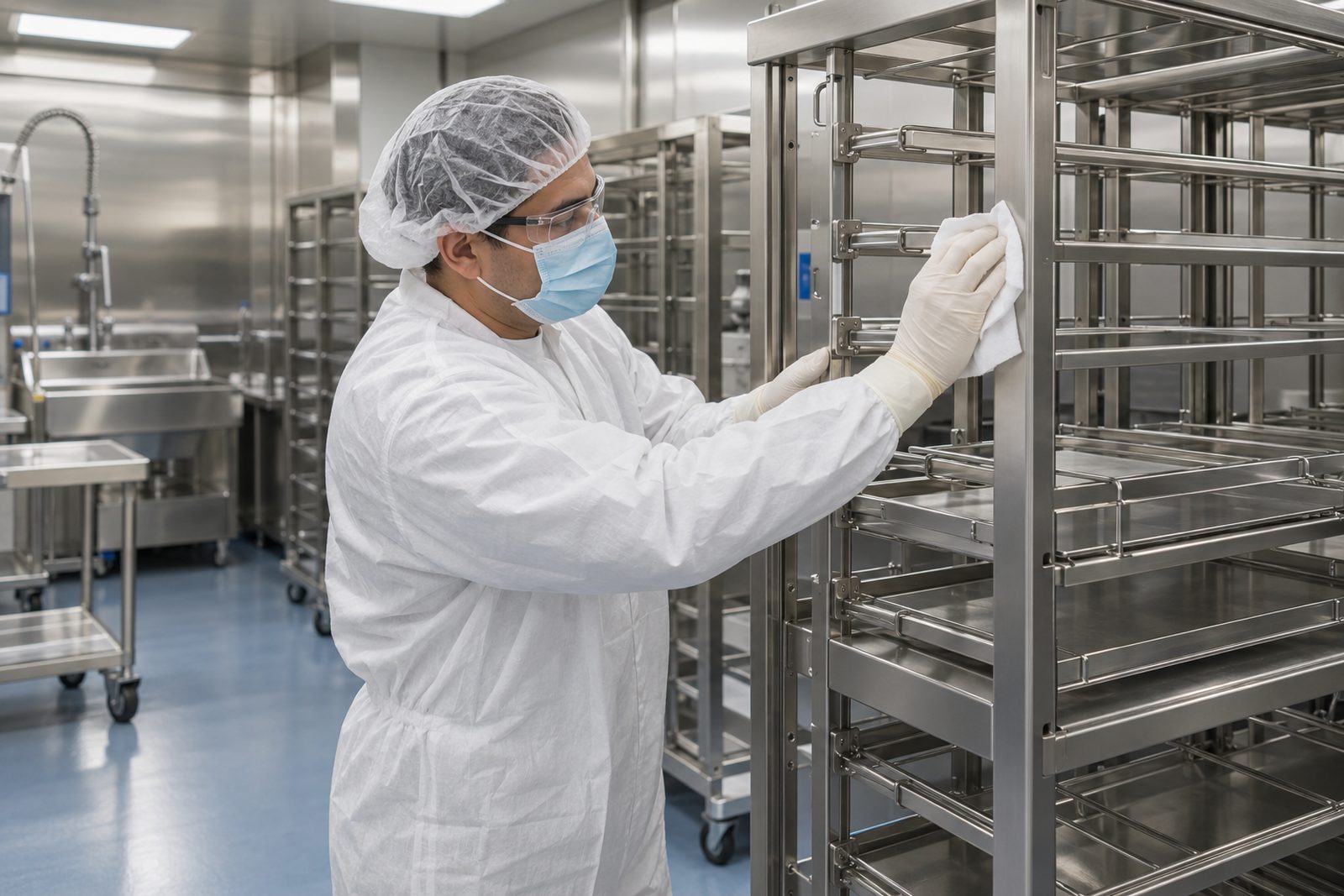
Vivarium cleaning must follow the facility animal care, biosafety, and access procedures. The vivarium manager should approve the support scope before any crew enters.
What makes vivarium cleaning different
Review both directions of contamination risk: material carried into animal areas and exposure from material already present. The site risk assessment should determine protective measures.
Ask the vivarium manager which animal care protocols and oversight requirements affect cleaning. Record permitted tasks and changes that need approval before work starts.
Coordinate equipment noise, product selection, and traffic with animal care staff. Do not change a documented method without the required site approval.
Barrier and quarantine awareness
Ask the vivarium manager to identify barrier, quarantine, and restricted areas. Put the approved routes and entry rules into the work instructions.
Staff need written instructions for authorized zones, entry order, PPE, and gowning. Do not enter a quarantine or restricted room without approval from the designated site contact.
What facility teams support
The vivarium manager should approve a task list for each area. Possible support areas, subject to training and authorization, include:
- Support corridors, hallways, and anteroom areas adjacent to animal housing — not animal rooms themselves unless the facility has specifically trained and credentialed staff for that work.
- Gowning rooms and PPE staging areas, which need to be cleaned and organized without disrupting the supplies or PPE that husbandry and research staff depend on.
- Cage wash and autoclave areas, including floor drains, equipment exteriors, and general surfaces — not the operation of the cage wash equipment itself, which is a husbandry function.
- Procedure rooms, surgical prep areas, and necropsy spaces when scheduled in coordination with the vivarium manager and only when the space is not in active use.
- Hazardous waste staging areas associated with the vivarium, including areas where bedding waste, carcasses, or biohazardous materials are staged for pickup.
Husbandry boundaries and staff roles
Keep animal handling, feeding, cage changing, and health monitoring outside the routine cleaning scope. Any separate animal care assignment needs its own authorization and training.
Have the vivarium manager set the approved schedule and access rules. Establish a contact for room release and schedule changes. Update the cleaning instructions when the site procedures change.
Training and discretion
Staff assigned to vivarium support areas should complete facility-specific onboarding that covers the biosafety level of the facility, the specific pathogens or species present if relevant, gowning and PPE requirements, entry and exit sequences, and what to do if they observe a sick or injured animal, an unexpected spill, or a situation outside their scope. That training should be documented and refreshed when the staff member's role changes or when the facility undergoes a significant protocol change.
Discretion is not a soft skill here — it is an operational requirement. Research protocols involving animal subjects are proprietary and often publication-sensitive. Staff working in these environments are expected to maintain confidentiality about what they observe. For related context on how we structure cleaning in specialized laboratory environments, see our medical and laboratory services and industry laboratory support pages.