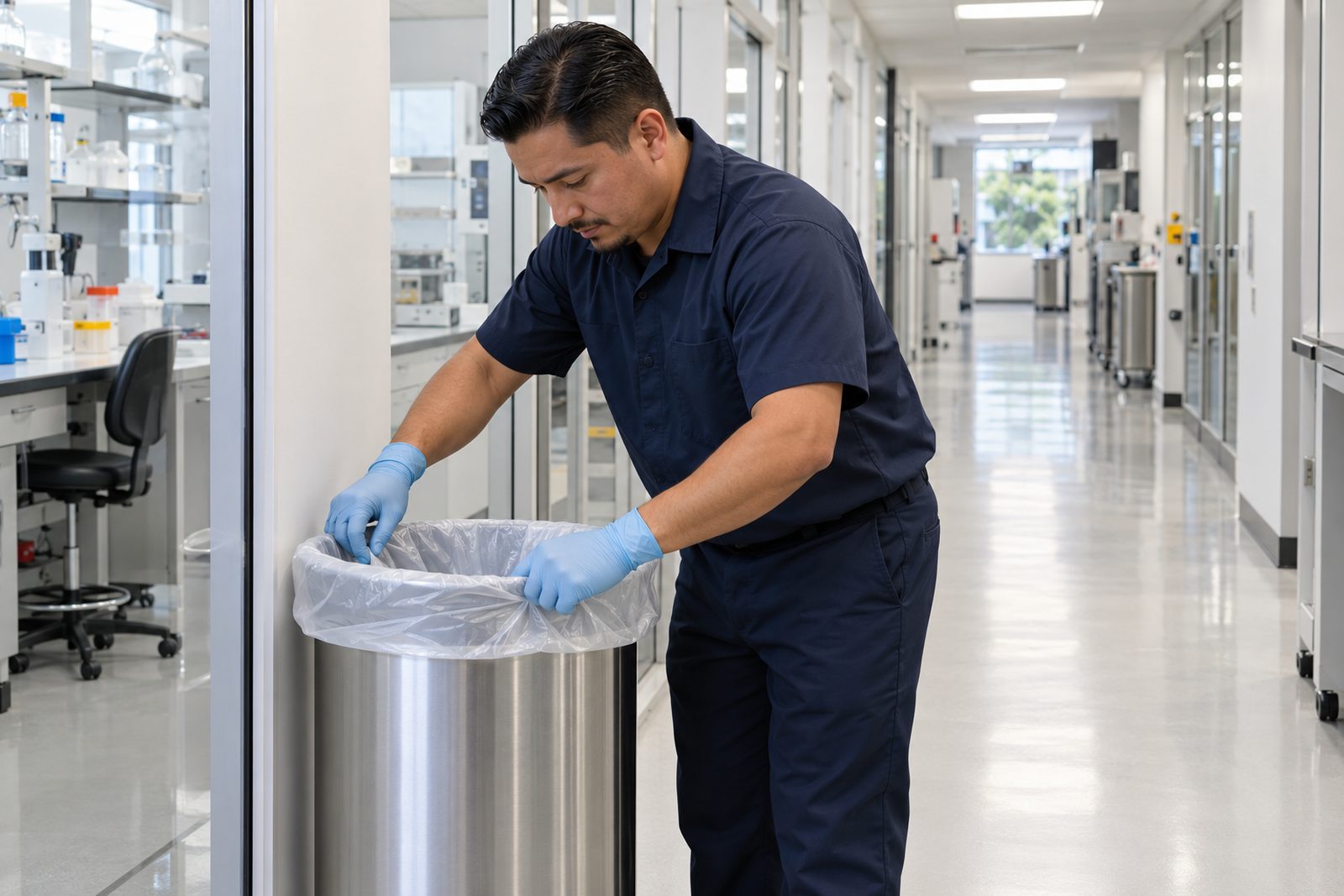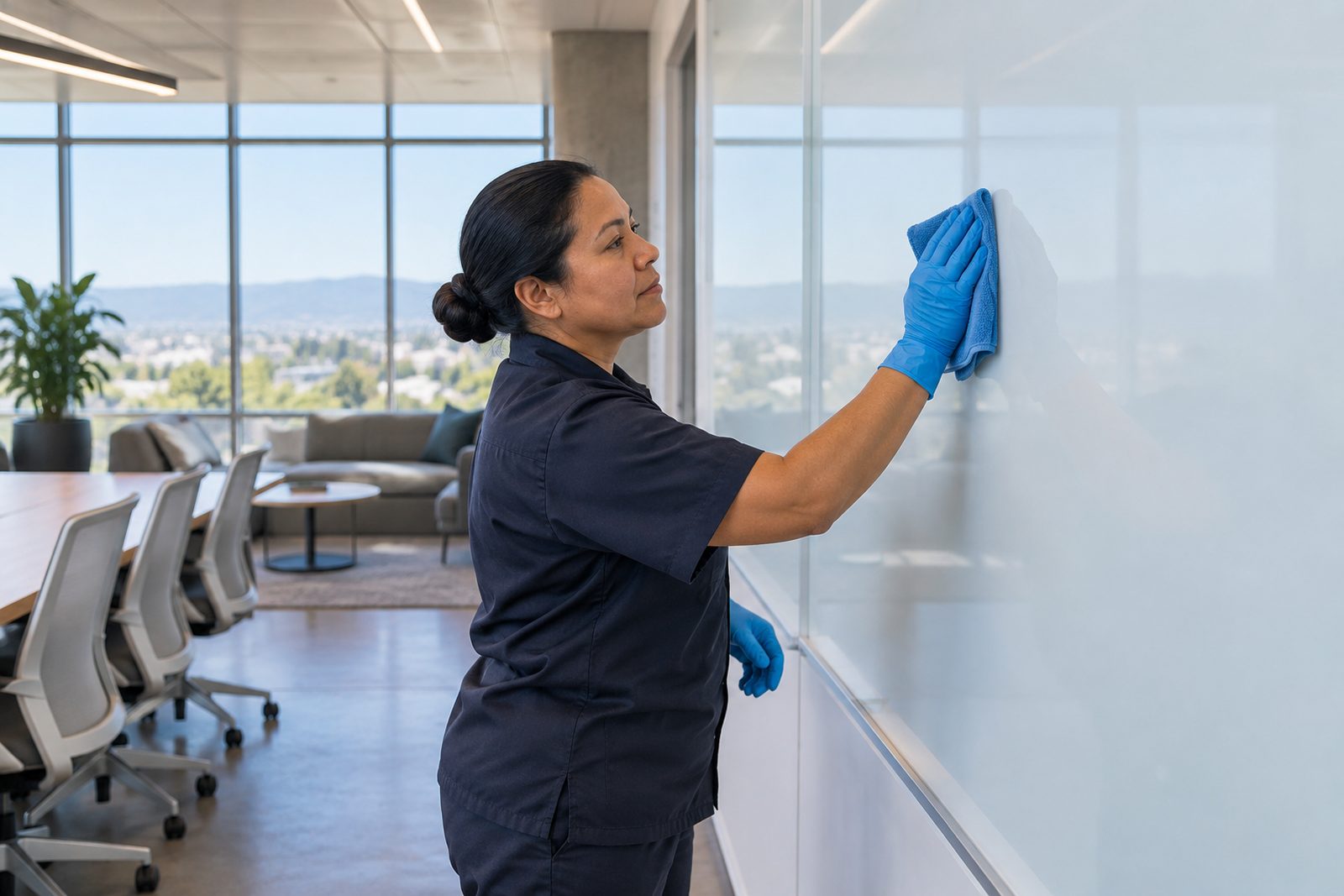

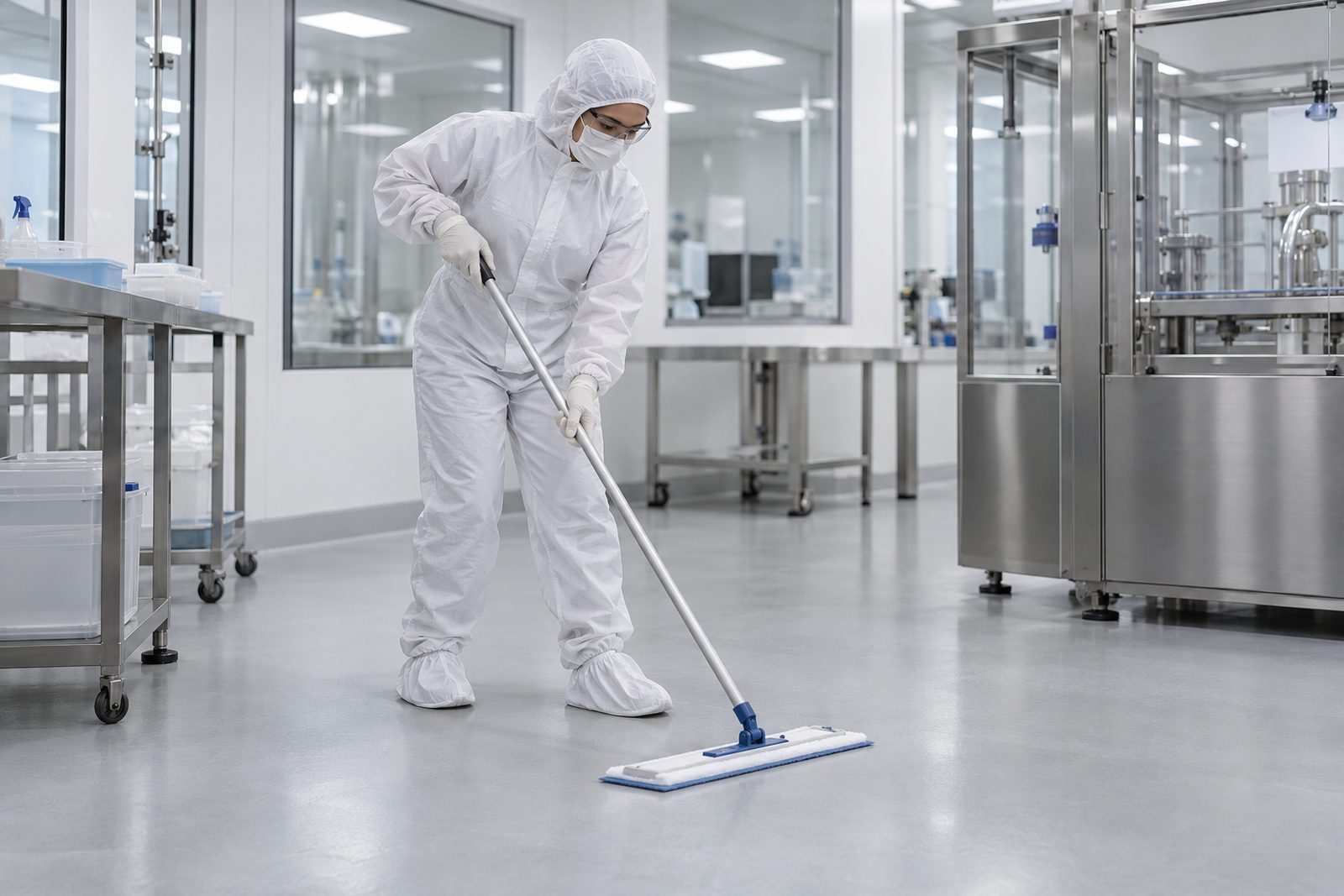
A GMP cleaning procedure needs defined methods and acceptance criteria. Visual checks, records and any required testing serve different purposes. The quality system determines how the process is qualified, validated and maintained.
Clean is not a feeling
Visual cleanliness does not establish microbial, product-residue or endotoxin acceptance. Define which contaminants matter and how the cleaning process will be assessed.
Cleaning validation uses documented evidence to assess a procedure under defined conditions against acceptance criteria. Control later changes through the quality system, including changes in agents, equipment and technique.
Cleaning vs sanitization vs disinfection
Define these terms in the site procedure. They describe different objectives and do not necessarily require separate products or a universal sequence:
- Cleaning removes soil, residues and particles. Account for soil removal when establishing an effective disinfection process.
- Sanitization reduces microbial bioburden on a cleaned surface to a level considered safe for that environment, typically using an agent with a defined contact time.
- Disinfection targets microorganisms covered by the selected product claims under specified conditions. It does not imply activity against every organism or bacterial spores.
For sterile medicinal-product manufacture, EU GMP Annex 1 includes periodic sporicidal use within a written disinfection program. Define the agent, frequency and method through the site assessment.
Agents, contact times, and rotation
Select agents for the contaminants, materials and intended use. Apply the product-specific contact time in the approved procedure. If wet contact ends too soon, record and assess the departure rather than assuming efficacy.
Define preparation, concentration, expiry, contact time and traceability requirements for each agent. The approved record form should capture the information needed to demonstrate that the procedure was followed.
Documentation as the validation backbone
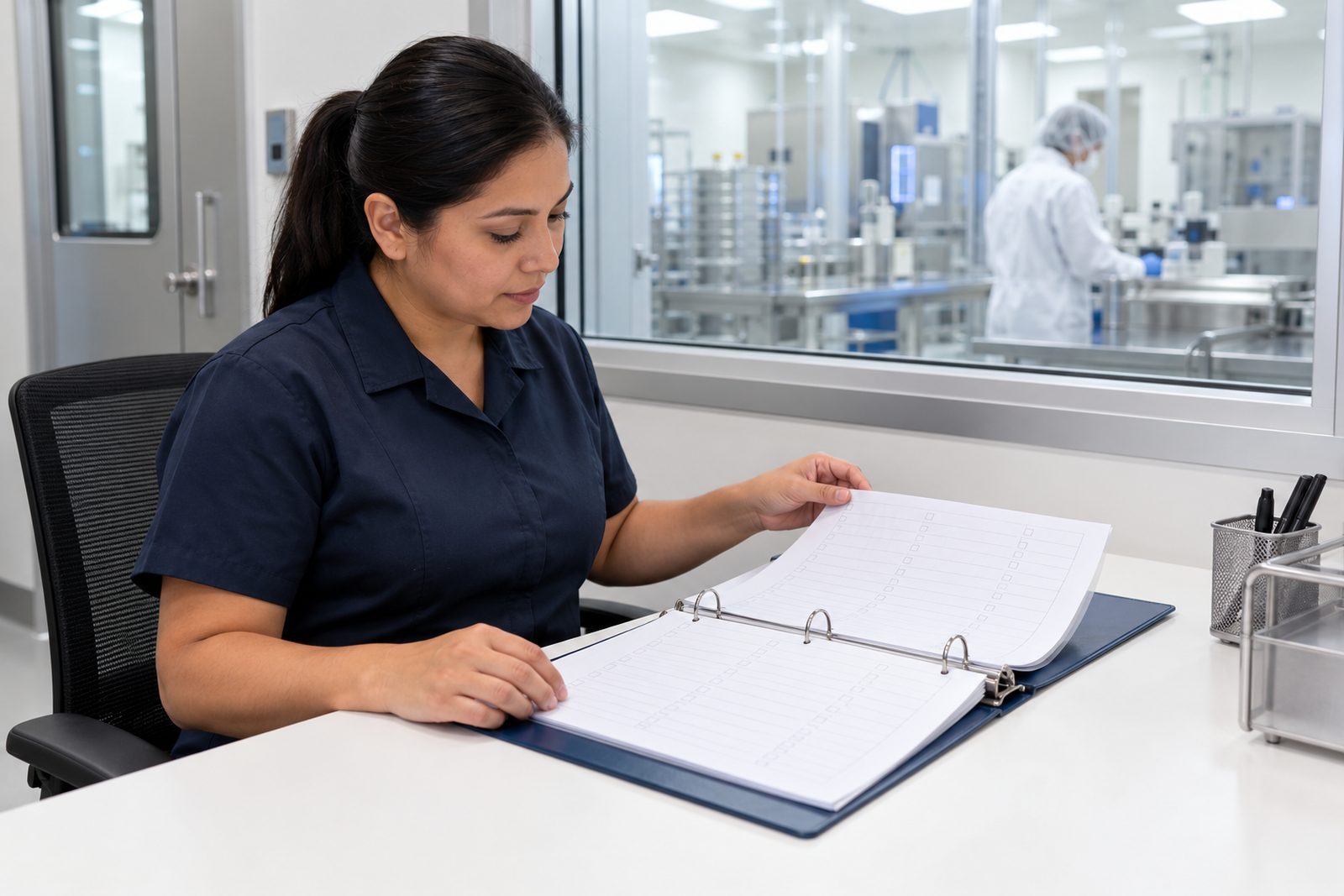
Maintain cleaning records alongside the applicable qualification or validation evidence. Use relevant monitoring and testing to assess control; a completed form alone does not establish the cleaning result.
Connect cleaning records to approved procedures and relevant qualification or validation evidence. Investigate missing information under the quality system before drawing conclusions about the cleaning result.
Operating inside change control
Any modification to a validated cleaning process — a new agent, a revised dilution, a different applicator, a changed sequence of steps — must pass through change control before it is implemented. This includes what might feel like minor substitutions, such as switching disinfectant suppliers while retaining the same active ingredient. A different manufacturer's formulation may have a different surfactant profile, a different pH, or a different contact-time requirement.
Suppose an approved agent is unavailable. Escalate the shortage before substituting another product. Assess formulation, use conditions and qualification needs, then record the authorized decision.
Discuss site scope through our GMP cleaning services and documentation requirements through our quality and compliance page.