
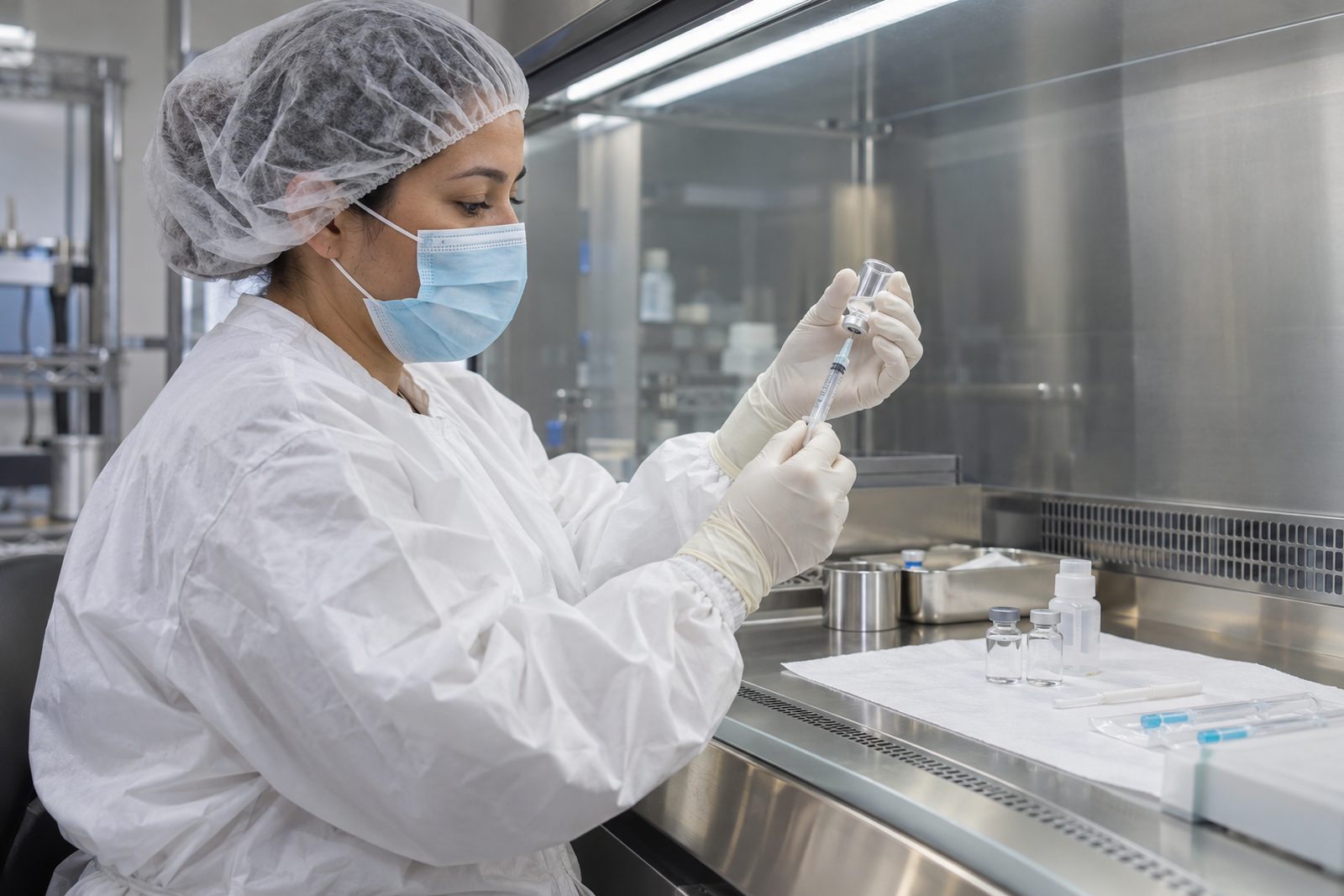
USP 797 addresses sterile compounding, while USP 800 addresses hazardous-drug handling. A facility preparing hazardous sterile products needs to assess the applicable requirements of both chapters.
Two standards, one shared priority
USP 797 sets standards for compounded sterile preparations. USP 800 addresses hazardous-drug handling and exposure protection for personnel, patients and the environment. Use the current chapters and applicable jurisdictional requirements when designing procedures.
For hazardous sterile compounding, assess contamination protection and hazardous-drug containment together. The facility design, engineering controls and work practices must support the applicable requirements.
USP 797: sterile compounding environments
USP 797 uses ISO air-cleanliness classifications in its environmental requirements. The room configuration depends on the compounding arrangement. Review these designations with the responsible pharmacy personnel:
- ISO 5 — the air-cleanliness requirement associated with the primary engineering control. Select a suitable device for the intended compounding activity.
- ISO 7 — a designation used for classified buffer rooms. Confirm the configuration and pressure requirements for the activity.
- ISO 8 — a designation used for some ante-room arrangements. Do not assume it applies to every hazardous or non-hazardous compounding configuration.
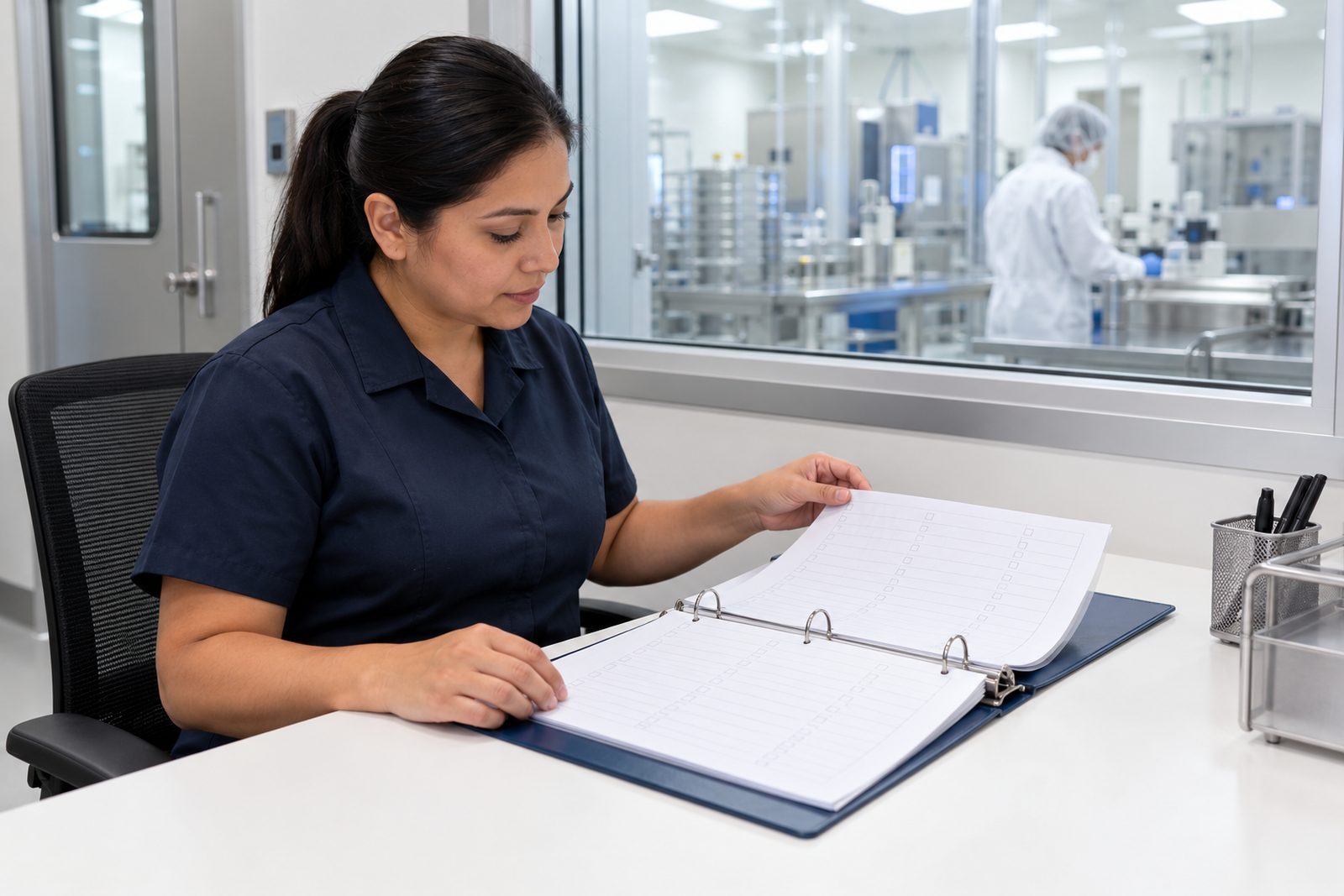
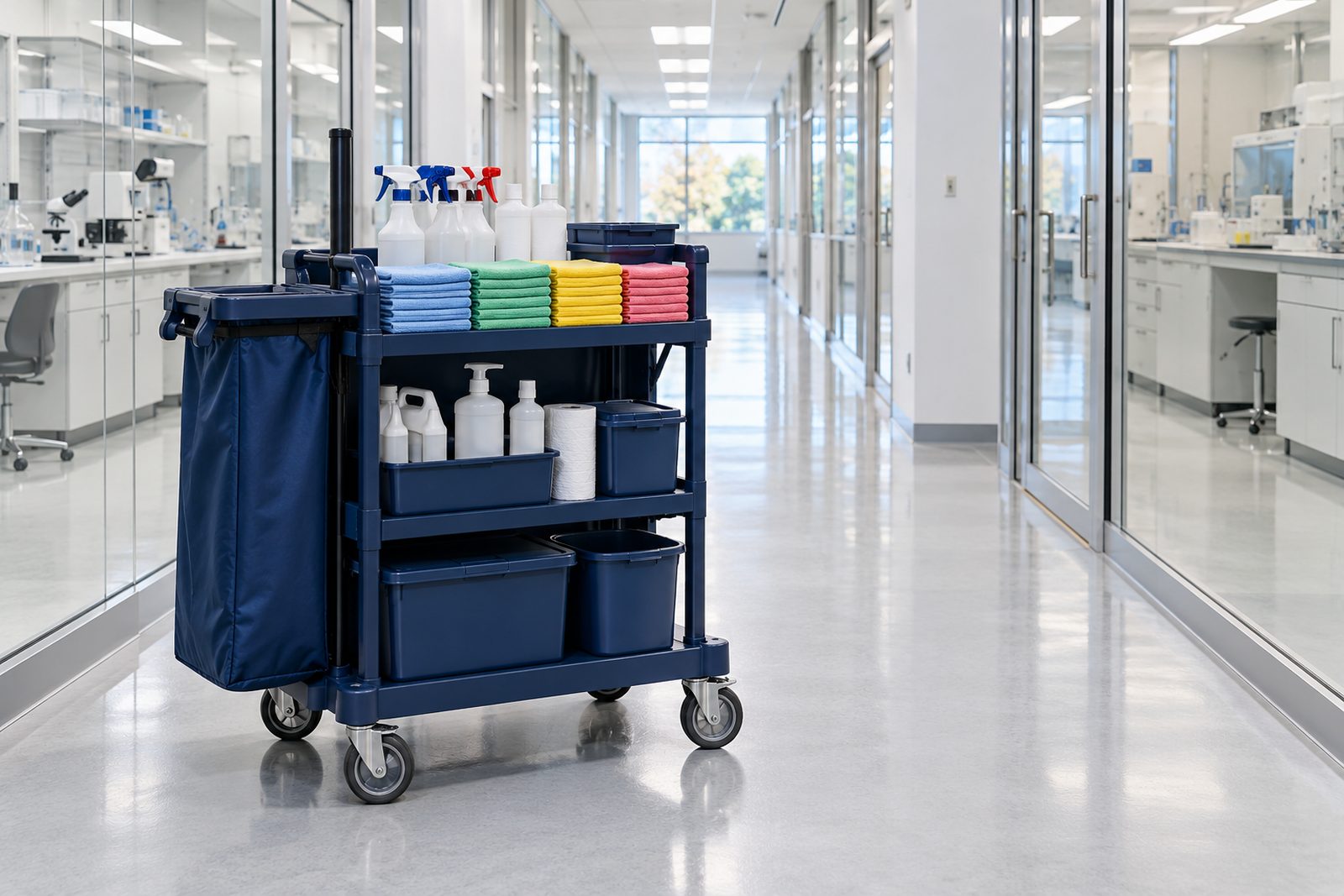
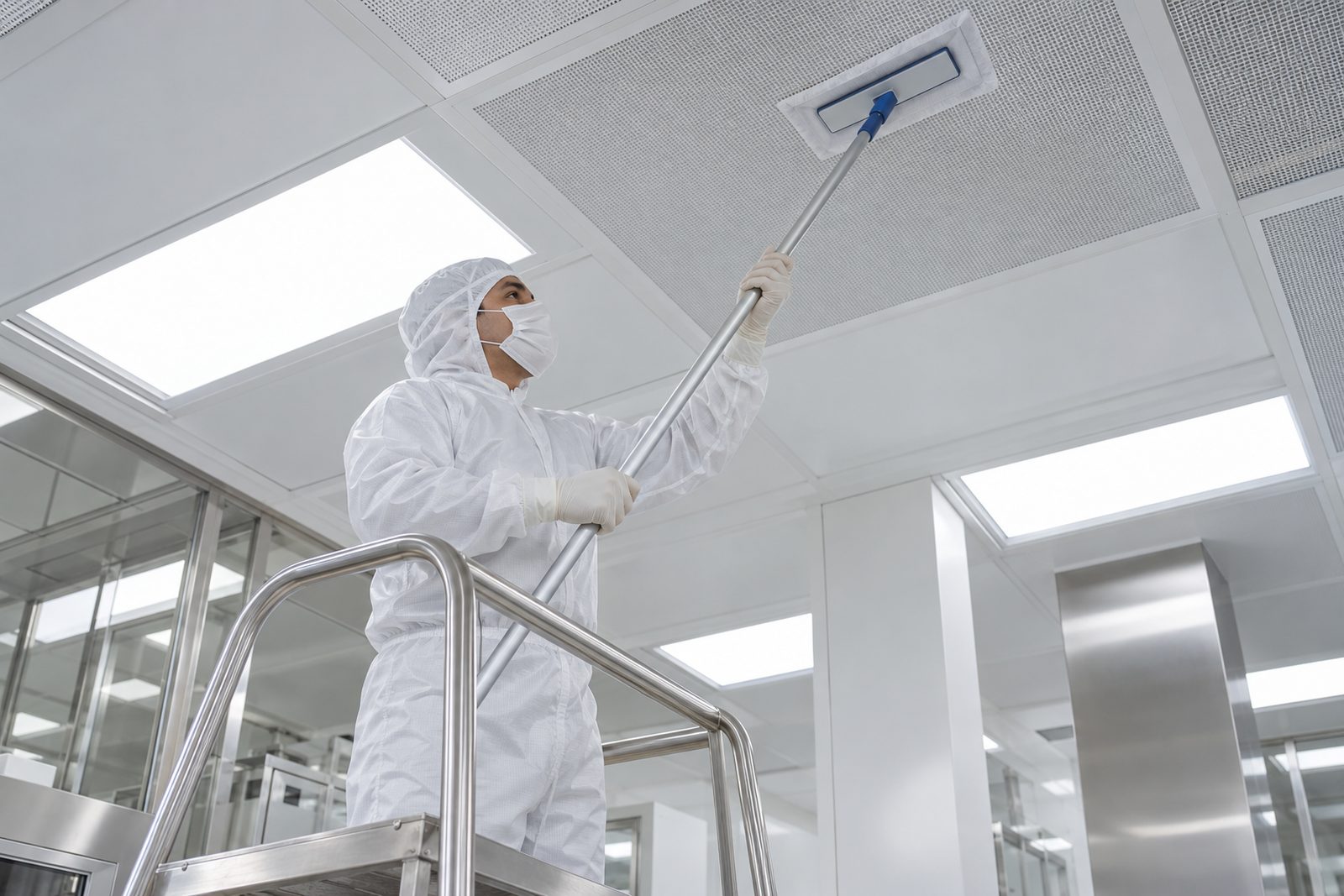
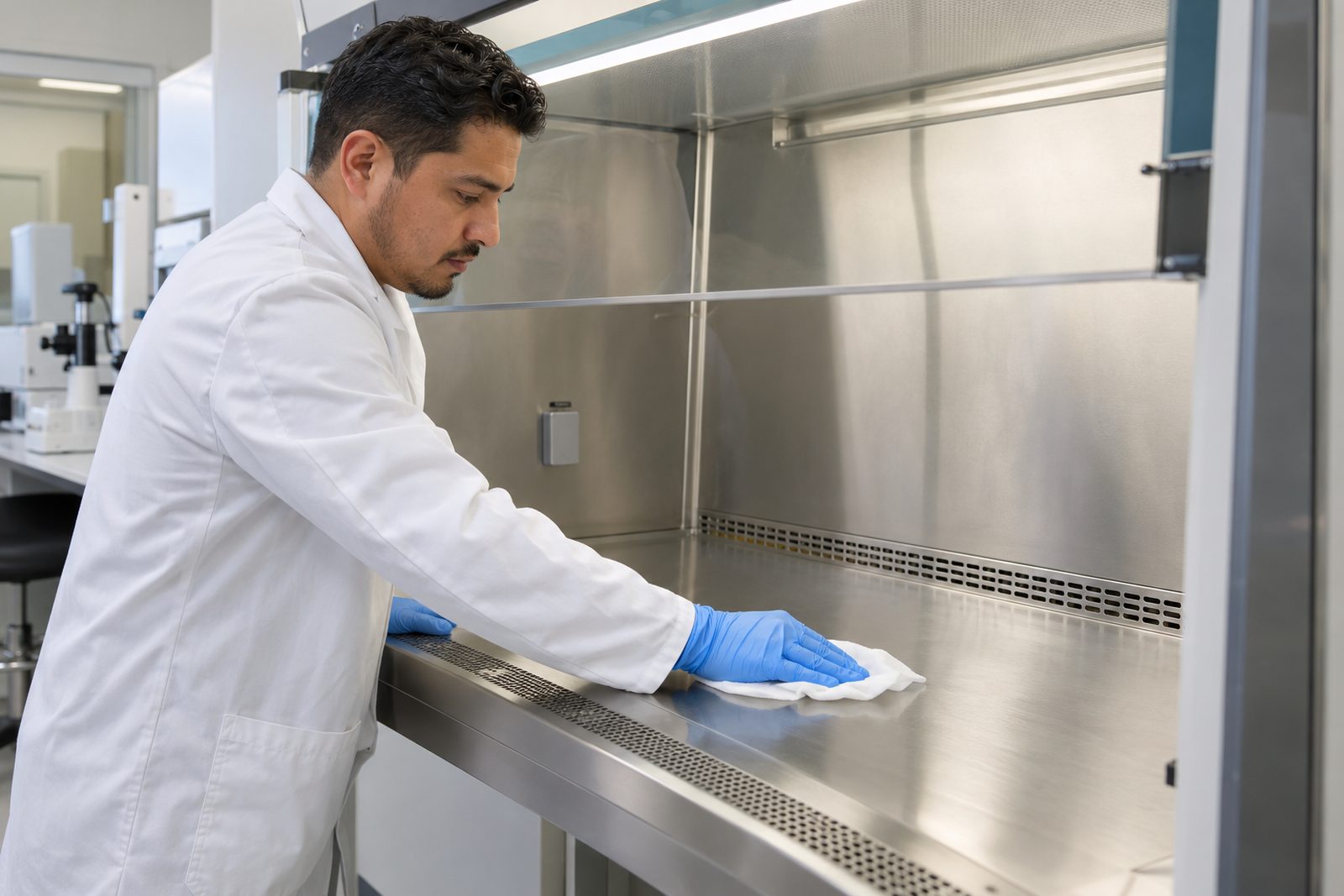
Map cleaning and disinfection requirements to each area and surface using the current chapter and approved procedures. Specify agents, sterile-material requirements, frequencies and any event-based cleaning. Keep zone-specific tools and records as required by the site plan.
Cleaning frequencies and zone logic
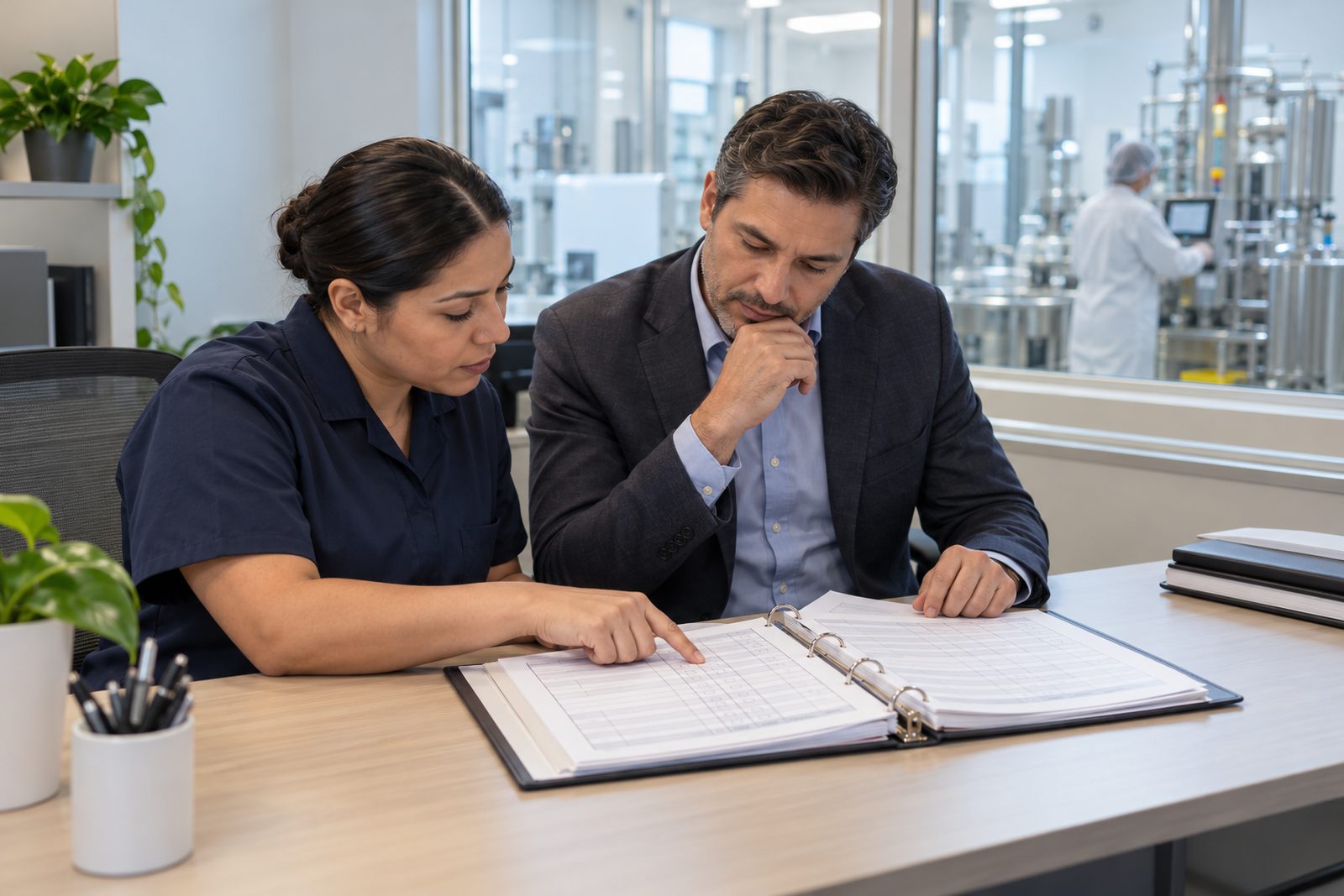
Create a surface-by-surface schedule from the current chapter and the compounding activity. Include routine intervals and responses to spills, interruptions or monitoring findings. Have responsible pharmacy personnel approve the schedule.
USP 800: hazardous drug containment
USP 800 addresses facility and engineering controls for hazardous-drug handling. Have qualified personnel assess the containment device, room ventilation and exhaust arrangement for the drugs and tasks involved. Do not select a cabinet solely from a general article.
Pressure relationships and airflow are engineering controls that require qualified design and verification. Assess hazardous and non-hazardous workflows together, including how cleaning personnel and materials enter and leave the areas.
Deactivation, decontamination, and cleaning — in that order
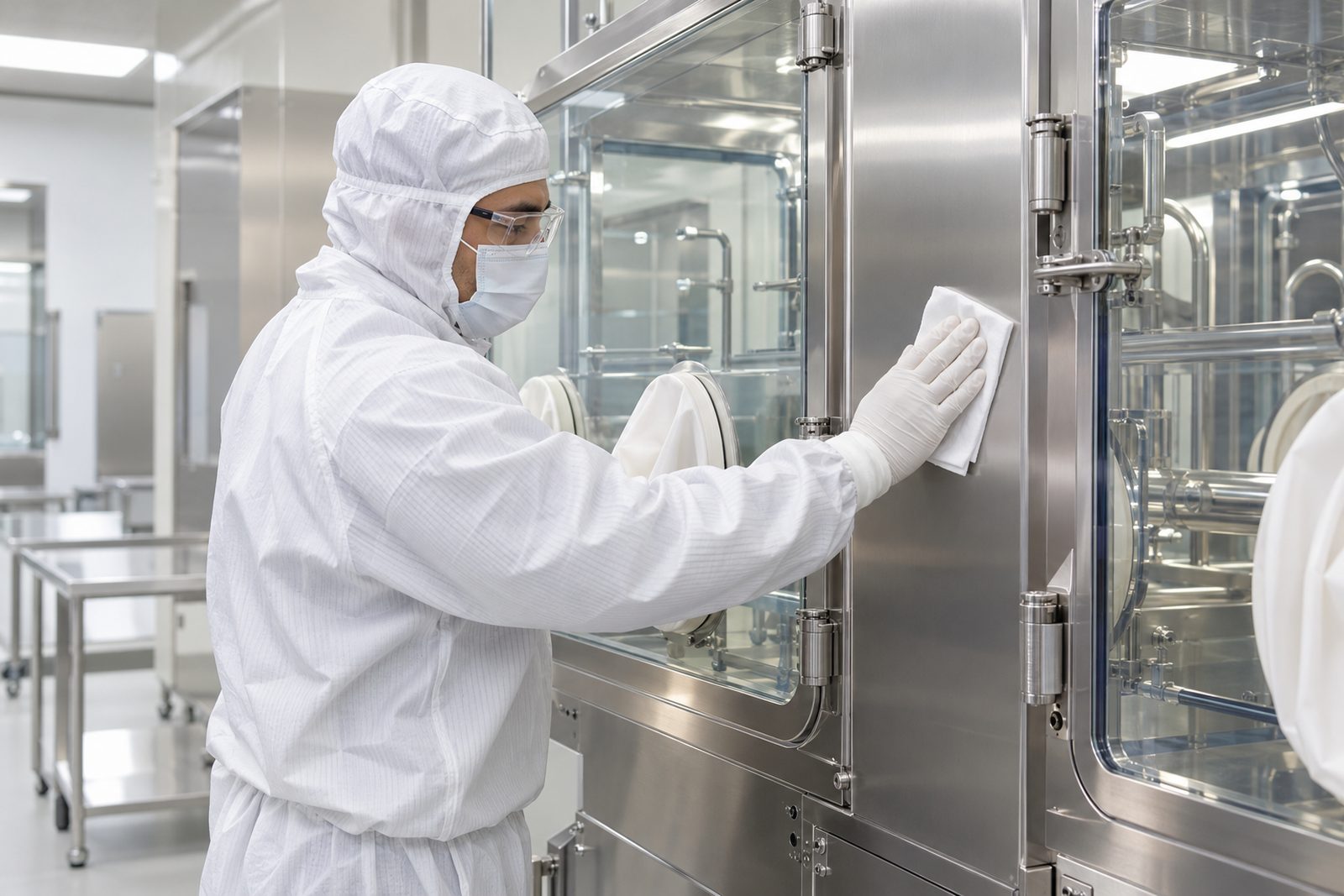
USP 800 distinguishes deactivation, decontamination and cleaning. Sterile compounding also requires disinfection. Define these operations in an approved procedure:
- Deactivation — chemical inactivation of the hazardous drug molecule itself. Sodium hypochlorite (bleach) at appropriate concentration is commonly used for many antineoplastic agents, but not all HDs are bleach-deactivatable. The deactivation agent must be appropriate for the specific drugs handled in the space.
- Decontamination — removal of hazardous-drug residue. Do not assume prior deactivation has made all residue harmless. Use the method approved for the drugs and surfaces involved.
- Cleaning and disinfection — standard cleaning to remove remaining soil, followed by disinfection for microbial control, as required by USP 797 for sterile compounding areas.
Select PPE through the current USP requirements and task-specific exposure assessment. Define glove, gown, eye, face and respiratory protection requirements before assigning the work. Include spill-response boundaries and training.
The facility partner's role
Define task-specific training and authorization for staff working in compounding areas. Responsible pharmacy personnel should approve the scope, agents, materials, PPE and documentation requirements.
Discuss the approved scope and staff qualifications before assigning compounding-area cleaning. See our cleanroom services and medical and laboratory cleaning, or reach out directly to discuss your facility requirements.