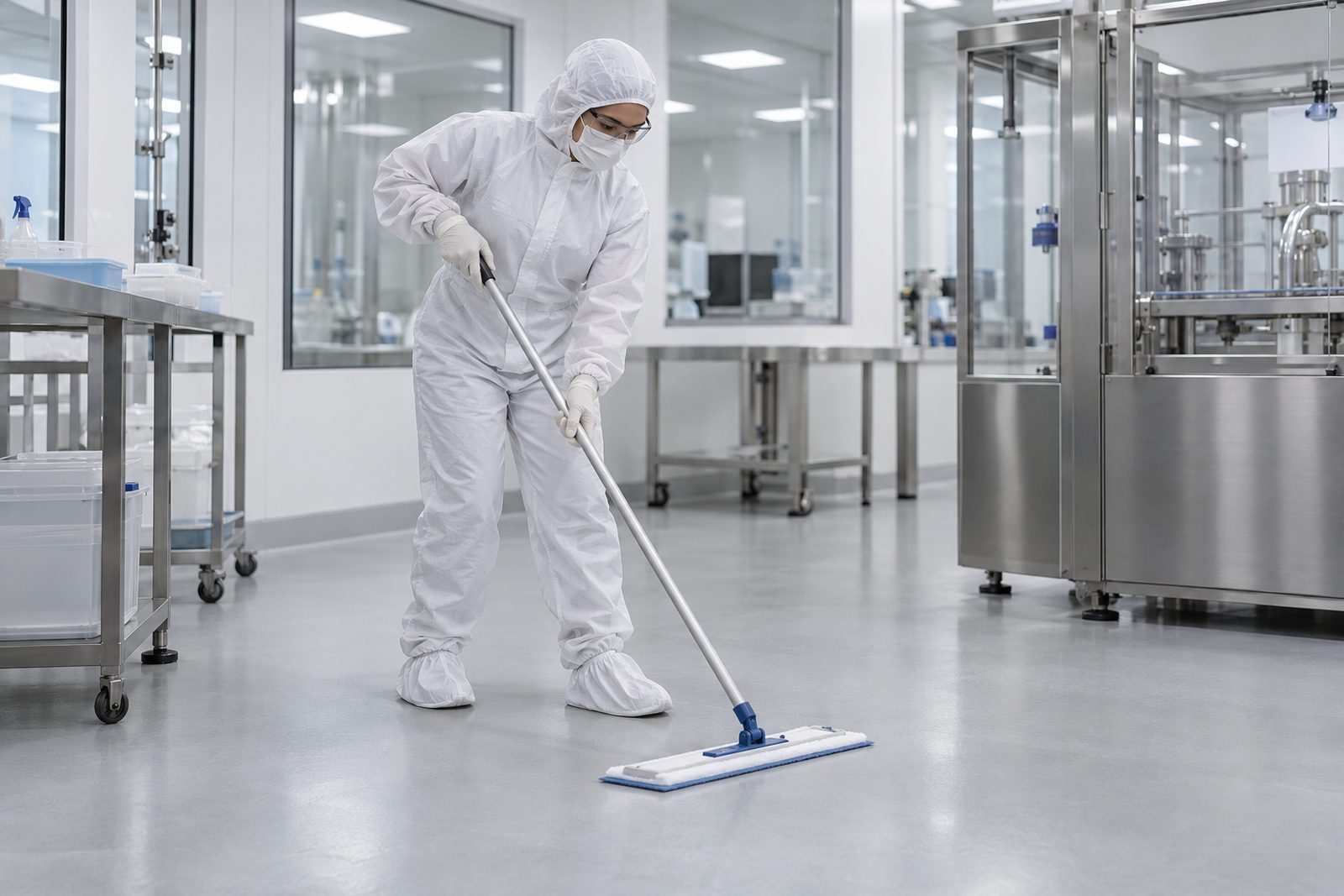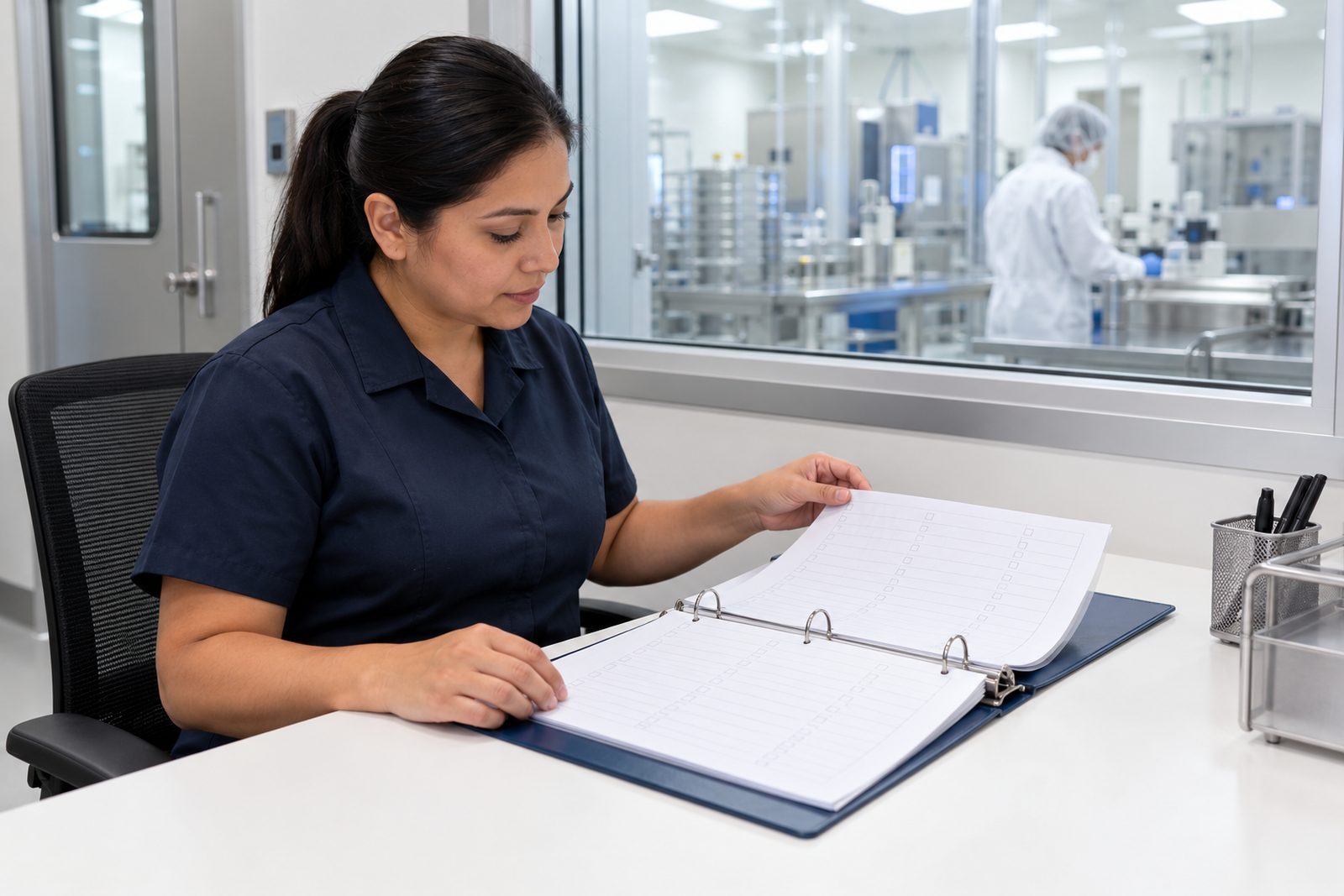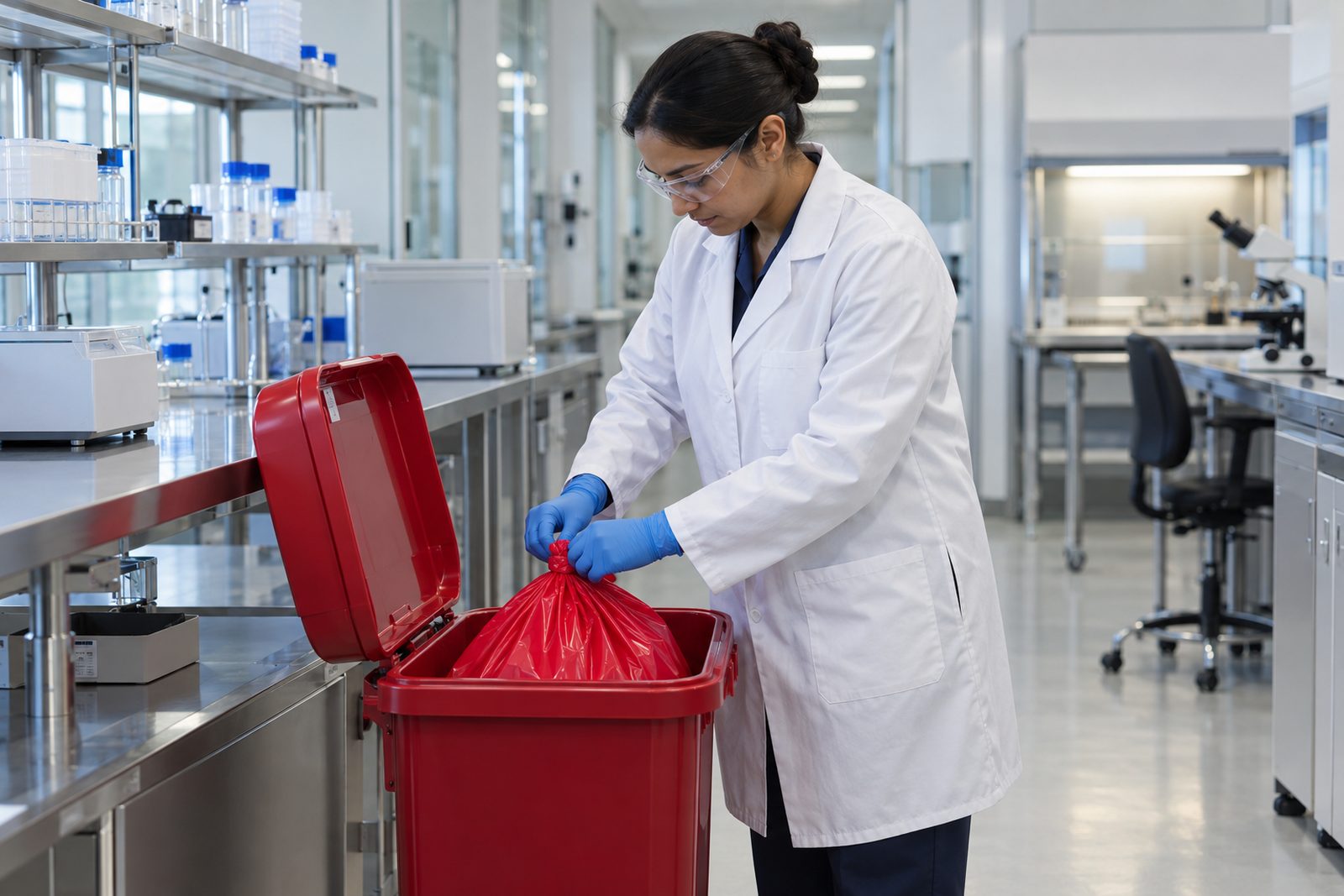
Cleaning records help a quality team assess whether approved procedures were followed. In drug manufacturing, written procedures and records are part of the equipment-cleaning requirements in 21 CFR 211.67.
Why cleaning records draw scrutiny
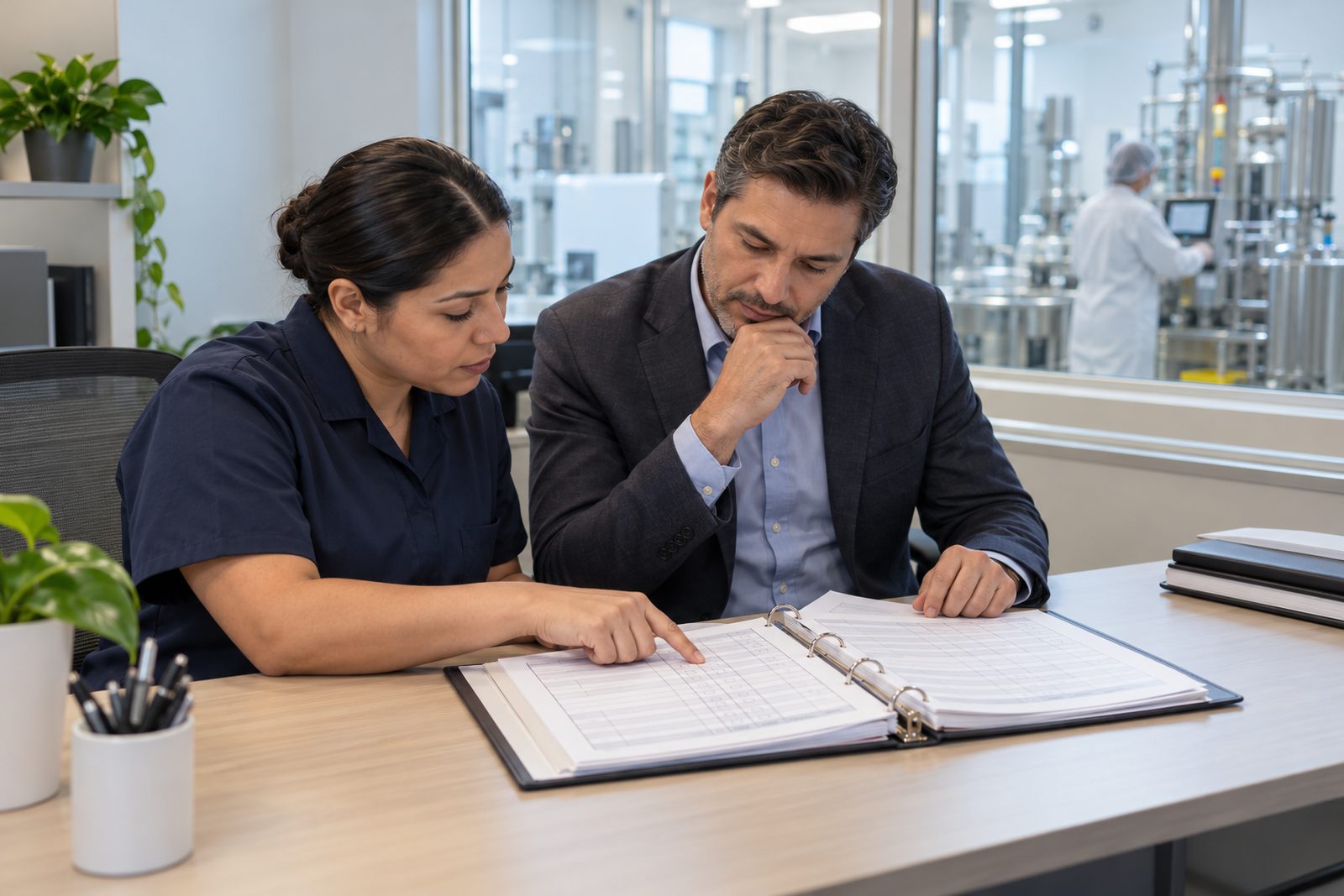
Incomplete records make it harder to establish what work occurred. Review cleaning logs for accuracy, procedure traceability and documented departures. Do not infer inspection rankings or outcomes from a generic checklist.
For drug manufacturing equipment, 21 CFR 211.67 addresses cleaning responsibilities, schedules, methods and records. Define the applicable record fields through the approved procedure and related recordkeeping requirements.
What to include in a cleaning record
Use the approved record form. Depending on the task and applicable requirements, fields to assess include:
- Who performed the work, using an identifier traceable to the operator under the site procedure
- What was cleaned — equipment ID, room number, surface area, or zone (ISO classification if applicable)
- When the work occurred, including the timing detail required by the approved procedure
- Agent used — product name, dilution concentration, and lot or batch number
- Dwell time — the product-specific wet contact time and the record required by the site procedure
- Verification signature — a second person confirming the work, where required by the SOP
Assess missing information under the quality procedure. A blank field is not proof that the work was omitted, but it needs an appropriate, traceable resolution. Do not invent values or complete records as though an undocumented observation occurred.
SOP-to-record traceability
Make the governing procedure and applicable revision traceable from the cleaning record. When an SOP changes, review affected log templates and withdraw obsolete forms under document control.
Assess agent substitutions under change control before use. Record the approved change and any effect on concentration, contact time, materials or training. The quality team should determine which documents need revision.
Training records and the human element
Maintain training evidence for the procedure an operator performs. Review training impact when an SOP changes. Define whether a revision requires additional instruction or practical qualification before independent work.
Include contract staff in the site training and record-access plan. Confirm responsibilities for qualification, record retention and retrieval before service starts.
Cleaning record gaps to review
Include these potential gaps in a cleaning-record review:
- Entries completed before work occurs, or late entries that do not disclose when they were made
- Logs that are not reviewed at the interval required by the quality procedure
- Approved cleaning agents used past their prepared-solution expiration window without notation
- Cleaning verification (swab/rinse sampling) results not linked back to the cleaning record that generated them
- Sporadic use of sporicidal agents in areas requiring scheduled rotation, with no documentation of the rotation schedule
Staying ready every day
Set a routine review schedule based on the site quality system. Check procedure references, record completeness and departures from approved work. Document corrections transparently and assess any impact.
Your cleaning partner should operate the same way. If you are working with a facilities-services provider in the Bay Area that cannot produce fully completed, SOP-traceable cleaning logs on demand, that is information worth having before an investigator asks the same question.
See GMP cleaning services to discuss service scope and our quality and compliance approach to discuss documentation requirements.